 By admin
 As we navigate the journey of aging, peripheral neuropathy emerges as a prevalent health concern, particularly for individuals over 60. This condition primarily targets the nerves in the extremities, often manifesting first in the feet and hands. It’s common for older adults to experience unusual sensations—like persistent tingling or discomfort—and mistakenly attribute them to the natural aging process or benign circulatory issues. However, contemporary research underscores that peripheral neuropathy can profoundly affect a substantial segment of the senior population, potentially hindering balance, daily routines, and overall quality of life. Overlooking these subtle indicators can allow nerve damage to advance unnoticed. This comprehensive guide will delve into crucial signs, supported by medical understanding, emphasize the importance of early detection, and provide actionable advice for engaging with your healthcare provider. Pay close attention to one specific symptom, frequently overlooked, which could signal unexpected underlying health risks.
The Silent Progression: Why Peripheral Neuropathy Is Frequently Missed After 60
For many entering their seventh decade and beyond, the onset of minor aches, pains, or general fatigue is often dismissed as an inevitable aspect of growing older. Yet, a growing body of evidence indicates that peripheral neuropathy impacts a considerable number of older individuals. For instance, a notable study from 2025, utilizing the Michigan Neuropathy Screening Instrument, revealed a prevalence of approximately 62% in very elderly adults (with a median age of 84), even among those not diagnosed with diabetes. Further estimations suggest that between 26% and 39% of individuals aged 70 and above are affected, with this percentage typically climbing with advancing age. This increase is influenced by a combination of natural age-related nerve alterations, prevalent health conditions, and various lifestyle factors.
This form of nerve damage specifically affects the peripheral nerves, which are the intricate network extending beyond the brain and spinal cord. It commonly initiates in the body’s longest nerves, those reaching the extremities like the toes and fingers. The insidious nature of its early symptoms, which unfold gradually, makes them particularly easy to overlook or misinterpret. If left unaddressed, peripheral neuropathy can significantly contribute to diminished mobility, an elevated risk of falls, and even minor injuries going undetected. Research consistently correlates this condition with an increased incidence of falls and a decline in the overall quality of life within older demographics. The encouraging news, however, is that recognizing these symptom patterns early on paves the way for more effective discussions with healthcare professionals. Many individuals discover considerable relief through timely diagnosis, lifestyle modifications, or specialized treatment plans.
Understanding Peripheral Neuropathy: What It Entails
At its core, peripheral neuropathy describes a condition characterized by damage or impaired function of the nerves responsible for transmitting signals between the central nervous system (brain and spinal cord) and the body’s various other parts. This complex disorder can manifest in several ways, impacting sensory nerves (which govern feelings like touch, temperature, and pain), motor nerves (controlling muscle movement), or autonomic nerves (regulating involuntary bodily functions such as digestion, heart rate, and blood pressure). Among older adults, a distinctive “stocking-glove” distribution is often observed, where symptoms initially emerge in the feet and hands before potentially progressing upwards. While the underlying causes are diverse, prevalent contributing factors include age-related wear and tear on nerve tissues, specific vitamin deficiencies, and a range of other health conditions.
10 Essential Signs of Peripheral Neuropathy for Those Over 60
While the onset of peripheral neuropathy can be subtle, its symptoms tend to progress and intensify over time. Here are ten frequently observed indicators, highlighted by both clinical experience and medical research, that individuals over 60 should be vigilant about:
-
Persistent Burning or Heat Sensations, Especially in the Feet at Night
Many individuals describe an uncomfortable burning or scalding sensation, particularly in their feet, which often intensifies during periods of rest or when lying down. Pain research indicates this is common in cases involving small nerve fiber damage. Daily activities may offer distraction, but evenings frequently amplify this discomfort, making even the lightest touch of sheets or blankets feel irritating.
-
Chronic Tingling or “Pins and Needles”
This early and often intermittent sensation, akin to “pins and needles,” frequently commences in the toes or fingertips. Neurological studies consistently identify it as one of the most common initial symptoms, affecting a significant majority (70-80%) in various cohorts. While it may come and go, its presence signals abnormal nerve activity.
-
Gradual Numbness or Diminished Sensation
Affected areas may progressively lose their sensitivity to touch, temperature variations, or pain. Extensive research, particularly in fields like diabetes care (which has broad applicability to neuropathy), correlates this reduced sensation with a higher risk of unnoticed injuries. Everyday actions, such as discerning different textures underfoot, can become increasingly challenging.
-
Sudden, Sharp, Electric-Shock-Like Pains
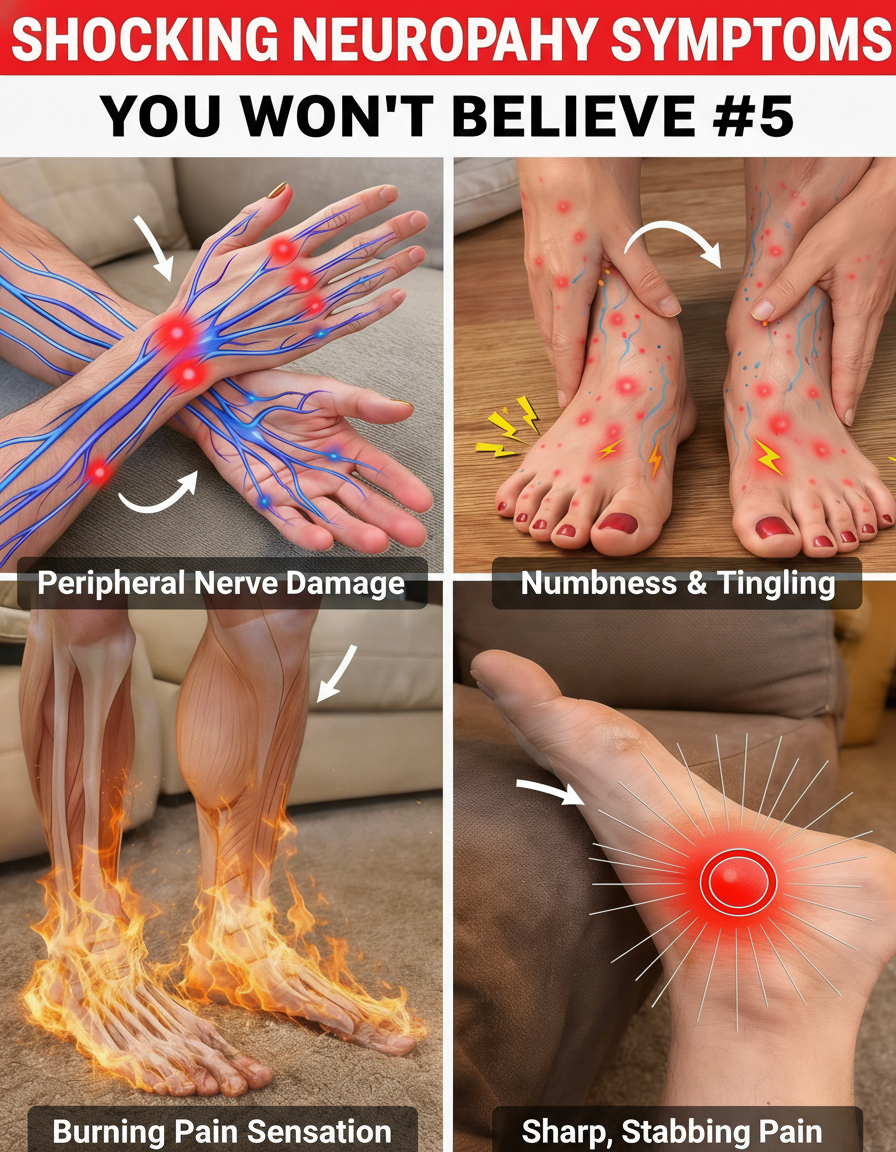
Unexpectedly, individuals may experience abrupt, intense, shooting pains, often described as electric shocks or stabbing sensations. Findings from pain journals link these “lancinating” pains to the involvement or compression of larger nerve fibers.
-
Loss of Temperature Sensitivity (The Often-Overlooked Indicator)
A surprisingly critical, yet frequently missed, sign is the impaired ability to differentiate between warm and cold stimuli. Damage to small nerve fibers can severely diminish temperature perception, thereby increasing the risk of accidental burns or frostbite without any immediate warning. Simple at-home tests, such as carefully comparing warm and cool objects, can help identify this crucial early change.
-
Muscle Weakness, Heaviness, or Fatigue
A noticeable weakening or feeling of heaviness in the legs or hands can develop. This might manifest as “foot drop” (difficulty lifting the front part of the foot), a weakened grip, or general muscle fatigue. Studies published in journals like Muscle & Nerve suggest this affects 40-50% of chronic neuropathy cases, significantly impacting walking ability and the execution of fine motor tasks.
-
Balance Impairment and General Unsteadiness
Diminished sensation and impaired proprioception (the body’s awareness of its position in space) contribute to an increased sense of wobbliness and instability. Gait research consistently demonstrates that individuals affected by neuropathy face a significantly higher risk of falls—up to three to four times greater—compared to their unaffected peers. This increased instability can profoundly impact daily confidence and independence.
-
Difficulty Walking or Coordinating Movement
Beyond general unsteadiness, neuropathy can directly impede the ability to walk smoothly or perform coordinated movements. This might appear as an altered gait, stumbling, or a need to watch one’s feet constantly to avoid tripping. Damage to motor nerves can specifically affect muscle control required for walking, making simple tasks like climbing stairs or navigating uneven surfaces particularly challenging.
-
Muscle Cramps or Spasms
Involuntary muscle contractions, ranging from mild cramps to more intense spasms, can be a sign of motor nerve involvement in peripheral neuropathy. These can occur unexpectedly, often in the legs or feet, and may be particularly bothersome at night, disrupting sleep and comfort.
-
Extreme Sensitivity to Touch (Allodynia)
While some areas may experience numbness, others can become hypersensitive, a condition known as allodynia. This means that even a light touch, which would normally not cause pain, such as the brush of clothing or a gentle caress, can trigger significant discomfort or pain. This paradoxical symptom indicates nerve fibers are misfiring and sending amplified pain signals.
Recognizing these ten signs of peripheral neuropathy is the first crucial step towards proactive health management, especially for those over 60. While these symptoms can be unsettling, early identification and a timely discussion with your healthcare provider can lead to effective strategies for managing the condition, alleviating discomfort, and preventing further complications. Don’t dismiss persistent or unusual sensations as merely “old age”; empower yourself with knowledge and seek professional medical advice to maintain your well-being and quality of life.