 By admin
 It’s easy to overlook minor alterations in your breast tissue. A faint flush, a subtle change in fullness, or a barely-there dimple might initially appear insignificant. However, dismissing these seemingly small variations can lead to serious consequences. The encouraging news is that understanding and promptly addressing early breast cancer warning signs can profoundly impact your health outcomes. This comprehensive guide will illuminate the specific indicators that warrant immediate medical evaluation.
Why Early Detection Transforms Outcomes
Breast cancer frequently originates unnoticed within the milk ducts or glands. When identified at its earliest stage, Stage 0, survival rates are remarkably high—nearly 99%, as reported by the American Cancer Society. Yet, the prognosis becomes significantly more challenging once the disease extends beyond the primary breast tissue.
Consider these vital statistics:
- Typical Delay in Seeking Care: 8 to 12 weeks after symptom onset.
- Crucial Assessment Period: The initial 4 weeks following the observation of a change.
- Survival Impact: A substantial difference exists between early and advanced stage diagnoses.
Ultimately, the power lies in proactive awareness and decisive action. Let’s delve into the top 10 warning signs of breast cancer, progressing from the more subtle indicators to those demanding immediate attention.
10. Subtle Shifts in Breast Size or Shape
Observing one breast becoming noticeably fuller or altering in shape compared to the other, without a clear hormonal cause, can be an early indicator. It’s crucial to be vigilant if:
- The alteration is unilateral (affects only one breast).
- The change endures for more than two weeks.
- It’s unrelated to pregnancy or your menstrual cycle.
- The affected area feels firmer than usual.
Studies from leading medical institutions highlight that new or increasing breast asymmetry can be one of the initial visible symptoms of breast cancer. A useful practice for self-monitoring is to capture monthly photographs in consistent lighting to document any potential changes.
9. Skin Texture Alterations: Dimpling or Puckering
Should your breast skin develop a texture resembling an orange peel—a condition medically known as peau d’orange—this could indicate significant structural changes beneath the surface. These alterations often point to different underlying causes:
- Tumor Pulling Tissue: A growing tumor can pull on ligaments, creating noticeable dimples or indentations. This is frequently linked to invasive ductal carcinoma.
- Lymphatic Blockage: Obstruction of lymphatic vessels can lead to skin thickening, often associated with inflammatory breast cancer.
- Fibrosis: Scar tissue formation can cause puckering or retraction of the skin.
Research from institutions like Johns Hopkins suggests that such skin changes can sometimes manifest before a palpable lump is detected. To perform a self-check:
- Stand with arms relaxed at your sides.
- Press your hands firmly on your hips.
- Raise your arms overhead.
- Gently pinch the skin on your breasts to look for any new indentations or puckering.
Any newly observed or persistent dimpling or puckering warrants an immediate consultation with a healthcare provider.
8. Unexplained Persistent Itching or Irritation
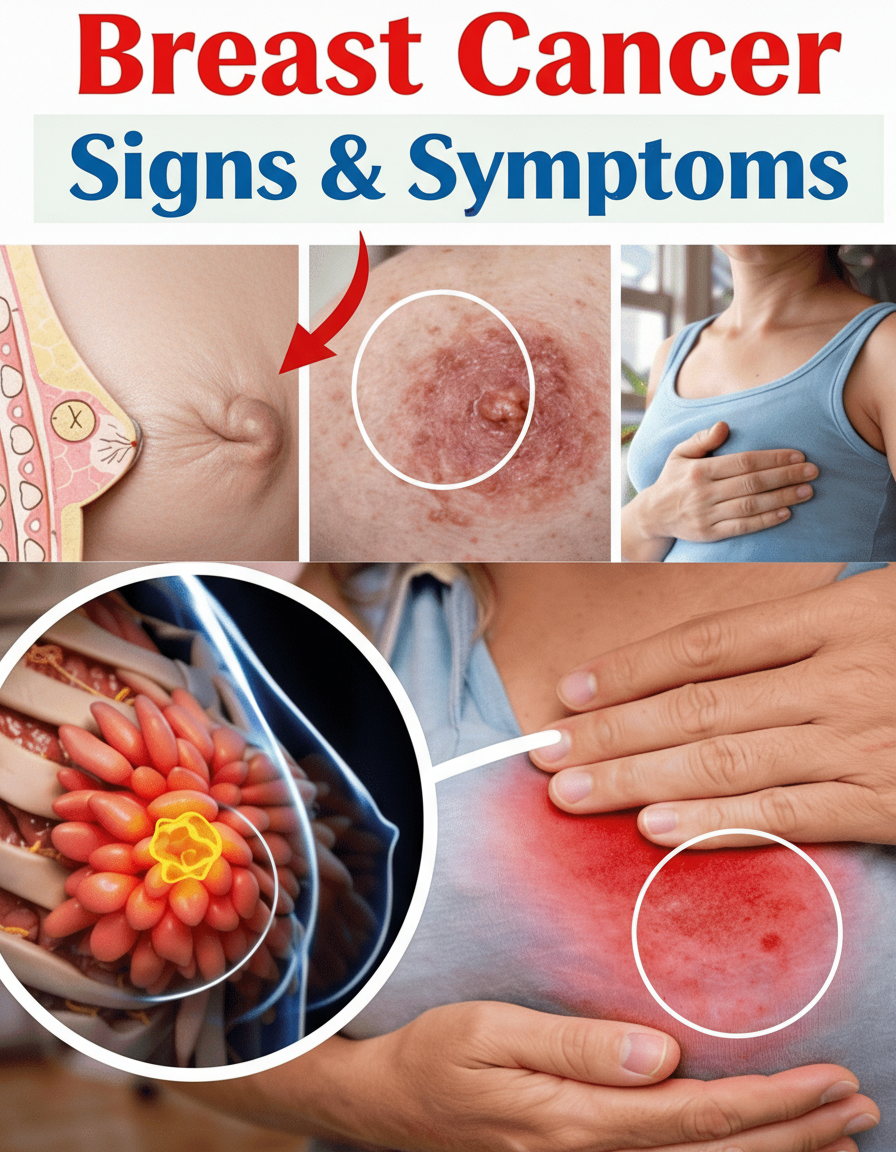
While sporadic itching is a common occurrence, chronic itching accompanied by redness, swelling, or warmth in the breast is a concern. Though uncommon, this presentation can be a sign of inflammatory breast cancer. Distinguish between typical and concerning symptoms:
- Mild Itching: Usually resolves within 1 to 3 days. Seek care if it persists for weeks.
- Temporary Redness: Brief and often transient. Seek care if it becomes persistent or spreads.
- Short-term Warmth: Generally fleeting. Seek care if it is constant or localized.
If you experience ongoing itching together with swelling, a rash, or thickened skin on the breast, immediate medical assessment is crucial.
7. Firm, Irregular Lumps
It’s important to remember that not every lump discovered in the breast is indicative of cancer; many are benign cysts or fibroadenomas. However, the specific characteristics of a lump are critical for evaluation. Here’s how to differentiate between typically benign and potentially concerning lumps:
- Shape: Benign lumps are often smooth and round, while suspicious lumps tend to be irregular or indistinct.
- Movement: Benign masses usually move freely within the breast tissue. A concerning lump often feels fixed or tethered to surrounding tissue.
- Edges: Benign lumps typically have well-defined, clear borders. Malignant lumps frequently have uneven or poorly defined edges.
- Pain: While some benign lumps can be tender, many cancerous lumps are painless.
- Growth: Benign lumps often remain stable in size or fluctuate with the menstrual cycle. Concerning lumps tend to progressively increase in size.
The American Cancer Society notes that the majority of cancerous breast lumps are described as firm, hard, and irregular to the touch. It’s also vital to acknowledge that male breast cancer, though rarer, does occur, and men should be aware of these same signs.
6. Persistent, Localized Breast Pain
Much of breast discomfort is hormonal in nature and typically affects both breasts. However, pain that is unremitting, confined to one specific area, deep-seated, and unilateral warrants a discussion with your healthcare provider. While breast pain by itself is not a definitive indicator of breast cancer, its presence, especially when coupled with other concerning symptoms, significantly elevates the need for investigation.
5. Unexplained Swelling in Breast or Underarm
Swelling that occurs in the breast or the underarm region without an obvious lump could be a critical sign of lymphatic involvement. This means cancer cells may have spread to the lymph nodes. To check your underarm area:
- Gently raise one arm.
- Use your opposite hand to carefully feel the front, middle, and back sections of your armpit.
- Pay attention to any firm, enlarged, or tender nodes.
Notably, this type of swelling, even in the absence of a palpable mass, can sometimes be linked to more aggressive forms of breast cancer, underscoring the importance of prompt evaluation.
4. Nipple Retraction or Inversion
A nipple that suddenly begins to turn inward, particularly if it was previously everted (pointing outward), is a significant warning sign that demands immediate attention