 By admin
 8 Health Conditions Linked to Excessive Drooling During Sleep: When to Seek Medical Advice
Imagine waking up to a damp pillow, a slight crust of saliva at the corner of your mouth, and a lingering sense of confusion or even embarrassment. You might dismiss it as a minor inconvenience, a mere quirk of sleep. But what if that persistent nighttime drooling is your body attempting to communicate a more significant message?
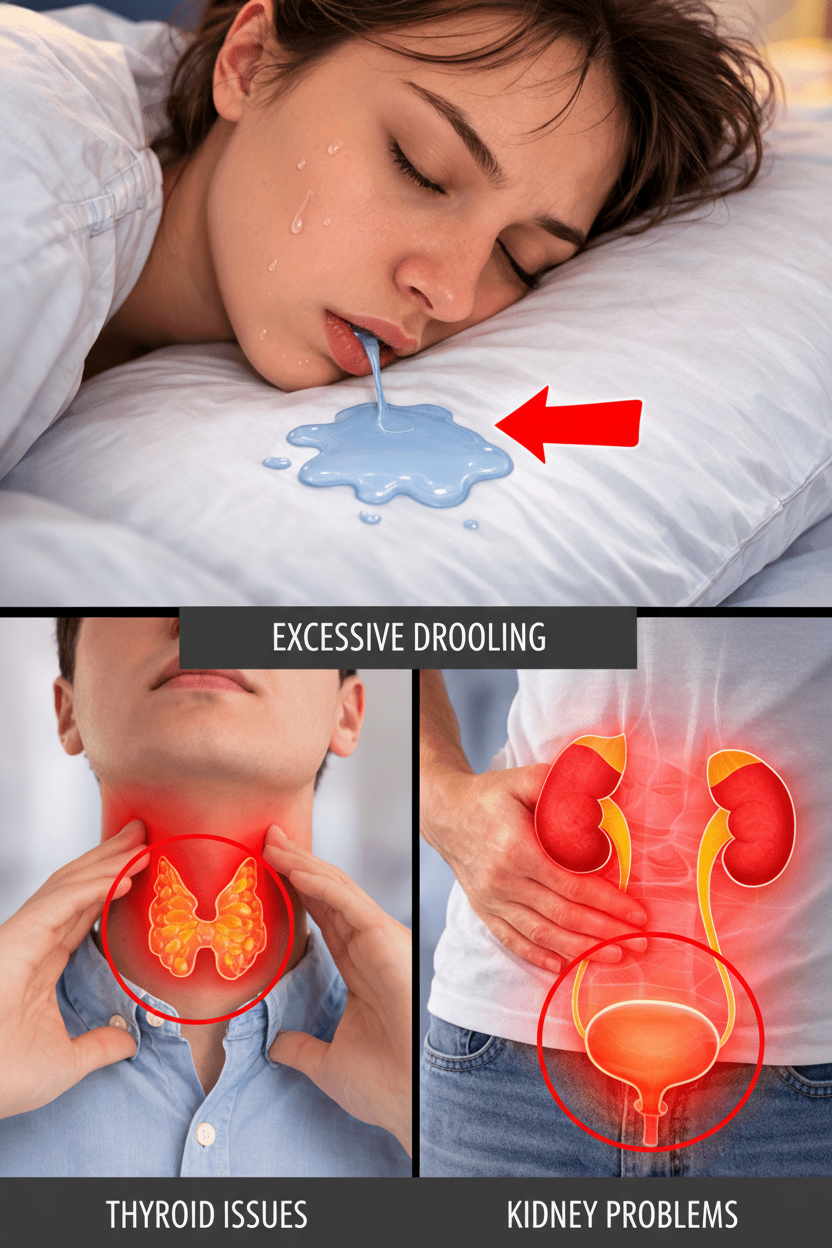
Excessive drooling while sleeping, medically known as nocturnal sialorrhea, is a surprisingly common yet often overlooked issue among adults. While occasionally harmless, research indicates it can frequently be a subtle indicator of underlying health conditions that warrant professional attention. Have you noticed this happening with increasing frequency, perhaps alongside other symptoms like snoring, heartburn, or general fatigue? Many tend to brush it off as normal, yet consistently waking up with a wet pillow could point to issues with swallowing mechanisms, respiratory function, or salivary gland control.
Health experts emphasize that early investigation can help prevent potential complications, ranging from skin irritation around the mouth to more serious concerns like aspiration pneumonia. The urgency to address this increases significantly if it begins to disrupt your sleep quality or daily life. What if understanding and addressing the root cause could bring substantial relief and improved well-being? The connections might be more surprising than you think.
Why Does Drooling Occur More Frequently at Night?
During our sleep cycles, several physiological changes contribute to the potential for drooling. While saliva production continues, our swallowing reflex naturally slows down, and the muscles around our mouth and throat relax. Factors like gravity, sleeping position, and breathing through the mouth can then allow accumulated saliva to escape. Studies suggest that conditions which impair muscle control or lead to an increase in saliva production can significantly exacerbate this phenomenon. Specialists from institutions like the Cleveland Clinic often highlight neurological or respiratory factors as key contributors. While a particular sleeping position can sometimes be the culprit, frequent or heavy drooling generally warrants a closer look.
Based on insights from trusted medical sources such as the Mayo Clinic, Cleveland Clinic, and the American Academy of Sleep Medicine, the following eight conditions are commonly linked to nocturnal sialorrhea in adults.
The 8 Conditions That May Cause Nighttime Drooling
8. Nasal Congestion or Sinus Issues
Picture a night spent struggling to breathe through your nose, forcing you to breathe through your mouth as you sleep deeply. Conditions like allergies, common colds, or chronic sinusitis can block nasal passages, making mouth breathing unavoidable. Research consistently shows a direct link between open-mouth sleeping and increased drooling. While often a temporary problem, recurring or persistent nasal congestion should not be ignored, as it directly impacts your ability to keep your mouth closed during sleep. This issue often sets the stage for other breathing-related concerns.
7. Gastroesophageal Reflux Disease (GERD)
That familiar burning sensation associated with acid reflux can trigger an unexpected response: your body produces extra saliva to neutralize and wash away the irritating stomach acid. When lying down, acid reflux becomes more prevalent, increasing both saliva production and the likelihood of it escaping. Studies have firmly linked GERD to nocturnal sialorrhea, sometimes accompanied by sensations of choking or a sore throat. It’s remarkable how seemingly unrelated issues like heartburn can have such a direct connection to drooling.
6. Medication Side Effects
Certain pharmaceutical agents can inadvertently stimulate the salivary glands, leading to excessive saliva production, a condition known as hypersalivation. Common culprits include some antipsychotic medications, drugs used to treat Alzheimer’s disease, and cholinergic agonists. Medical experts frequently report this as a reversible cause of drooling. You might not immediately associate your prescribed pills with a wet pillow, but discussing your medications with your doctor can often lead to adjustments that alleviate this bothersome side effect.
5. Obstructive Sleep Apnea (OSA)
Obstructive Sleep Apnea is a disorder where breathing repeatedly stops and starts during sleep, often due to relaxed throat muscles blocking the airway. These brief pauses in breathing frequently compel individuals to breathe through their mouths, leading to increased drooling and dry mouth. Research highlights strong correlations between OSA, excessive drooling, and chronic daytime fatigue. Many individuals with OSA also experience loud, disruptive snoring. Does loud, irregular breathing during sleep resonate with your experience or that of a partner? It could be a significant clue.
4. Infections or Throat Irritation
Inflammation or infection in the throat can overwhelm the body’s natural swallowing mechanisms. Conditions like swollen tonsils, strep throat, or even persistent post-nasal drip can increase mucus and saliva production, making it difficult to manage secretions effectively. While acute infections are temporary, persistent throat irritation or recurrent infections warrant further investigation. You might initially blame a common cold, but if the issue persists, it’s advisable to seek medical advice.
3. Stroke or Recent Neurological Event
A sudden onset of drooling, especially if localized to one side of the mouth, can be a critical sign of a recent stroke or other neurological event. These events can cause muscle weakness or paralysis, impairing the ability to close the mouth effectively or swallow saliva. Studies emphasize the importance of prompt medical evaluation for any sudden change in neurological function, particularly if accompanied by other symptoms like speech difficulties or facial weakness. The suddenness of such an onset demands immediate attention.
2. Parkinson’s Disease
Parkinson’s disease, a progressive neurological disorder, often manifests with symptoms like tremors and reduced coordination. Up to 80% of individuals with Parkinson’s experience sialorrhea, primarily due to impaired swallowing reflexes and reduced facial muscle control rather than overproduction of saliva. Research identifies drooling as an early and often distressing symptom. Patients might also notice other motor symptoms like stiffness or slowed movement, which collectively point towards this condition.
1. Other Neurological Conditions
A range of other progressive neurological disorders, including Amyotrophic Lateral Sclerosis (ALS), cerebral palsy, and multiple sclerosis, can severely disrupt nerve signals controlling facial and swallowing muscles. This impaired muscle function leads to poor saliva management and control, making drooling a common and chronic symptom. Experts note that excessive drooling is a frequent feature in many progressive neurological conditions, highlighting its broad impact across such disorders.
Understanding Potential Links: A Quick Summary
- Sleep Apnea & Nasal Congestion: Often lead to mouth breathing, accompanied by snoring and fatigue.
- GERD & Infections: Result in excess saliva production or difficulty swallowing, frequently linked to heartburn or a sore throat.
- Medications & Stroke: Primarily cause impaired muscle control, potentially alongside speech changes or weakness.
- Parkinson’s & Other Neurological Conditions: Stem from muscle and nerve dysfunction, often presenting with tremors or stiffness.
Real Stories: How Recognition Led to Positive Change
Consider Laura, 58, whose persistent drooling worsened alongside increasingly loud snoring. A sleep study ultimately revealed she had severe obstructive sleep apnea. After starting CPAP therapy, her drooling significantly reduced, and her energy levels dramatically improved. Or take David, 65, who began noticing drooling primarily after experiencing episodes of acid reflux. By effectively managing his GERD through dietary changes and medication, his nighttime drooling eased considerably, leading to more restful nights.
It’s understandable to think, “It’s probably nothing serious.” However, these real-life accounts underscore how investigating seemingly minor symptoms like nighttime drooling can empower individuals to identify and address underlying health issues, leading to significant improvements in their overall health and quality of life. Don’t hesitate to consult a healthcare professional if you’re experiencing persistent nocturnal sialorrhea; your body might be trying to tell you something important.