 By admin
 8 Subtle Body Signals You Might Be Dehydrated
Have you ever experienced a momentary lightheadedness when you stand up quickly, or found yourself with unexpectedly dry lips during an important conversation? For many, these small, often embarrassing moments – or even a sudden dip in energy mid-afternoon – are easily dismissed as simply “getting older.” Yet, sometimes the underlying cause is far simpler and more easily remedied: your body might be subtly signaling its need for more water.
Your body is an incredibly sophisticated system, constantly communicating its needs long before overt thirst kicks in. Ignoring these quiet cues can impact everything from your energy levels to your cognitive function. Let’s explore eight surprising, often overlooked, signs that your body is seeking better hydration, including one crucial indicator that might surprise you.
1. Dry Mouth and Sticky Lips: Your Oral Health’s Early Warning
One of the earliest and most common indicators of insufficient fluid intake often manifests in your mouth. While many attribute dry or chapped lips to weather changes, spicy foods, or excessive talking, it’s frequently your body’s initial plea for more hydration. Keep an eye out for:
- Lips that feel rough, chapped, or visibly cracked.
- A persistent sticky or fuzzy sensation in your throat.
- An increased need to sip water frequently, especially during conversations.
Beyond surface discomfort, research into hydration and oral health highlights a direct link: inadequate fluid levels can significantly reduce saliva production. Saliva is vital for oral comfort, digestion, and even protecting your teeth. When it diminishes, your mouth can feel unpleasantly dry long before you consciously feel thirsty. A simple, effective habit is to always keep a glass or water bottle within reach throughout your day, particularly if you’re active or in warmer climates.
2. Unexplained Head Pressure or Mild Headaches
Have you ever felt a peculiar pressure or a dull ache in your head that seems to appear out of nowhere? Most people instinctively attribute such sensations to stress, insufficient sleep, or too much sun exposure. However, your hydration status often plays a significant, yet overlooked, role.
Studies in nutritional science and fluid balance suggest that even mild dehydration can compromise blood circulation and the efficient delivery of oxygen throughout your body, including to your brain. This can manifest as:
- Subtle, persistent headaches.
- A feeling of pressure concentrated around your temples.
- A general sensation of heaviness in your head.
Interestingly, many individuals report that simply drinking one or two glasses of water and resting for a few minutes can significantly alleviate this discomfort. While headaches can stem from numerous causes, maintaining optimal hydration is one of the most straightforward practices to support overall physical comfort and well-being.
3. Sudden Mid-Day Energy Slump
It’s a common scenario for many adults: you start your day feeling refreshed and productive, only to be hit by a sudden, overwhelming wave of fatigue by mid-afternoon. This isn’t always a sign of aging; often, the explanation is far simpler. Water is crucial for countless bodily functions, including nutrient transport, maintaining robust circulation, and fueling brain activity. When your body lacks sufficient fluids, these vital processes become less efficient, leading to a faster and more pronounced drop in your energy levels.
Look out for these subtle indicators:
- Feeling unusually weak or drained.
- A noticeable dip in motivation to move or engage in tasks.
- An unexpected urge to sit down or rest earlier than usual.
Staying adequately hydrated is a powerful tool against these energy dips, helping your body sustain its functions throughout the day. And there’s another crucial sign that medical professionals frequently emphasize…
4. Dark Yellow Urine: Your Body’s Internal Hydration Gauge
This is arguably one of the most direct and easily observable clues your body provides about its hydration status. The color of your urine offers a quick, visual assessment of how well-hydrated you are. Generally, a pale, straw-like yellow indicates sufficient fluid intake, whereas darker shades suggest your body could benefit from more water. Here’s a simple guide:
- Pale Yellow: Often indicates good hydration.
- Yellow: Typically within normal limits.
- Dark Yellow: May signal a need for increased fluid intake.
- Amber: Suggests dehydration may be present.
While certain foods, medications, or vitamin supplements can temporarily alter urine color, consistently monitoring this simple signal can be an invaluable habit for maintaining awareness of your daily hydration needs.
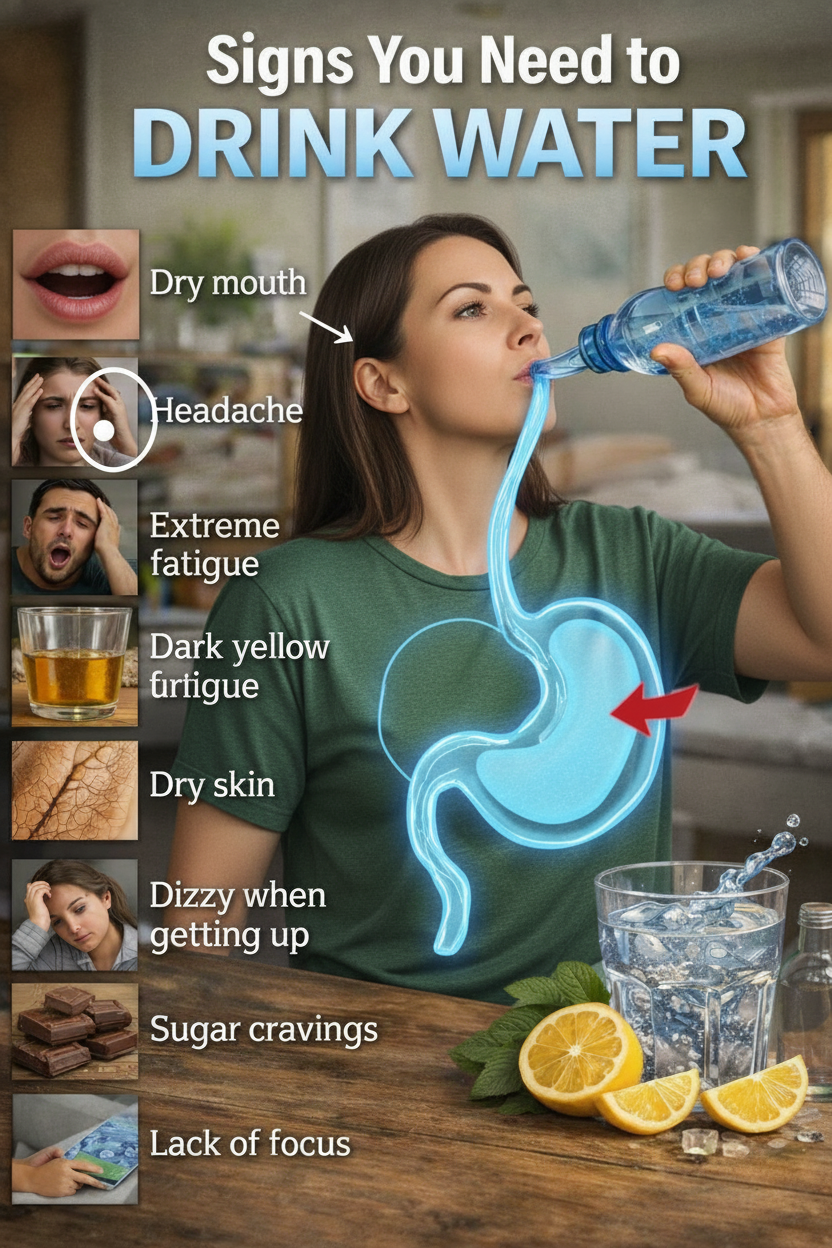
5. Dry or Dull Skin: A Reflection of Internal Hydration
Your skin, the body’s largest organ, often serves as a mirror reflecting your internal health. If you notice your skin feeling unusually rough, tight, or appearing dull and lacking its usual vibrancy, your hydration levels might be a contributing factor. It’s important to note that while water is vital, achieving healthy skin is a multifaceted endeavor involving nutrition, sleep, and environmental factors.
Nonetheless, proper hydration plays a fundamental role in supporting the body’s ability to maintain healthy tissues, promote efficient circulation, and ensure skin elasticity. You can perform a quick self-check:
- Gently pinch the skin on the back of your hand.
- Release it and observe how quickly it returns to its normal state.
If your skin is slow to snap back, it may indicate that your body, and consequently your skin, could benefit from improved hydration and consistent skincare practices.
6. Feeling Dizzy When Standing Up (Orthostatic Dizziness)
This is a common experience for many: you rise quickly from a seated or lying position, and for a moment, the room seems to spin, or you feel lightheaded. While such brief dizziness can sometimes be linked to rapid blood pressure changes or certain medications, inadequate hydration is also a significant factor. Water plays a crucial role in maintaining your blood volume and overall fluid balance, which directly impacts circulation.
When your fluid levels are low, your body may struggle to maintain sufficient blood pressure, leading to a temporary drop in blood flow to the brain upon standing. Consider these simple strategies to help your body adjust more smoothly:
- Stand up gradually and slowly.
- Pause for a moment before you begin walking.
- Make a conscious effort to drink water consistently throughout the day.
7. Unexpected Sugar Cravings
This sign often catches people by surprise: a sudden, intense craving for sugary foods. Sometimes, your body can misinterpret its need for fluids as a need for food, particularly quick energy sources like sugar. When you’re dehydrated, your body’s energy production processes can slow down, leading to feelings of fatigue (as mentioned earlier).
In an attempt to quickly boost energy, your brain might send signals that manifest as a desire for sugary snacks. Before reaching for that sweet treat, try drinking a glass of water. You might find that your ‘hunger’ was actually just thirst in disguise, and the craving dissipates as your body rehydrates.
8. Irritability or Mood Changes
Beyond physical symptoms, your mental and emotional state can also be a subtle indicator of dehydration. Even mild fluid depletion can significantly impact brain function and neurotransmitter balance, leading to noticeable shifts in mood and cognitive clarity. You might find yourself feeling:
- Unusually irritable or ‘on edge’.
- Experiencing difficulty concentrating or a general ‘brain fog’.
- More easily frustrated than usual.
Your brain is largely composed of water, and maintaining its hydration is essential for optimal cognitive performance and emotional regulation. If you notice yourself feeling unexpectedly moody or mentally sluggish, a glass of water might be a simple, yet effective, first step toward restoring mental balance.
Listen to Your Body’s Wisdom
These eight signs serve as a powerful reminder that your body is constantly communicating its needs. While extreme thirst is an obvious alarm, these subtler clues often appear much earlier, offering a chance to address fluid imbalances proactively. Prioritizing consistent hydration is one of the simplest, yet most impactful, habits you can adopt for enhancing your overall health, energy, and well-being. Start listening to your body’s quiet wisdom today – it just might be telling you it needs more water.