 By admin
 You wake up one morning feeling unusually drained even after a full night’s rest, or you notice a dull ache in your neck that you blame on bad posture or a long day at the desk. These little discomforts seem so ordinary that most people simply push them aside and carry on with their routines. Yet for thousands each year, these everyday feelings quietly signal something far more serious happening inside the body without the dramatic chest pain everyone expects.
But here’s the part that surprises even experienced health writers: these subtle clues can be easy to miss until it’s too late. Keep reading because by the end of this article you’ll have a clear checklist of the six most commonly overlooked signs plus simple steps you can start using today to stay more aware of what your body might be trying to tell you.
Why Silent Heart Attacks Often Slip Under the Radar
Many heart events happen without the classic crushing chest pain that movies have taught us to watch for. Research from the American Heart Association shows these so-called silent episodes can account for a significant portion of all heart attacks, especially in women and older adults.
People often mistake the signals for stress, indigestion, or simple muscle strain. The result? Valuable time is lost before anyone seeks help.
The good news is awareness makes a real difference. Understanding what to watch for turns vague feelings into actionable information.
The 6 Signs of a Silent Heart Attack That Are Often Ignored
Let’s break them down one by one so you can spot patterns in your own daily life. Each of these can appear on its own or together, and they’re frequently brushed off as minor annoyances.
1. Discomfort in the Jaw, Neck, or Throat
You might feel a sudden tightness or aching in your jaw or neck that comes and goes. Many blame teeth grinding or a stiff pillow. According to Mayo Clinic experts, this radiating discomfort can sometimes travel from the heart area without any chest involvement at all.
But that’s not all – it often feels exactly like a pulled muscle or sinus issue, which is why it gets ignored so easily.
2. Pain or Pressure in the Shoulders, Upper Back, or Arms
A nagging soreness between your shoulder blades or in one arm can feel like you overdid it at the gym or slept wrong. Cleveland Clinic notes that this type of discomfort is a classic yet overlooked clue because it mimics everyday strain. The pain may come and go, making it easy to dismiss until other signs appear.
3. Unusual Fatigue That Doesn’t Improve with Rest
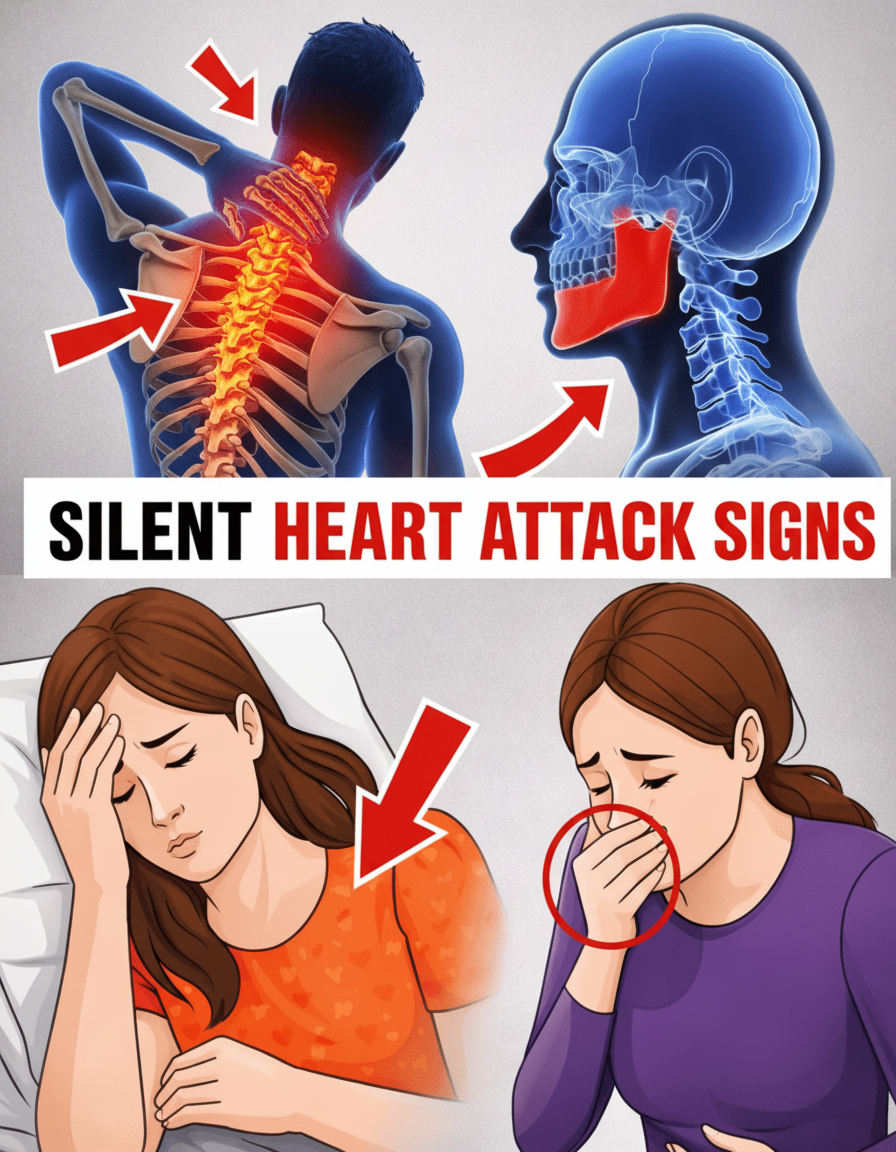
Waking up exhausted or feeling wiped out after simple tasks like climbing stairs is common. People often chalk it up to aging, busy schedules, or the flu. Yet studies highlight how this deep, unexplained tiredness can be one of the earliest quiet warnings, especially in women who report it more than men.
4. Shortness of Breath During Normal Activities
Suddenly feeling winded while walking to the mailbox or talking on the phone can seem random. Many assume it’s allergies or being out of shape. The American Heart Association lists this as a key clue that can happen with or without other discomfort, making it one of the most frequently missed signs.
5. Nausea, Indigestion, or Stomach Discomfort
That queasy feeling or mild heartburn after meals often gets blamed on last night’s dinner or stress. WebMD and other sources confirm these digestive-like symptoms can appear without any chest pain at all. The woman in the illustration clutching her stomach is a perfect example of how ordinary this can look.
6. Breaking Out in a Cold Sweat or Feeling Lightheaded
A sudden wave of clammy sweat or dizziness while sitting quietly can feel like a hot flash or low blood sugar. This is the sign that surprises most people because it seems completely unrelated to the heart. Yet it’s one of the clearest quiet indicators experts urge us to take seriously.
Here’s a quick comparison to help you remember the difference:
Normal everyday issue : Fatigue after a late night – improves with rest Possible quiet sign : Fatigue that lingers for days with no clear reason
Normal : Occasional neck stiffness from desk work Possible quiet sign : Sudden jaw or neck ache that spreads without injury
Simple Steps You Can Take Right Now to Stay More Aware
You don’t need fancy equipment or complicated routines. These practical habits fit easily into any busy schedule:
Keep a quick daily note on your phone about any unusual tiredness, aches, or shortness of breath. No