 By admin
 Alright, ladies, let’s get real. You hit your 50s and beyond, and suddenly, these pesky little dark patches – you know, on your face, hands, and anywhere the sun has ever had a party – start popping up. It’s unexpected, it’s annoying, and let’s be honest, it can seriously chip away at your daily confidence, sometimes in ways you don’t even realize until you catch a glimpse in the mirror.
And what happens next? You scroll social media, right? BAM! Your feed is flooded with ‘before-and-after’ photos, promising lightning-fast results from some cheap kitchen hack. It screams ‘too good to be true,’ and guess what? Most of the time, it absolutely IS. These so-called miracle cures often fall flat, or worse, leave your skin in a much sorrier state than when you started. Talk about a gut punch!
Now, among all these DIY fads, one household hero keeps making an appearance: baking soda. Why? Because it’s dirt cheap and everyone’s got a box tucked away. But hold up, before you go raiding your pantry like a madwoman, there are some *crucial* facts the experts want every woman to understand about what this stuff *actually* does to mature skin. Seriously, stick with us, because the no-nonsense, science-backed insights ahead could save you a whole lot of grief and steer you toward habits that truly support your skin.
Understanding Age Spots and Why They Appear
Let’s talk brass tacks about these dark devils. Age spots, also known as liver spots or those fancy-sounding solar lentigines, are just flat brown or black marks that slowly but surely show up on skin that’s seen its fair share of sun over the years. They’re basically your body’s way of saying, “Hey, we got some UV damage here!” by pumping out extra melanin in certain spots, all thanks to sun exposure mixed with the natural aging process. Medically speaking, they’re usually harmless, but let’s be honest, they can create an uneven look that many women over 50 find downright bothersome, especially in photos or when you’re staring at your reflection.
But here’s the good news, and it’s a big one: simply being aware of your daily habits can make a massive difference in how your skin looks and feels over time. It’s not about magic; it’s about smart choices.
The Rise of Baking Soda in Skincare Conversations
Online platforms are absolutely buzzing with stories about baking soda – touted as the ultimate quick-fix home remedy for all your skin tone woes. The appeal is obvious: it’s cheap, it’s ‘natural,’ and it’s probably already chilling in your pantry. People are constantly sharing these DIY recipes, mixing it into pastes or scrubs, swearing it’ll smooth out texture and magically brighten up those problem areas. But here’s the cold, hard truth that most of those viral posts conveniently forget to mention.
They skip the part where reality bites. While the internet loves a good story, your skin deserves better than just hearsay and hopeful mixing. It’s time to separate fact from fiction, especially when it comes to something as delicate as your face.
What Science and Dermatologists Actually Say
Alright, let’s get down to what the real pros are saying. Research on baking soda for skin? It’s practically non-existent, and dermatologists are generally waving big red flags, urging serious caution, especially if you’re thinking of slathering it regularly on your face or hands. Sure, the gritty texture makes it a physical exfoliant, but here’s the kicker: its super high alkaline pH (around 9!) completely clashes with your skin’s natural, slightly acidic balance (which is usually between 4.5 and 5.5).
This pH mismatch isn’t just a minor squabble; it’s a full-blown war on your skin barrier. Repeated applications can strip away your protective oils and seriously weaken that crucial barrier. Experts, from credible sources like Healthline, are quick to point out that baking soda simply *cannot* reach the deeper melanin layers where age spots actually form. It’s like trying to clean a deep stain with a surface wipe – utterly useless.
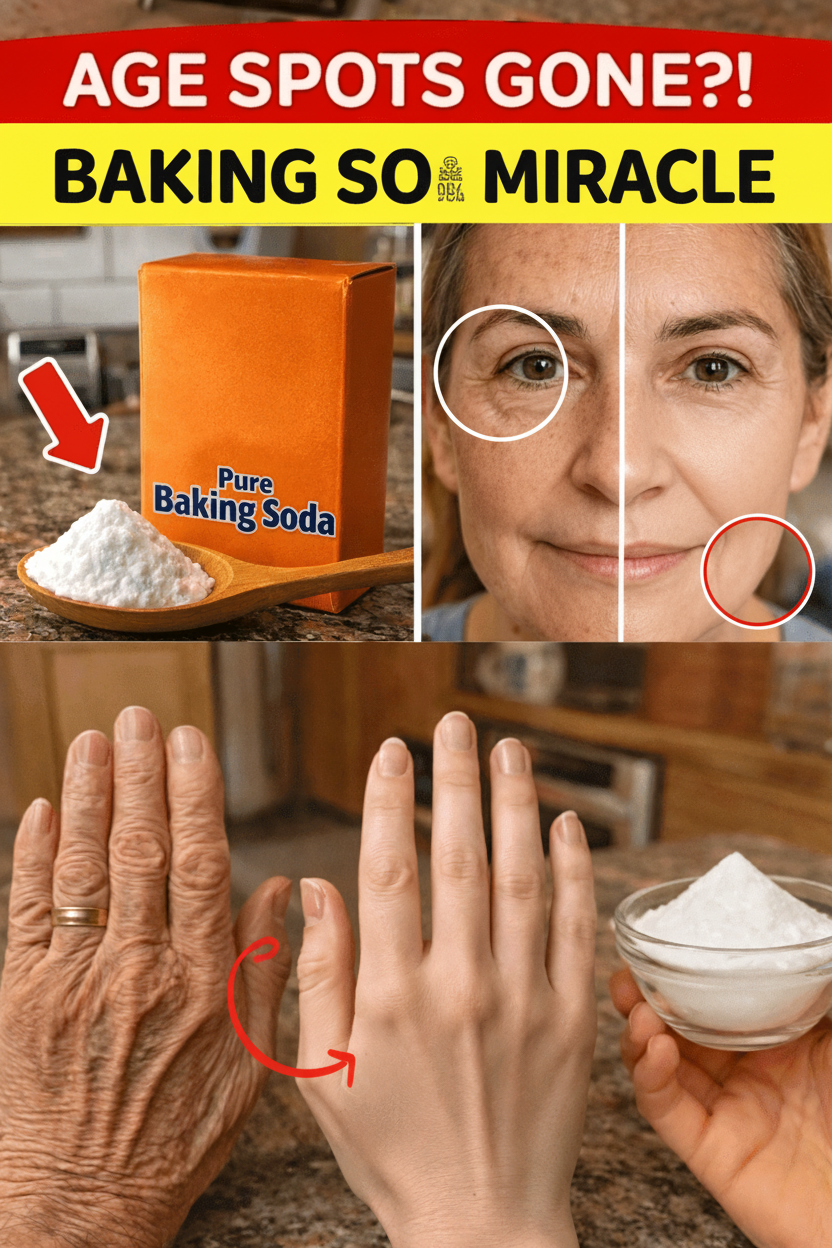
And here’s another harsh reality: irritation from overuse can even trigger inflammation, which, ironically, might lead to *darker* discoloration, especially if you have medium or deeper skin tones. The bottom line? There’s barely any clinical evidence to back up baking soda as a reliable option for tackling age spots. Don’t get played by the hype!
Potential Risks Every Woman Over 50 Should Consider
Listen up, because this is important: mature skin tends to be thinner and way more reactive than younger skin. So, tossing in any new, unproven ingredient needs some serious thought. Professionals are screaming about several downsides that can pop up fast when you mess around with DIY baking soda methods:
- It breaks down your skin barrier, leaving you with increased dryness and sensitivity.
- It triggers redness or stinging, especially on those delicate facial areas.
- It jacks up the chance of post-inflammatory changes that can make your spots look even more noticeable.
- The abrasion can cause micro-tears that slow down your skin’s natural healing process.
- It plays terribly with other common mature-skin sensitivities like rosacea or eczema, making everything worse.
The surprising truth? What feels like a gentle little kitchen hack can sometimes create a whole lot more work for your skin, rather than less. Don’t fall for it!
Safer Evidence-Based Ways to Support Even Tone
Thankfully, dermatologists aren’t just here to tell you what *not* to do. They’ve got a ton of gentle, consistent approaches that actually work with your skin, not against it. Shifting your focus here often brings far better long-term comfort and, more importantly, confidence. Try weaving these smart habits into your routine, one step at a time:
- Slap on broad-spectrum SPF 30 or higher every single day – yes, even when you’re indoors near windows. No excuses!
- Layer up with a vitamin C serum in the morning; it’s your skin’s bodyguard against daily environmental stress.
- Ditch those harsh scrubs! Opt for mild chemical exfoliants like lactic acid a few times a week instead.
- Moisturize like your life depends on it, morning and night, with formulas packed with ceramides or hyaluronic acid.
- Fuel your body from the inside out: eat plenty of antioxidant-filled foods like berries, leafy greens, and nuts.
But that’s not the whole story, folks. Small, consistent daily protections compound into visible improvements far more reliably than any sporadic, risky experiments. Trust the process, not the quick fixes.
Building a Gentle Routine for Face Hands and Beyond
Age spots often decide to make their grandest appearance on the backs of your hands, simply because those poor things receive constant sun exposure without much protection. Treat
Thanks for sticking around and getting the real scoop! Ready to dive deeper into smart skincare and health tips for women over 50? Explore more expert-backed articles right here on dogpjs.com!