 By admin
 The Ultimate Lowdown: What Your Pee Color Says About Your Kidneys – A No-BS Guide to the Stages!
Hold up, ever caught a glimpse of your pee and thought, ‘Whoa, what’s that color?’ Maybe it’s darker than usual, or rocking a tint that just screams ‘pause button.’ Look, millions of folks out there see their urine doing weird things daily and just shrug it off like it’s no big deal. But let me drop some truth: those seemingly small shifts can actually be your kidneys talking, telling you how they’re handling their critical mission of filtering all the gunk out of your blood. This isn’t just about hydration; it’s about your kidney health straight up.
Here’s the kicker: kidney disease is a sneaky bastard. It creeps up on you, often without a peep of pain or any blaring alarms until things are already pretty bad. So, while it might seem trivial, actually paying attention to something as basic as your urine color isn’t just smart – it’s a power move to stay ahead of the game and protect your precious kidney function.
Alright, buckle up! In this no-BS guide, we’re gonna dissect the five brutal stages of chronic kidney disease (CKD) – all based on how effectively your kidneys are doing their dirty work, measured by something called eGFR. We’ll break down exactly what your urine color might be screaming at each stage. Plus, we’re diving into those common urine color changes that big-shot experts like the National Kidney Foundation are flagging as major red alerts. And trust me, you need to stick around till the very end, because I’m revealing one super simple, everyday habit that almost everyone misses, but it could seriously be a game-changer for your kidney health.
Breaking Down the Beast: Understanding the Stages of Chronic Kidney Disease
So, chronic kidney disease (CKD) isn’t a sprint; it’s a slow, grueling marathon, unfolding in five distinct stages. How do we track this monster? Mostly through a blood test called estimated glomerular filtration rate (eGFR). And here’s a terrifying truth bomb: studies consistently show that in the early stages, there are often zero clear symptoms. That’s why those boring ‘regular check-ups’ aren’t just a suggestion; they’re your damn lifeline!
Stage 1: Damage is Brewing, But Kidneys Still Kicking (For Now)
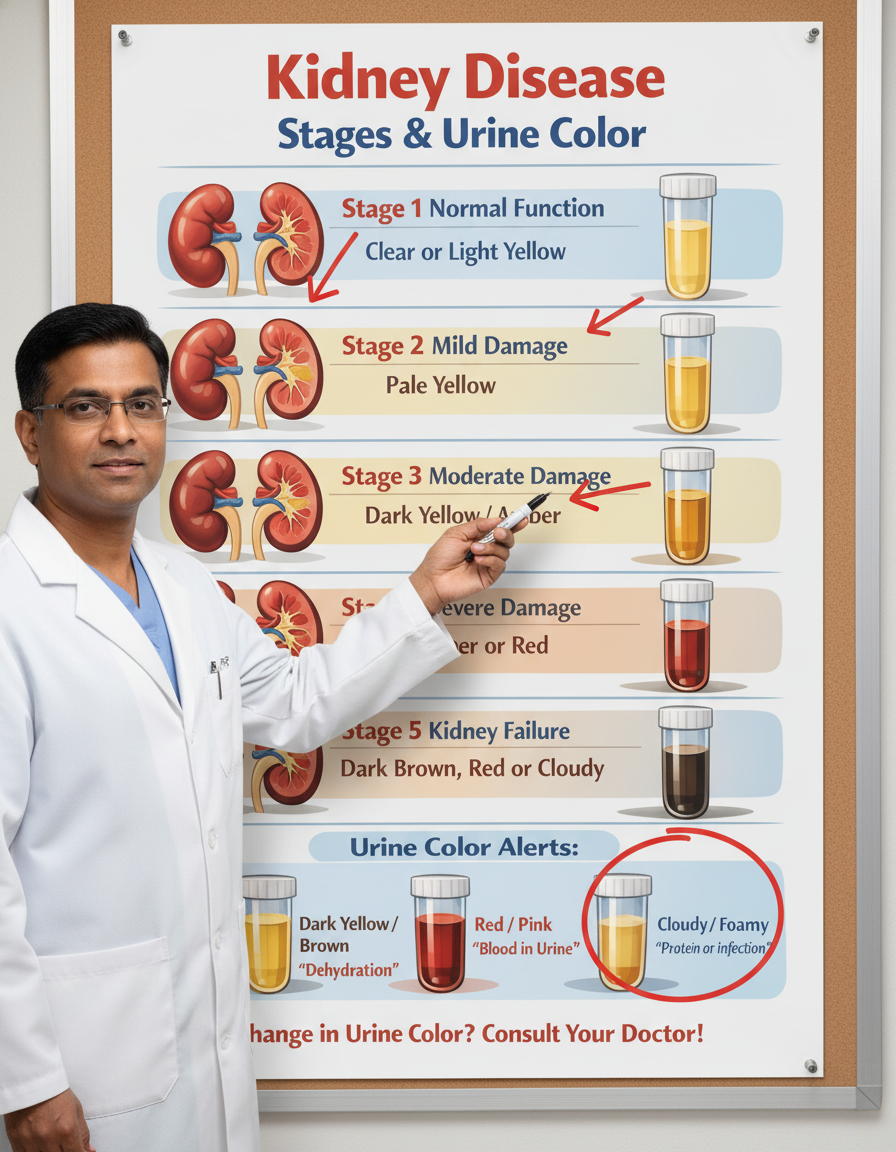
At this point, your eGFR is still riding high at 90 or above. Your kidneys are mostly doing their thing, but don’t get too comfortable. There might already be sneaky early signs of damage, like a tiny bit of protein in urine showing up on tests. Most folks? They feel absolutely normal, totally oblivious. And your urine color? Usually clear to a nice, light yellow – a good sign you’re hydrated and your body’s balancing fluids like a pro. But remember, ‘normal’ doesn’t always mean ‘no problem’.
Stage 2: Mild Kidney Function Loss – Still Sneaky, Still Dangerous
Now your eGFR has slipped a bit, landing between 60 and 89. The damage is still considered mild, and your kidneys are still mostly pulling their weight. You’re probably still walking around feeling like a million bucks, oblivious to the quiet battle going on inside. Your urine color? Still rocking that pale yellow, just like a healthy dude. Sure, a little dehydration can temporarily darken it, but typically, that’s not the red flag for the actual kidney changes happening at this stage.
Stage 3: Moderate Kidney Function Loss – The Warning Shots Begin!
Alright, this is where things get real. Your eGFR has taken a noticeable dive, now between 30-59 (we’re talking 3a and 3b here). Your kidneys are officially starting to choke on their job of waste removal. You might actually start feeling it now – that nagging fatigue, maybe some mild swelling. And your urine color? Get ready for darker yellow or even amber shades, a potential sign that waste is piling up or you’re just not drinking enough. Even big players like the National Kidney Foundation are pointing out that these