 By admin
 Let’s be real, facing cancer treatment? It’s a brutal marathon. We’re talking endless hours stuck at the hospital, those grinding, repeated visits, and the pure physical drain of sitting through IV infusions that drag on for 30 minutes, sometimes even an hour or more. For patients and their loved ones, that’s not just a medical procedure; it’s a gut punch of emotional stress, a wrecking ball to daily life, and a constant battle to juggle side effects with everything else. That bone-deep fatigue from those never-ending sessions? It’s no joke, and it absolutely crushes your quality of life during what’s already the toughest fight of your life. But hold up, there’s a new player in town.
Now, here’s the good news. England’s National Health Service (NHS) just dropped a bomb, and it’s aimed straight at easing some of that crushing burden. We’re talking about a revolutionary new method to deliver an already proven immunotherapy drug, slashing the time patients spend in treatment – dramatically. But seriously, what’s the real deal with this game-changing move? How does it fit into the bigger picture of cancer care, and what kind of future are we looking at? Buckle up, because we’re diving deep into the nitty-gritty, including why every healthcare pro is buzzing about this seismic shift.
So, what’s the big scoop? Back in 2025, the NHS in England kicked off a massive rollout: an injectable form of nivolumab, that powerhouse immunotherapy drug you might know as Opdivo. This isn’t just any shot; it’s a subcutaneous (right under the skin) formulation that lets qualified patients get their dose in a mind-blowing 3 to 5 minutes flat! Compare that to the old intravenous (IV) drip, which usually had you chained to a chair for 30 to a grueling 60 minutes. Yeah, you read that right – 3 to 5 minutes!
And get this: NHS England is shouting from the rooftops that this lightning-fast approach is now on the table for a staggering 15 different cancer types. We’re talking major players like skin cancer (melanoma), lung cancer, bowel (colorectal) cancer, kidney cancer, bladder cancer, oesophageal cancer, head and neck cancers, and more. Let’s be clear: this isn’t some brand-new miracle drug. Nope, it’s the same trusted medicine, just delivered in a way that blows the old IV method, which we’ve been stuck with for years, completely out of the water.
Talk about making history! This rollout officially crowns England as the first country in Europe to widely offer this game-changing injectable form through its national health service. Healthcare bigwigs are already forecasting massive wins, estimating it could initially benefit roughly 1,200 patients every single month. And that’s just the start – as this bad boy rolls out further, we’re talking about potentially helping thousands of lives annually. That’s huge, people!
So, how does this magic happen? Immunotherapy is basically like giving your body’s own immune system a serious pep talk, teaching it to finally spot and kick cancer cells to the curb more effectively. Nivolumab, the star of our show, is part of a squad known as checkpoint inhibitors. Its mission? To zero in on a protein called PD-1, found on your immune cells (the T-cells, your body’s personal army). By blocking those sneaky signals cancer cells use to play hide-and-seek, nivolumab unmasks them, letting your immune system go to work.
Now, let’s get one thing straight, no sugarcoating here: this isn’t some magic bullet that guarantees a win for every single patient. Responses are a wild card, swinging based on the specific cancer type, its stage, your individual health quirks, and whatever other treatments are in the mix. But make no mistake, years of hardcore research and real-world clinical experience prove that immunotherapy can be a total powerhouse in tackling certain cancers, often teaming up with surgery, chemotherapy, or radiation to deliver a knockout punch.
So, why all the hype around this injectable version? It’s pure, unadulterated convenience, folks. We’re not talking about a drug that suddenly works better – it’s about making life infinitely easier. Those drastically shorter administration times mean way less time glued to that clinic chair. And that, my friends, is a massive win: less stress for patients already going through hell, and it frees up healthcare teams to actually see more people. Everybody wins.
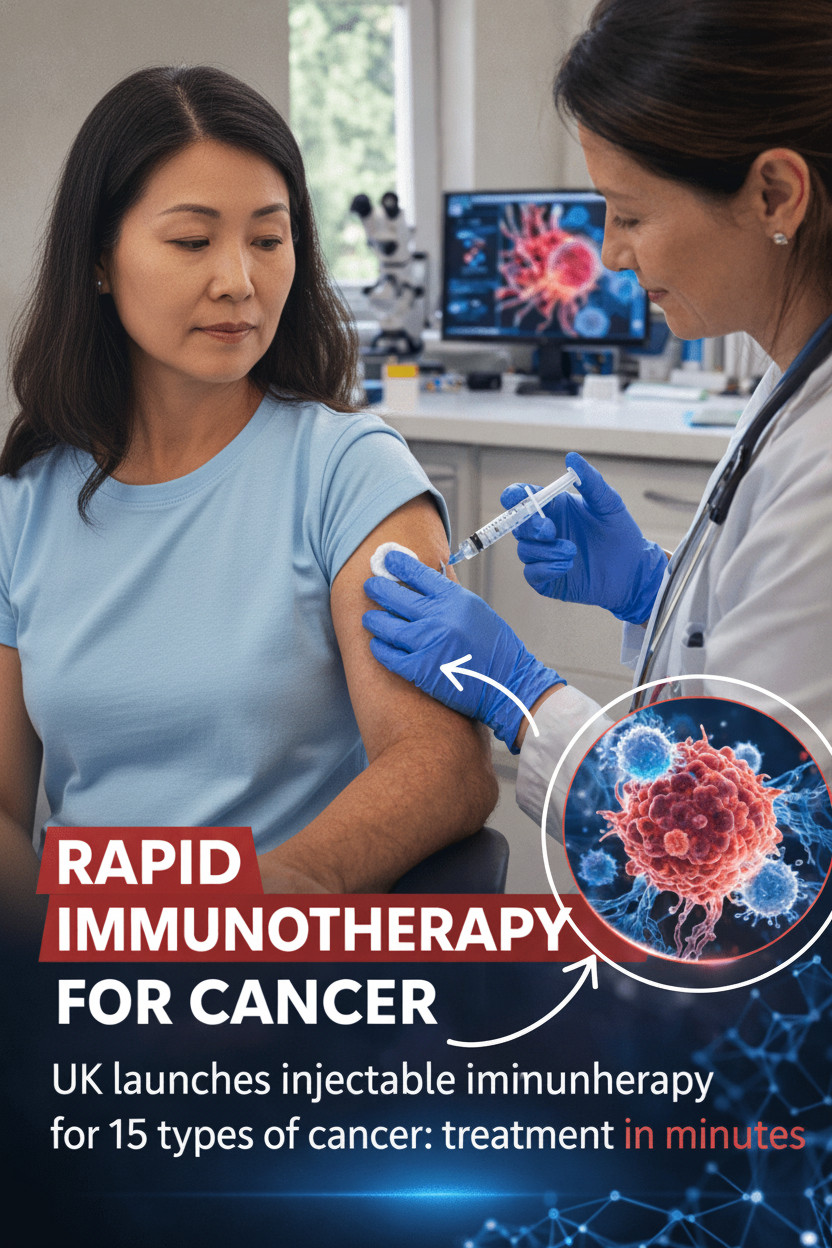
Seriously, ditching the old way for a quick jab offers real, tangible advantages that hit home where it counts – in your actual daily life.
Less Time Imprisoned in the Hospital or Clinic: This is huge. Patients finally get to ditch those soul-crushing long waits for IV setup and infusion. We’re talking about freeing up precious hours that can be reclaimed for actual living – whether it’s resting up, spending time with family, or even getting back to work. Imagine that freedom!
Fewer Disruptions to Your Life: With treatments popping up every 2 to 4 weeks (all depends on your specific battle plan), these lightning-fast visits make scheduling a breeze. That means less scrambling, less stress, and a serious cut in the brutal travel burden. Your life gets a little bit back.
A Lifeline for Our Healthcare Heroes: This isn’t just about patients; it’s a massive win for the system too. The NHS number crunchers are saying this move could save thousands of clinician hours every single year. Think about that – it’s a much-needed pressure release valve for overworked cancer units, potentially opening doors and improving access for countless others who desperately need care. It’s a win-win, hands down.
Actually Comfortable During the Process: Let’s be honest, no one likes needles. But subcutaneous injections? They’re generally quicker, less of a production, and for many, they just feel less invasive. It’s not a universal guarantee, everyone’s different, but for a lot of folks, this is a much smoother ride. A small detail, but a huge deal when you’re going through treatment.
But wait, there’s more to this story. We’re not just guessing here. Hard data from studies on similar subcutaneous formulations (think atezolizumab back in 2023, for example