 By admin
 You ever catch your aging parents or grandparents doing something a little… off? Maybe they’re shuffling more, seem a bit lost in thought, or their hands aren’t as steady as they used to be. It’s easy to just wave it off, right? “Oh, they’re just getting old,” or “Too much stress,” or some minor ache. But what if these little things start piling up, not just as isolated quirks, but as a giant red flag?
Listen up: When these subtle shifts become a pattern, they could be screaming about early changes in how blood flows to the brain. We’re talking about the sneaky beginnings of vascular dementia symptoms that mess with their thinking, their movement, and even their daily grind, turning simple tasks into a frustrating, heartbreaking battle. The good news, if there is any, is that catching these signals early means you can actually DO something. You can have real talks with the docs and explore support options before things go completely sideways. But here’s the kicker, the part that’ll probably drop your jaw: there’s ONE specific sign almost EVERYONE misses until it blows up in their face and completely derails daily life. We’re gonna spill the beans on that in a sec, so keep reading!
What the Heck Is Vascular Dementia and Why Should You Even Care About Early Signs?
Vascular dementia isn’t just some fancy medical term; it’s what happens when your brain cells get damaged because they’re not getting enough blood – often from tiny strokes or ongoing problems with those crucial blood vessels. According to the big guns like the Mayo Clinic and NHS, this beast is one of the most common forms of dementia, right after Alzheimer’s. But here’s the twist: unlike some other brain diseases, the changes with vascular dementia can hit in steps, often mixing up thinking problems with physical stuff you can actually see.
So, spotting these patterns early isn’t about freaking out and hitting the panic button. No, no, no. It’s about getting smart, understanding what’s really going down, so you can plan ahead and grab the right guidance. It’s about fighting back, not just watching things fall apart.
Alright, Listen Up! Here Are The 9 Sneaky Early Warning Signs of Vascular Dementia Almost Everyone Blows Off
This ain’t a doctor’s visit, but it’s a clear list of nine signs, pulled straight from solid medical insights. Use this to get informed, not to diagnose! If you see these, it’s time to call in the pros, not play doctor yourself.
- Brain’s running on slow-mo: conversations and decisions take FOREVER.
- Suddenly can’t get their act together: simple tasks become a monumental struggle.
- Feet start failing them: walking or balance issues they just blame on ‘getting old’.
- Mind keeps wandering off: can’t stay focused or pay attention.
- Mood swings from hell: sudden irritability or just total apathy.
- Forgetting stuff, but not like ‘all gone’: mild memory lapses, especially recent events.
- Hands or legs feeling like dead weight: weakness or numbness in limbs.
- Tongue-tied and fumbling for words: trouble finding the right words mid-sentence.
- Bladder acting up: unexpected urgency or control issues.
Each one might seem like nothing on its own, a fleeting ‘senior moment.’ But put ’em together, and they paint a much clearer, much scarier picture. Let’s break ’em down, one by one.
Sign #1: Brain’s Running on Slow-Mo
Ever notice your loved one taking an eternity to process what you just said? Or needing extra time, like, a LOT of extra time, to answer a simple question? This isn’t laziness, folks. It’s not them being deliberately slow. Reduced blood flow literally slows the brain’s processing speed. Research from the National Institute on Aging clearly shows this often pops up way earlier than major memory loss in vascular cases. It’s a red flag waving right in front of your face!
Sign #2: Suddenly Can’t Get Their Act Together
Familiar routines? Suddenly, they feel like climbing Mount Everest. Maybe following a recipe step-by-step becomes a total nightmare, or even sorting the mail turns into a baffling puzzle. These ‘executive-function’ challenges are classic early vascular dementia symptoms because they mess with the brain areas that absolutely depend on steady, strong circulation. But hold on, that’s not the whole story…
Sign #3: The BIG ONE: When Their Feet Start Failing Them (The Sign Most People Miss)
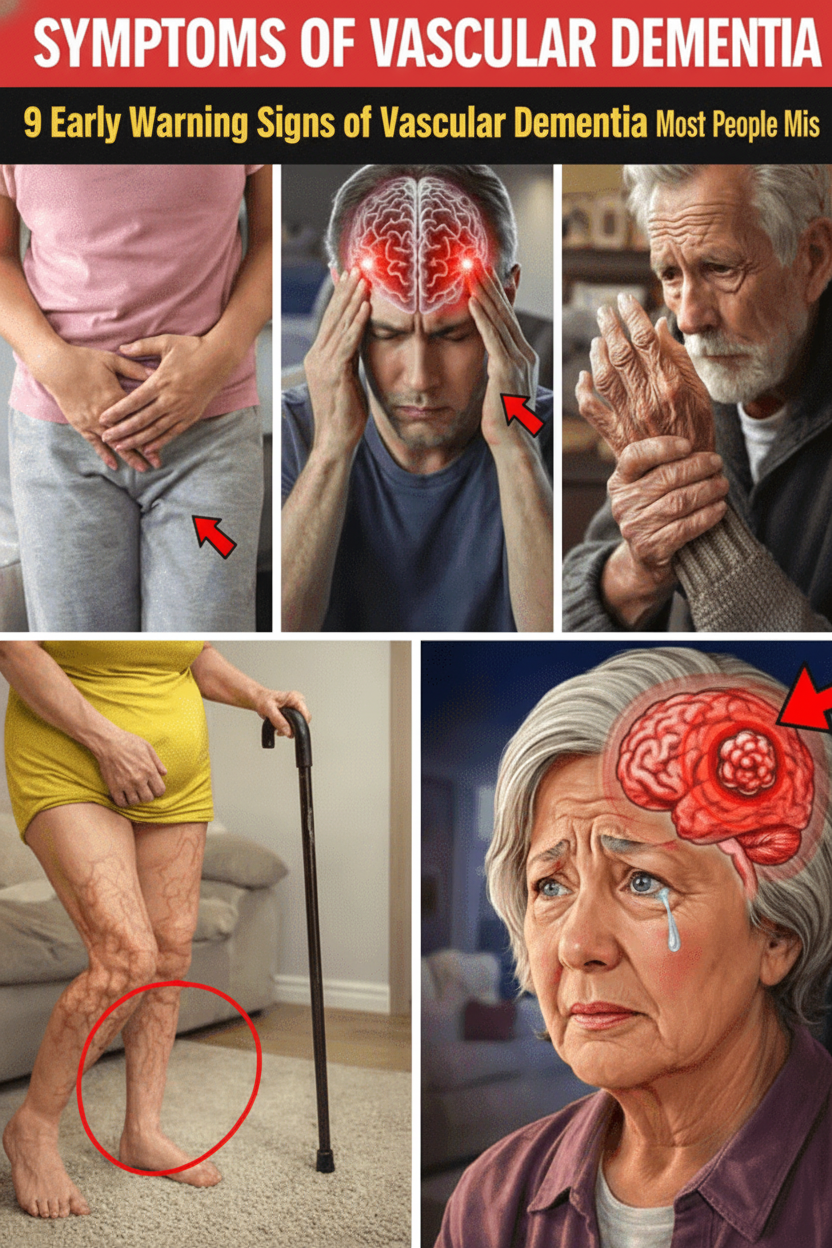
Alright, pay close attention. This is the sneak attack, the one that flies completely under the radar for most families: unsteady steps, a weird shuffling gait, or suddenly needing a cane like it’s their new best friend. People, families, doctors even – they frequently chalk it up to arthritis, weak knees, or just plain “old age.” WRONG! In vascular dementia, it can stem directly from damaged motor-control pathways in the brain. That image you might see with leg veins, a cane, and someone struggling to move? It highlights exactly why this one gets missed – until it totally crushes their independence. This sign is screaming for your attention!
Sign #4: Mind Keeps Wandering Off
Short bursts of confusion during a simple task? Zoning out mid-conversation, drifting off into space more often than usual? These aren’t just ‘senior moments’ or distractions. These concentration dips can actually be a direct reflection of tiny vessel changes impacting the brain’s attention centers. It’s like their brain signal keeps cutting out.
Sign #5: Mood Swings From Hell or Just… Flatlining
Ever notice unexplained irritability, withdrawal from activities they once loved, or a sudden, deep low mood? These mood shifts aren’t just a bad day; they can be a serious warning. Depression, in particular, is shockingly common early on because vascular changes can directly mess with the brain areas responsible for emotional regulation. It’s not just their personality changing, it’s their brain.
Sign #6: Forgetting Stuff, But Not Like ‘All Gone’
Yeah, we all forget recent conversations or misplace our keys sometimes. Happens to the best of us. But when it starts happening more frequently, and especially when it pairs up with these other signs we’re talking about? That deserves serious attention. In vascular dementia, these memory issues are often milder than what you see with Alzheimer’s at the very beginning. Don’t dismiss it as just ‘getting older’ if other flags are flying.
Sign #7: Hands or Legs Feeling Like Dead Weight
Is their grip strength fading? Does one side of their body just feel… slightly off? Those common illustrations showing hands and legs? They’re pointing to this exact issue. Small vessel damage can create focal weakness that feels like a persistent case of “pins and needles” or just plain clumsiness. This isn’t just a muscle cramp, it’s a brain signal problem.
Sign #8: Tongue-Tied and Fumbling for Words
Are they pausing often, struggling to pull out common words from their mental dictionary? Or mixing up terms completely mid-sentence? It’s like their brain is playing a cruel game of hide-and-seek with their vocabulary. This isn’t just a senior moment; it’s a communication breakdown that can be a clear sign of vascular dementia’s sneaky grip.