 By admin
 Waking up with a slightly bloated stomach or a dull ache in your lower back? Most of us just wave it off like it’s nothing – just another Monday, another year older, or that time of the month messing with us. Let’s be real, ladies, how many times have we blamed persistent gut weirdness or that general ‘off’ feeling on stress or that questionable takeout? We’re so busy pushing through, we don’t realize our body’s not just whispering; it’s practically screaming a much more serious message. This constant cycle of shrugging off vague discomfort? It’s a dangerous game, leading to a delay that could cost you big time in the long run. Are you really going to let that happen?
But hold up. What if those symptoms you’ve been told are “just part of being a woman” are actually the flashing red lights of one of the trickiest health battles out there? Forget the old wives’ tales about a “silent killer.” In this no-nonsense guide, we’re ripping through that myth to pinpoint 6 specific warning signs of ovarian cancer that get missed way too often. By the time you’re done reading this, you’ll be armed with a critical “2-week rule” that’ll help you tell the difference between everyday bloat and something that needs a doctor’s eye, like, yesterday. Trust us, this simple tool? It could literally change everything.
The “Silent Killer” Myth vs. Reality
For years, ovarian cancer got stuck with the grim nickname “silent killer.” The story went that it wouldn’t show its face until it was already way too late. Well, let’s set the record straight: that’s a load of bull, actually.
New research has blown that myth out of the water. Turns out, most women *do* experience early signs. The problem? These signs are often so sneaky and common that we just brush them off, blaming them on getting older or a grumpy gut (hello, IBS!).
The BEAT Acronym: Your Quick Check
To keep your guard up and stay sharp, health pros have cooked up a super easy memory trick. It’s called BEAT, and it’s your personal alarm system:
- Bloating that is persistent.
- Eating less and feeling full quickly.
- Abdominal or pelvic pain.
- Talk to your doctor.
1. Persistent Bloating That Doesn’t “Go Away”
Alright, let’s be real. We’ve all felt that post-pizza bloat or the monthly belly puff. Totally normal, right? But the bloating linked to ovarian cancer? That’s a whole different beast. It’s not just a temporary thing; it’s persistent. And here’s the kicker, the part you absolutely cannot ignore…
If your stomach feels swollen, tight, or like it’s been inflated like a balloon most days for more than two or three weeks straight, it’s not just that extra slice of cake. This happens because fluid (doctors call it ascites) can start building up in your belly, or a growing mass might be pushing on everything inside. If you suddenly find your favorite jeans are cutting you in half but you haven’t changed a thing about your diet, pay attention, seriously.
2. Feeling Full Quickly (Early Satiety)
Ever sat down for a meal, barely touched your food, and suddenly felt like you just ate a Thanksgiving feast? That weird sensation is called “early satiety.” And here’s the cold, hard truth of why it might be happening…
When there’s a lump or mass chilling out in your pelvic region, it can literally squish your stomach or intestines. Plus, that same fluid buildup that’s causing the bloat can make your stomach feel crowded, sending signals to your brain that you’re full way before you’ve even made a dent in your plate. It’s not in your head; it’s your body giving you a nudge.
3. Frequent or Urgent Need to Urinate
If you suddenly find yourself practically living in the bathroom, running to pee every hour, or if that “gotta go NOW” urge hits you with full-blown panic, don’t just shrug it off as a weak bladder or another pesky UTI. Think again.
Because your ovaries are practically roommates with your bladder, any enlargement in that pelvic area can put direct, unwelcome pressure on it. This means your bladder can’t hold as much, making you feel like you have to “go” even when there’s barely anything in there. It’s your body’s way of saying something’s intruding.
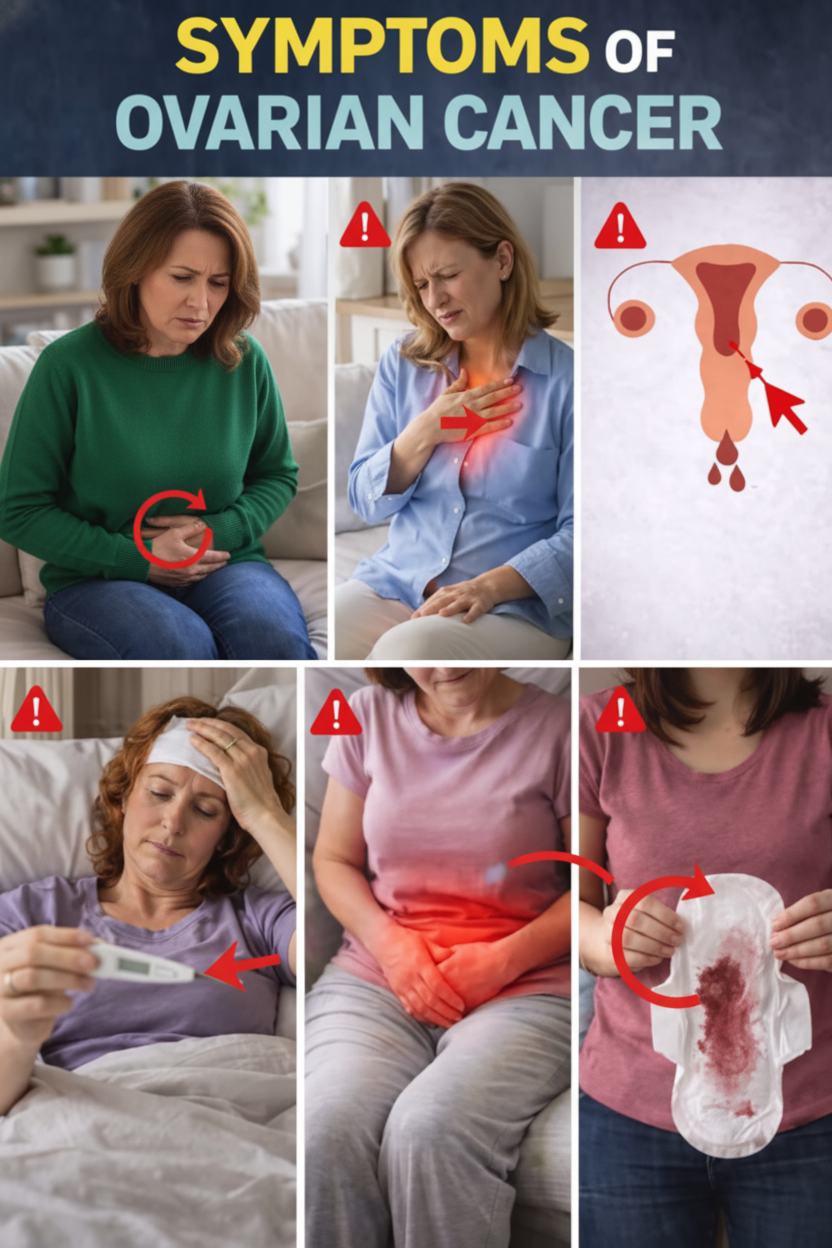
Ovarian Cancer Signs vs. Common Conditions
Let’s break it down so you can tell the difference. Don’t get caught guessing!
| Symptom | Ovarian Cancer | IBS / Digestive Issues |
|---|---|---|
| Bloating | Persistent & Progressive | Comes and goes with food |
| Pain | Constant dull ache/pressure | Sharp, intermittent cramps |
| Urination | Frequent & Urgent | Usually normal |
| Appetite | Feeling full after 2-3 bites | Varies based on hunger |
4. Persistent Pelvic or Abdominal Pain
Sure, we all get the occasional cramp – it’s part of the deal. But if you’re feeling a constant, nagging dull ache, a heavy pressure, or a weird sense of fullness in your lower belly or hips that just won’t quit, consider that a massive red flag. This is way more than just a typical cramp.
Some women describe it as a “pulling” sensation or that unsettling feeling like something is taking up space where it absolutely shouldn’t be. If this new discomfort has set up camp for weeks and isn’t packing its bags, it’s time to get a professional to take a good, hard look. No excuses.
5. Changes in Bowel Habits
Suddenly battling with constipation, diarrhea, or a complete flip in how often you’re hitting the bathroom? These aren’t just random gut feelings. While we usually point fingers at our diet or stress for these issues, a mass in your pelvis can physically mess with your digestive system’s rhythm. And here’s the tricky part…
Many women get slapped with an Irritable Bowel Syndrome (IBS) diagnosis first, which can delay the real deal. If you’re over 50 and suddenly developing IBS-like symptoms out of nowhere, experts are shouting this from the rooftops: demand a pelvic check too. Don’t let them dismiss you.
6. Unexplained Fatigue
Look, we’re all tired, especially in today’s crazy world. But the kind of fatigue that screams “ovarian cancer” is on a whole other level. We’re talking about an overwhelming, bone-deep exhaustion that no amount of sleep, no matter how good, can fix. It’s not just feeling sleepy; it’s feeling utterly drained.
This happens because your body is basically in overdrive, redirecting all its precious energy to fight off the cellular changes that are silently happening inside. It’s a battle you didn’t ask for, and it’s sucking the life out of you.
The “2-Week Rule”: When to See a Doctor
The key to ear
Whew! That was a lot to take in, but crucial for your health. Remember, your body talks to you; you just need to listen. Don’t ever feel like you’re overreacting when it comes to your health. If something feels off, get it checked out. Your life could depend on it.
Stay informed, stay empowered. And for more vital health insights and tips that could genuinely make a difference, don’t just stop here. Dive deeper into our other articles right here on dogpjs.com. Your well-being is worth every click!