 By admin
 Many people brush their teeth religiously, scrub like their life depends on it, yet still deal with stubborn bad breath that lingers no matter how careful they are with their oral hygiene routine. Sound familiar? This frustrating issue can absolutely tank your confidence during conversations, work meetings, or even simple daily interactions, making you feel self-conscious and constantly reaching for mints or gum like it’s your last hope.
But here’s the kicker, the dirty little secret: In many cases, the real culprit isn’t your teeth or gums at all, but tiny white or yellowish particles that form in the back of your throat called tonsil stones. Yeah, you heard that right – *stones* in your tonsils! But what if there was more to the story about these little formations that could help you finally understand and manage what’s been stinking up your life?
What Exactly Are Tonsil Stones?
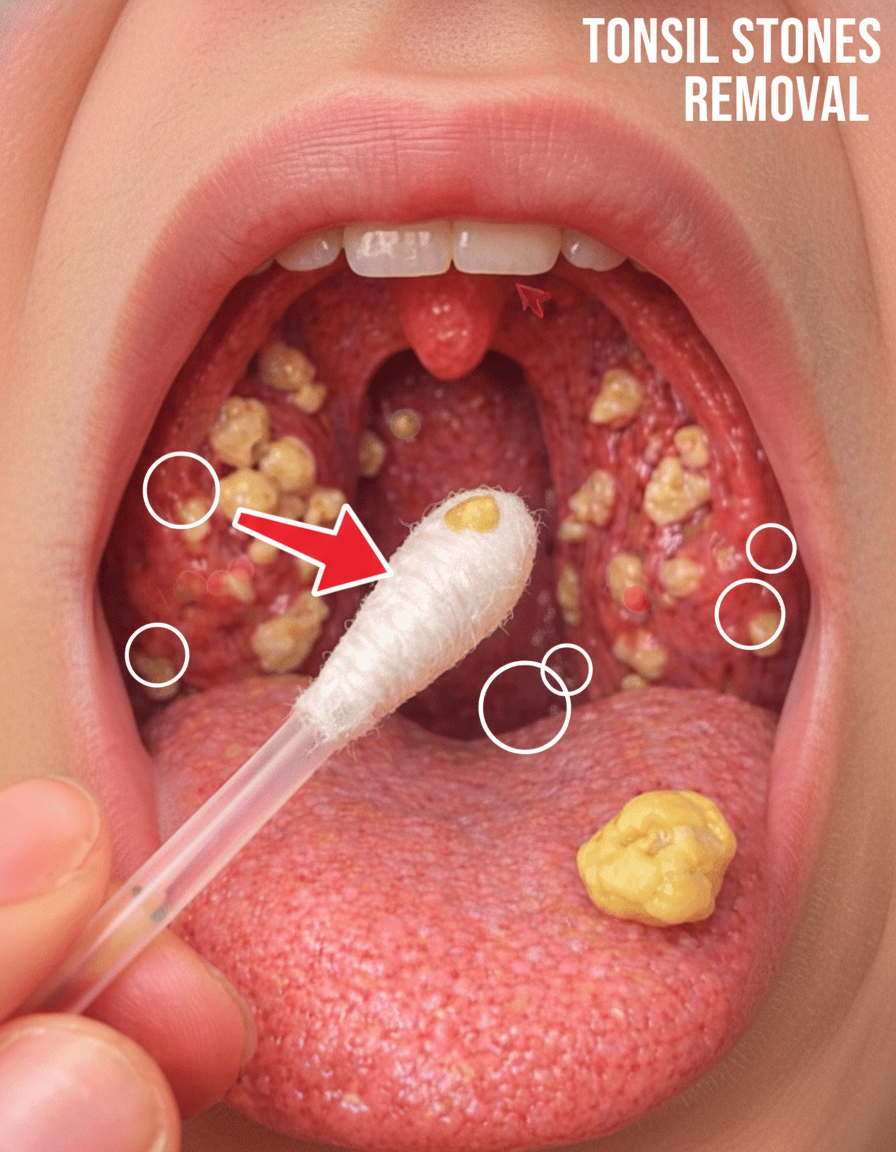
So, what *are* these nasty little squatters? Tonsil stones, also known as tonsilloliths, are small, hardened deposits that can appear as white or yellowish bumps nestled in the natural crevices of your tonsils. Don’t get it twisted; they aren’t actual stones like you’d find outside. Instead, they form when bits of food, dead cells, mucus, and bacteria get trapped and slowly calcify over time – basically, a gross cocktail of gunk hardening into tiny, foul nuggets.
These tiny lumps can range from barely visible specks to larger, more noticeable clusters that practically scream for attention. Many people first spot them when looking in the mirror, shining a flashlight into their gaping maw, or when one dislodges on its own – often with a surprising, disgusting plop. The image you often see online — a cotton swab gently lifting one away — shows exactly how they sit right in the tonsil tissue, just waiting to cause trouble. Health organizations such as the Cleveland Clinic aren’t shy about noting that tonsil stones are surprisingly common, especially among adults with deeper tonsil pockets. So, you’re not alone in this stinky struggle!
How Do Tonsil Stones Actually Form?
But here’s where it gets really interesting, and a little bit gross. Your tonsils act like natural bouncers for your immune system, trapping debris to keep you healthy. Think of them as tiny security guards. The problem starts when that debris isn’t cleared out efficiently; it builds up and hardens with minerals from your saliva, essentially becoming a tiny, stinky time capsule. Common contributing factors that help these little devils form include chronic post-nasal drip (that annoying drip down your throat), dehydration (not drinking enough water), or even naturally irregular tonsil surfaces that offer perfect hideouts.
Research shared by reputable medical sources indicates that people who experience frequent throat irritation or have larger tonsils tend to see these formations more often. It’s like their tonsils are just begging for trouble! And sure, poor oral hygiene can play a supporting role in this whole drama, but trust us, it’s not the only piece of this foul-smelling puzzle.
Recognizing the Signs That Tonsil Stones May Be Present
Now, you might be wondering if this is what’s been happening in your own throat, causing that persistent stench. The most noticeable, and often most embarrassing, clue is usually persistent bad breath that brushing and mouthwash never fully fix. We’re talking about that death-defying dragon breath that just won’t quit! Why? Because the bacteria trapped inside the stones produce sulfur compounds that create that strong, lingering odor – it’s a chemical warfare happening right in your mouth.
Other subtle signs can include:
- A feeling like something is stuck at the back of your throat – a phantom lump that just won’t go away.
- Mild irritation or a scratchy sensation when swallowing – like sandpaper is gently caressing your throat.
- Occasional coughing or the need to clear your throat – your body trying to dislodge the invaders.
- Visible white or yellow spots when you shine a light and look carefully – time to play detective with a flashlight!
But that’s not all. Here’s the kicker: Some lucky (or unlucky, depending on how you look at it) people have no obvious symptoms at all and only discover tonsil stones during a routine dental visit or by sheer chance when one pops out on its own. Sneaky little things, aren’t they?
Why These Stones Often Lead to Ongoing Bad Breath
The connection between tonsil stones and bad breath is straightforward once you understand the science, and trust us, it’s not pretty. The trapped material within these stones creates an ideal environment for anaerobic bacteria – those nasty bugs that thrive in oxygen-free zones. These bacteria get to work, breaking down proteins and releasing volatile sulfur compounds — the exact same ones responsible for that utterly unpleasant, rotten-egg smell that sends people running for cover.
Unlike bad breath from last night’s garlic feast or just plain poor brushing, this type tends to return quickly, like a bad penny, even after thorough cleaning. It’s a relentless assault on your fresh breath! Many people describe it as a constant worry that affects their social comfort far more than they ever expected. It’s not just bad breath; it’s a social assassin that chips away at your confidence.
Simple Daily Habits That May Help Support Better Oral Comfort
Alright, don’t despair, warrior! The good news is there are easy steps you can start today that many people find incredibly helpful for keeping their throat feeling fresher and less like a bacterial breeding ground. These aren’t miracle fixes that will banish them forever with a single wave of a wand, but consistent habits can make a real difference in how your mouth feels overall. Here’s a straightforward routine you can try right away to start fighting back:
- Chug that water: Drink plenty of water throughout the day to help flush debris before it settles and hardens into those nasty stones. Hydration is your first line of defense!
- Brush like a pro: Gently brush your tongue and the back of your throat when you brush your teeth. Don’t just focus on your pearly whites; get those hidden areas!
- Gargle like your grandma: Mix half a teaspoon of salt in warm water and gargle for 30–60 seconds a few times a week. This simple trick can work wonders in dislodging debris.
- Water flosser warrior: Use a water flosser on a low setting to gently rinse the tonsil area if you feel comfortable doing so. It’s like a mini power wash for your throat!
But wait — there’s more you can layer on for even better results. Why stop at good when you can aim for great, right?
Everyday Prevention Tips Worth Building Into Your Routine
Prevention becomes much easier when you turn a few key habits into autopilot – make them part of your daily grind without even thinking about it. Consider adding these to your daily life to keep those tonsil stones at bay and your breath smelling fresh:
- Scrape that tongue: Scrape your tongue every morning and night to remove extra bacteria that can contribute to bad breath and, yes, tonsil stone formation. Don’t skip this crucial step!
You’ve got this! By understanding what tonsil stones are and taking these simple, consistent steps, you can significantly improve your oral comfort and finally kick that persistent bad breath to the curb. Your confidence will thank you, and so will everyone you talk to!
***
Hey there, awesome reader! We hope this deep dive into the world of tonsil stones has given you the clarity and the tools you need to tackle that stubborn bad breath head-on. Your health and comfort are our top priority, and we love bringing you content that truly makes a difference in your daily life. Don’t stop here – we’ve got a treasure trove of other articles packed with tips and insights to help you live your healthiest, happiest life. Go ahead, explore more of our content on Herbal Medicine, Home Tips, Garden Tips, and Healthy Life. Keep learning, keep growing, and keep that breath fresh!