 By admin
 WAKE UP CALL: 9 Early Warning Signs of Cervical Cancer Most Women BLOW OFF – What You ABSOLUTELY Need to Watch For!
Listen up, ladies! How many times have you just brushed off those weird body changes as ‘stress,’ ‘hormones,’ or just ‘getting old’? You’re not alone, but guess what? That nagging discomfort, an odd spotting, or a funky discharge can feel too minor to even bring up at your next check-up. But here’s the kicker: these subtle signals could be screaming a warning you absolutely cannot afford to ignore, pointing to something serious that needs your attention, and fast!
Now, for some good news that should give you a fighting chance: cervical cancer is highly preventable if we catch it early with regular screenings. Knowing what to look for isn’t just smart; it’s your superpower to stay in control of your health. But there’s one shocking detail most women totally miss that could change everything in catching these shifts early. Are you ready to hear it?
Understanding Cervical Cancer and Why Awareness Matters – Seriously!
Cervical cancer kicks off in the cells of your cervix – that’s the lower part of your uterus connecting to your vagina. According to the big guns like the American Cancer Society and Mayo Clinic, it’s often tied to a stubborn HPV infection. But here’s the scary part: many women don’t even get symptoms until this thing has really dug its heels in. That’s why regular Pap tests and HPV screenings aren’t just good advice; they are your gold standard, your frontline defense for early detection.
Research isn’t just talking; it’s shouting: when abnormalities are found and dealt with ASAP, the outcomes shoot through the roof! Still, knowing these common warning signs can arm you with the power to speak up – and speak up *sooner* – during your next doctor’s visit. Don’t be shy; your life could literally depend on it.
The 9 Early Warning Signs Most Women Overlook – Don’t Be One of Them!
Here are nine red flags that top health organizations like the Mayo Clinic and the Centers for Disease Control and Prevention are highlighting as potential indicators. Remember, these can also be from other common, less serious conditions, so don’t go diagnosing yourself into a panic! Only your healthcare provider can really tell you what’s going down. But knowing these means you’re informed, not ignored.
1. Abnormal Vaginal Bleeding: Not Just a ‘Bad Period’
Bleeding after sex, spotting between periods, or any bleeding after menopause? This is one of the most common signs women report. It might be light, or it might be heavier than usual. Many women just shrug it off as ‘irregular cycles’ or ‘birth control blues,’ but persistent changes? That’s a straight-up signal that demands your attention.
2. Unusual Vaginal Discharge: When ‘Normal’ Goes Sideways
Got watery, bloody, or pale discharge popping up between periods or after menopause? That’s a potential game-changer. If it smells foul – and we mean *foul* – or seems way heavier than your usual, it’s absolutely worth noting. The Mayo Clinic points out this can happen when cells start shedding in ways they shouldn’t.
3. Pain During or After Intercourse: Sex Should NOT Hurt!
Discomfort or downright pain during sex, sometimes called dyspareunia, is another major clue. It might feel deep in your pelvis and can even happen when everything felt totally normal before. If it’s happening, don’t just grin and bear it; get it checked out!
4. Persistent Pelvic Pain or Pressure: More Than Just ‘Bloating’
That dull ache, pressure, or those sharp twinges in your lower abdomen or pelvis that just won’t quit, even after your cycle? It’s so easy to dismiss. But studies show this often shows its face when changes are starting to mess with nearby tissues. Don’t let it become your new normal.
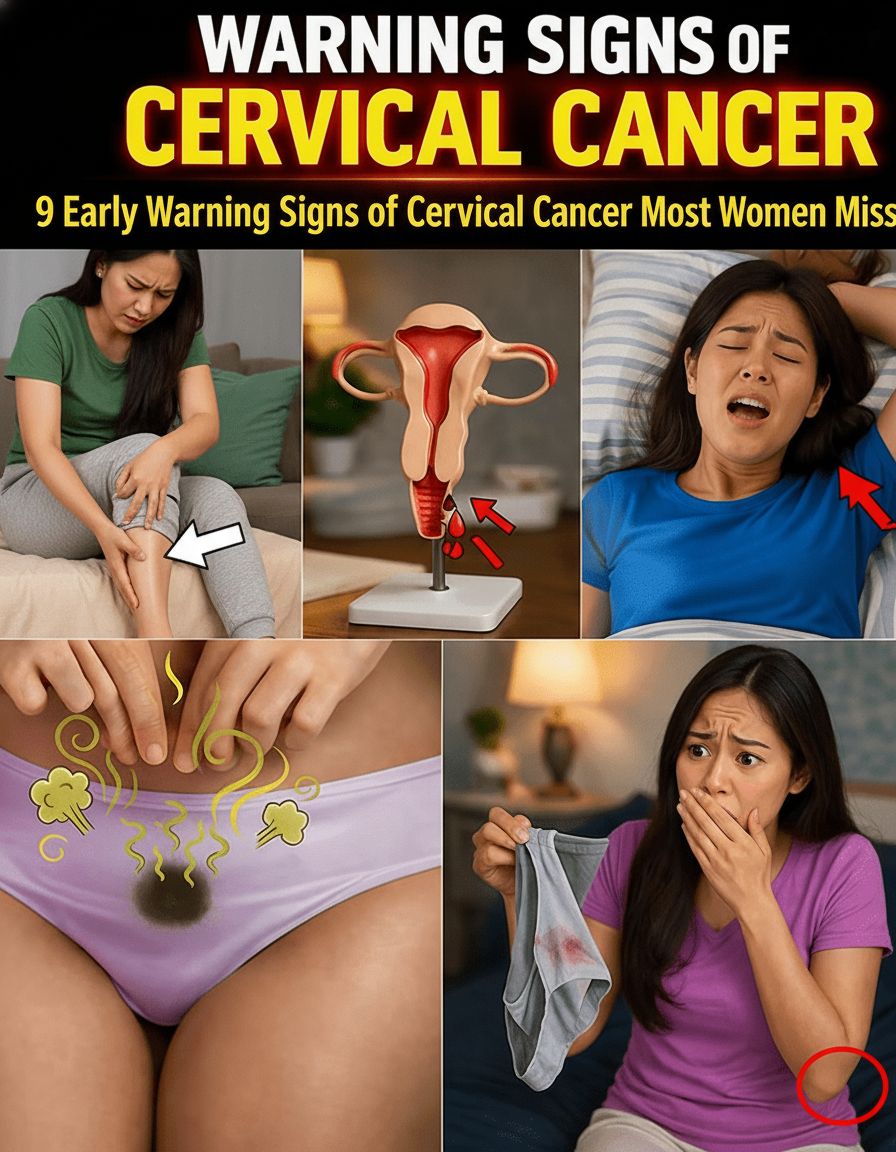
5. Lower Back or Leg Pain: When It Spreads, Pay Attention!
Unexplained pain that shoots down to your lower back or causes swelling in one or both legs? This can sometimes be linked to more advanced stages. Many women first notice it when they’ve been sitting or standing for a long haul. If your back or legs are suddenly screaming at you without a reason, listen up.
6. Foul-Smelling Discharge: Beyond the Usual ‘Funk’
A strong or just plain *weird* odor hanging around with your discharge can happen when tissue changes lead to secondary effects. This isn’t your typical yeast infection or bacterial vaginitis; this is often a persistent, lingering smell that no amount of hygiene seems to banish. If it’s different, it’s significant.
7. Heavier or Longer Menstrual Periods: Your Cycle’s SOS
Periods that suddenly become a deluge, last way longer than usual, or come with big, alarming clots? These could be pointing to changes in your cervix. Pro tip: tracking your cycle with an app isn’t just for predicting ovulation; it’s your personal detective for spotting these crucial patterns.
8. Pain or Discomfort in the Shoulder or Upper Body: A Hidden Link?
Some women actually report pain that feels like it’s coming from their shoulders or upper back – what doctors call ‘referred pain.’ While it’s less common, it can pop up alongside those pelvic symptoms. If you’ve got weird aches up top and something’s off down below, make sure your doctor knows about both.
9. Unexplained Fatigue or Changes in Bathroom Habits: Your Body’s Silent Cry
Feeling unusually wiped out, or noticing you’re peeing more often, feeling pain when you pee, or even having bowel changes? These can happen as your body tries to cope. It’s so easy to blame these on your crazy schedule or a new diet. But if it’s new and persistent, it’s worth a closer look.
But hold on, that’s not even the full story – many of these signs overlap with far more common, less serious issues like fibroids or infections. And that, my friends, is *exactly* why getting a professional evaluation isn’t just a suggestion; it’s a non-negotiable must-do!
When Should You See Your Doctor? The Answer is NOW!
Don’t you dare wait for all nine of these signs to show up before you act. If you notice even one or two that just feel plain *wrong* or out of the ordinary for *your* body, pick up the phone and schedule that visit! Here’s a quick, actionable checklist you can use right now – no excuses!
- Grab a simple journal or a phone app and track any bleeding or discharge for two full cycles. Get the data!
- Note your pain levels on a 1–10 scale and when they occur (during sex, daily activities, etc.). Be specific!
- Walk into your appointment armed with a list of all your symptoms and every question you have. Don’t forget anything!
- Ask about your last Pap or HPV test date and whether you’re due for another. Stay on top of your screenings!
Your health is your most valuable asset, and being proactive is the best way to protect it. Don’t let fear or dismissal keep you from getting the answers you need. You deserve to feel your best, and we’re here to help you stay informed every step of the way. Keep exploring our site for more vital health insights!