 By admin
 Let’s be real, folks. That quiet ache, that sneaky stiffness… it’s a pain in the butt, literally. You wake up, swing your legs out of bed, and BAM! There it is again. That stiff, aching feeling in your knees or feet that makes you pause before standing up straight. Maybe you’ve even tried playing it cool, hiding it from family, pretending everything is A-OK while secretly avoiding stairs or those long walks you used to love. It’s frustrating, and honestly, a little soul-crushing.
But here’s the part most people don’t quite grasp, the juicy bit: some of those “natural remedies” floating around online? They might not be the miracle cure-alls they claim to be. And one popular one might just shock you by the time you hit the end of this article. So buckle up, because we’re about to spill the tea on rosemary for pain relief.
What Is Rosemary and Why Is It Trending for Pain Relief?
Rosemary. You know it, you love it – probably in your roasted potatoes or a fancy tea. It’s a common kitchen herb, no big deal, right? But lately, this humble herb has been making waves online, being hyped up as a “natural morphine.”
Now, let’s hit the brakes right here. “Natural morphine”? That phrase packs a punch, doesn’t it? Almost *too* powerful. And that, my friends, is exactly why it’s gone viral. But the real truth? It’s far more grounded, and frankly, much safer to understand than some wild internet claim.
What Science Actually Says
Research suggests that rosemary contains natural compounds that are pretty neat. We’re talking about stuff like:
- Rosmarinic acid
- Carnosic acid
- Essential oils such as cineole
These compounds are known for some gentle, supportive actions:
- Mild anti-inflammatory effects
- Antioxidant support
- Circulation-boosting properties
But here’s the absolute key point, the one you *really* need to remember:
👉 These are gentle, supportive effects, like a friendly pat on the back. They are NOT strong, pain-blocking effects like the heavy-hitters you get from prescription medications. Don’t get it twisted.
Can Rosemary Really Help With Joint or Muscle Discomfort?
Let’s talk honestly, no BS, just like your favorite family doctor would. If you’re dealing with that occasional soreness – you know, after a long day of walking, digging in the garden, or standing on your feet for too long… then yeah,
👉 Rosemary *may* offer some comfort. It’s not a miracle, but it might just take the edge off.
Potential benefits
Here’s how this little herb might actually lend a hand:
- Helps relax tight muscles, giving them a bit of a break.
- Supports blood flow in those tired legs, helping them feel less sluggish.
- Provides a warming, soothing sensation, like a cozy blanket for your aches.
- May reduce mild inflammation, calming things down a notch.
But here’s the part many flashy online posts conveniently leave out, the inconvenient truth:
What it does NOT do
- It does not repair damaged joints. Sorry, no magic fix here.
- It does not rebuild cartilage. Your body doesn’t work that way with an herb.
- It does not address underlying conditions like arthritis. That’s a job for medical pros.
And this is crucial, people! Because relying *only* on home remedies while ignoring persistent pain can seriously delay the proper care you need. Don’t play games with your health.
The “Foot Soak with Rosemary” Trend: Helpful or Hype?
You’ve probably seen it all over your feed. A beautiful bowl of warm water, fresh rosemary sprigs, and tired feet soaking peacefully. It looks absolutely divine, right? Super relaxing. And to be fair…
👉 It *can* be. It’s not totally useless, just don’t expect miracles.
What a rosemary foot soak can do
Here’s what you *can* realistically expect from a good rosemary foot soak:
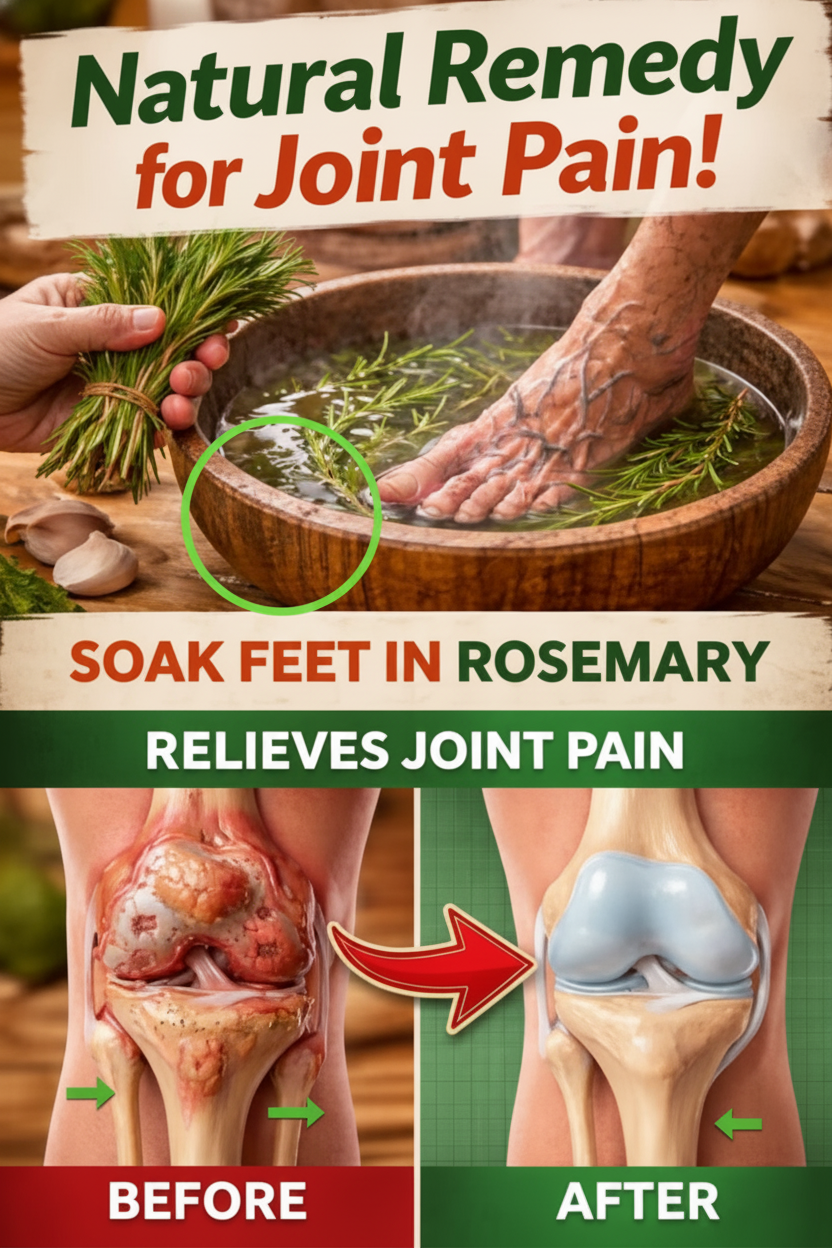
- Relax muscles after a long day – pure bliss for your overworked feet.
- Improve temporary circulation, giving those weary soles a little boost.
- Reduce feelings of fatigue in the feet, making them feel lighter.
- Provide a calming sensory experience – a nice little treat for your senses.
But let’s keep expectations real, okay? Don’t let the internet hype trick you.
What it cannot do
- It cannot “heal” joints. Your feet aren’t going to suddenly become twenty again.
- It cannot remove uric acid buildup. That’s a medical issue, not a spa treatment.
- It cannot reverse long-term joint wear. Time marches on, and so does wear and tear.
Here’s the unfiltered truth: It’s a comfort routine, a nice little self-care moment, not a medical solution for serious problems. Period.
Rosemary vs. Common Pain Relief Options
Let’s cut through the noise and break it down in a simple, no-nonsense way so you know exactly what you’re dealing with:
| Option | How It Works | Best For | Limitations |
|---|---|---|---|
| Rosemary (tea, oil, soak) | Mild anti-inflammatory, circulation support | Light discomfort, relaxation | Limited strength |
| Over-the-counter creams | Local numbing or anti-inflammatory | Moderate muscle or joint pain | Temporary relief |
| Prescribed medications | Target pain pathways in the body | Chronic or severe pain | Requires supervision |
The takeaway
The moral of the story? Rosemary can totally be a part of your daily routine – a nice little helper. But don’t you dare ditch treatments recommended by your healthcare provider for it. Your health isn’t a game, folks.
How to Use Rosemary Safely at Home
If you’re still curious and want to give rosemary for natural pain relief a shot, here are some simple and safe ways to start, without messing things up:
-
Rosemary tea
- Add 1 teaspoon of dried rosemary to hot water.
- Let it steep for 5 to 10 minutes.
- Drink once daily. Easy peasy.
-
Foot soak
- Warm water in a basin – nice and comfy.
- Add fresh or dried rosemary.
- Soak feet for 15 to 20 minutes. Ahhh, relaxation!
-
Gentle massage
- Use diluted rosemary oil – don’t go full strength!
- Apply to sore areas.
- Massage lightly for circulation. Feel that warmth?
But wait… hold up! This is important, so listen closely.
Safety reminders
- Avoid using concentrated oil directly on your skin. That’s just asking for irritation or a rash.
- Stop immediately if irritation occurs. Your body is telling you something!
- Consult a doctor if you have chronic conditions. For crying out loud, talk to a professional first!
Why “Natural Morphine” Is a Misleading Term
This is where we need to be crystal clear, no room for confusion. Calling rosemary “natural morphine” is not just inaccurate; it’s flat-out wrong and irresponsible. Here’s why:
- Morphine is a powerful opioid, a serious drug used in controlled medical settings for severe pain.
- It acts directly on the brain to block pain signals – a heavy-duty mechanism.
- Rosemary does not have this mechanism. Not even close. It’s like comparing a bicycle to a rocket ship.
Using that kind of sensational label can create wildly false expectations. And worse…
It may lead some people to ignore symptoms that desperately need real medical attention, thinking a simple herb will solve everything. Don’t fall for the hype.
Actionable Tips to Support Joint Comfort Naturally
Now, here’s the part that truly matters, the real gold. If you want to feel better day-in and day-out, ditch the quick fixes and focus on these solid habits. These are the daily actions that make a *real* impact, not just empty promises:
Daily habits that mak
Thanks for sticking with us and getting the real scoop on rosemary! We’re always here to give you the honest truth about your health. Don’t forget to check out more of our no-nonsense articles and practical tips right here on dogpjs.com. Your well-being is our top priority, and we’re committed to delivering content that’s not just informative, but genuinely helpful. Keep thriving!
”
}
“`