 By admin
 Your Nerves Are Screaming: 15 Red Flags of Nerve Damage You’d Be CRAZY To Ignore!
Listen up, folks! Nerve damage, what the docs call neuropathy, often sneaks in quiet as a mouse. Most people? They just brush off those first weird feelings, blaming it on “getting old,” too much stress, bad circulation, or just some minor aches. But here’s the brutal truth: when those crucial peripheral nerves – especially in your hands, feet, legs, or arms – start acting up, ignoring those early warnings is like playing with fire. You’re letting the damage fester, sometimes until it’s permanent, leading to nasty complications like foot ulcers, nasty falls, or a lifetime of nagging pain. We’re laying out 15 of the most common, yet frequently overlooked, early-to-mid-stage signs of nerve damage right here. The more of these red flags you’re waving – and the longer they stick around – the faster you need to get your backside checked out. Seriously, don’t mess around with this.
Sensory (Feeling-Related) Signs
Tingling or “Pins & Needles” Sensation
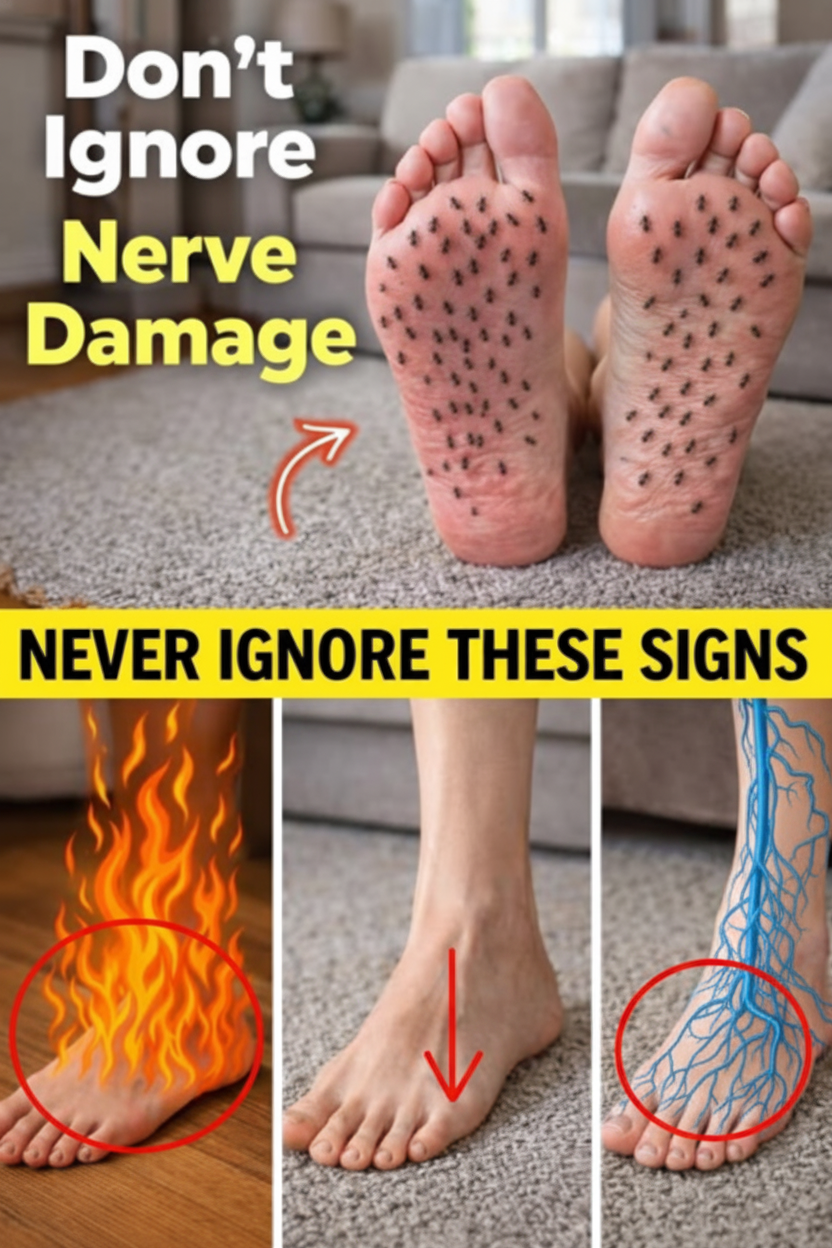
Ever feel like a thousand tiny needles are dancing on your skin, especially in your feet, toes, hands, or fingers? It often starts mild, just coming and going. You might think, “Oh, I just slept on my arm/leg wrong,” or “I’ve been sitting too long.” WRONG. That’s your nerves trying to get your attention.
Numbness or Reduced Sensation
Feeling like part of your foot or hand is totally “asleep,” or you can’t even feel a light touch, like your socks or the texture of the floor? Don’t just shrug it off as “I’m just tired” or “bad circulation.” Your sensory system is shutting down, and that’s a major warning sign.
Burning, Electric, or Shooting Pain
When sharp, electric-like jolts or a constant, fiery burn hits you – often worse at night or when you’re trying to relax – that’s not just a “muscle cramp.” That’s your nerves screaming for help. Don’t label it “just nerve pain” and move on; it’s a symptom, not a diagnosis.
Hypersensitivity (Allodynia)
Does a normal touch, like your clothes rubbing or your bedsheets, suddenly feel painful or super uncomfortable? If your skin feels like it’s on fire from the slightest touch, it’s not just “sensitive skin” or “irritation.” Your nerves are misfiring big time.
Loss of Temperature Sensation
Having trouble telling hot from cold? Like, you could be burning your hands on hot water without even noticing? Don’t blame it on being “clumsy” or “not paying attention.” This is dangerous, and it means your nerves aren’t doing their job.
Motor (Movement-Related) Signs
Muscle Weakness or Heaviness
Suddenly finding it tough to grip objects, struggling to open jars, or finding walking on your toes/heels or climbing stairs a monumental task? Don’t just mutter, “I’m getting older” or “I’m out of shape.” Your muscles are losing their nerve connection.
Frequent Dropping Things
Do objects just slip out of your hands without warning, leaving you wondering what just happened? This isn’t just “clumsy hands.” It’s often a direct result of reduced grip strength or a loss of sensation, and it’s a classic nerve damage indicator.
Balance Problems or Unsteadiness
Feeling wobbly on your feet, especially in the dark or on uneven ground? That’s not just “being tired” or “needing new glasses.” It’s likely reduced proprioception – your body’s sense of where it is in space – and that means your nerves are failing you, putting you at risk of a nasty fall.
Autonomic (Body Regulation) Signs
Excessive Sweating or No Sweating
Are your palms and feet suddenly drenched in sweat, or conversely, are areas that used to sweat now completely dry? This isn’t just “hot flashes” or “dry skin.” Your autonomic nervous system, which controls these involuntary functions, is on the fritz.
Dizziness or Lightheadedness When Standing Up
Feeling like the room is spinning or getting lightheaded every time you stand up? This is called orthostatic hypotension – your blood pressure taking a nosedive when you change position. Don’t just blame it on “low blood pressure” or “dehydration.” This is a serious autonomic red flag.
Digestive Issues (Constipation, Bloating, Early Fullness)
Is your gut suddenly acting up? Slowed gut motility leading to constipation, bloating, or feeling full after just a few bites is super common with autonomic neuropathy. Stop blaming it on “IBS” or your “diet.” Your internal wiring might be the real culprit.
Urinary Problems (Difficulty Starting/Stopping, Frequent UTIs)
Struggling with bladder control, like difficulty starting or stopping urination, or getting frequent UTIs? This isn’t just an “aging bladder” or “prostate issues” (for the guys). It could be nerve damage messing with your bladder’s signals.
Sexual Dysfunction
If men are experiencing erectile dysfunction or women are noticing reduced sensation or lubrication, don’t just brush it off as embarrassing, or blame it on “stress” or “age.” This is a very common, yet often ignored, sign of nerve damage affecting those sensitive areas.
Dry Eyes or Mouth
Got eyes that feel like sandpaper or a mouth that’s desert-dry? Reduced tear and saliva production is a common sign of autonomic neuropathy, or sometimes related to conditions like Sjögren’s. Don’t just chalk it up to a “dry climate” or “allergies.”
Heart Rate or Blood Pressure Irregularities
Is your heart racing even when you’re resting, or does your pulse feel off? Are you getting dizzy when you stand up, even if it’s not orthostatic hypotension? Don’t just say it’s “anxiety” or “dehydration.” Your autonomic nerves could be losing control over your most vital functions.
Quick Urgency Guide – When to See a Doctor
Don’t wait around! Here’s when you need to act, and how fast:
- Emergency (ER or urgent care NOW) if you experience:
- Sudden weakness or paralysis in an arm, leg, or face.
- Severe dizziness combined with fainting and an irregular heartbeat.
- Chest pain with shortness of breath and numbness.
- Urgent (within days) if you experience:
- Rapidly worsening numbness or weakness that’s getting worse fast.
- Persistent burning or electric pain coupled with muscle loss.
- New balance issues that are causing you to fall frequently.
- Prompt (within 1–2 weeks) if you experience:
- Tingling or numbness, especially if you have a history of diabetes.
- Any three or more of these symptoms sticking around for over four weeks.
- Unexplained weight loss and fatigue along with signs of neuropathy.
- Routine check (within 1–3 months) if:
- You have mild but ongoing tingling or numbness in your feet or hands.
- There’s a family history of neuropathy or an autoimmune disease.
Bottom Line
Alright, let’s get real. Nerve damage often starts with these sneaky, “silent” symptoms that people totally blow off for months, even years. They think it’s “normal aging,” bad circulation, or just stress. But let me tell you something crucial: when multiple signs show up together – especially that nasty combo of tingling, numbness, weakness, and balance issues – they are NEVER “nothing.” They demand a prompt evaluation, no excuses.
A few simple tests – like a nerve conduction study, some blood tests (checking B12, glucose, thyroid, inflammatory markers), and sometimes even imaging – can catch these problems early. And that’s when treatment, whether it’s medication, physical therapy, or some smart lifestyle changes, is most effective. You know your body better than anyone else. If even two or three of these signs stick around for more than three to four weeks – especially if they’re in your feet or hands – don’t play the waiting game for “worse” symptoms. Get yourself checked out, and get it done soon. Your future comfort depends on it.
Action step: Tonight, take a good, hard look at your feet and hands. Do you feel any reduced sensation? Are things just… off? Don’t ignore it!
We hope this eye-opening article has given you the kick in the pants you needed to take your nerve health seriously. Your body is a temple, so treat it right! For more crucial health insights and tips that could save you a headache (or worse!), keep exploring our site. We’re always here to help you live your healthiest, happiest life!