 By admin
 You fill your glass, take a few sips, and figure you’re doing everything right. But then, by midday, your legs feel like lead, your energy tanks, and your body just doesn’t feel as… well, “fluid” as it used to. Sound familiar? This is a quiet frustration many older adults know all too well, but rarely spill the beans about.
Here’s the blunt truth: staying hydrated after 60 isn’t just about chugging more water. Nope. There’s a tiny, often-missed detail that could be a total game-changer – if you know how to play your cards right.
Why Hydration Feels Different After Age 60
Let’s be real. Our bodies don’t exactly perform the same magic tricks they did back in our 20s or 30s. When it comes to hydration for seniors, efficiency takes a hit, even if your water habits haven’t changed a bit. So, what’s the deal?
- Your thirst signal gets weaker, so you might not even realize you need a drink.
- Your kidneys, bless their hearts, aren’t as sharp at holding onto fluids.
- Your body just doesn’t hold as much water overall.
- And yeah, that circulation might slow down a tad, making everything feel a bit sluggish.
Now, here’s the kicker, the insight that might just blow your mind…
You might already be drinking enough water – but your body could be dropping the ball on actually *using* it effectively. That’s where many older adults get stuck. They drink more… and still feel exactly the same. And that, my friends, is when the frustration really kicks in.
The Hidden Role of Minerals in Hydration
Listen up: water doesn’t just waltz into your cells and do its thing solo. It needs a crew, a support team, if you will, in the form of minerals known as electrolytes. We’re talking about the heavy hitters like:
- Sodium
- Potassium
- Magnesium
- Calcium
Think of these as the tiny bouncers that guide water right where it needs to go – into your cells. Without them, water can just zip through your system, leaving your tissues high and dry. And when that happens, you might be looking at:
- Feeling wiped out, even after downing fluids.
- Stiff muscles or those annoying mild cramps.
- Hands and feet that always feel like ice.
- That occasional head rush when you stand up a little too fast.
Here’s the piece of the puzzle many people overlook…
As we age, plus the impact of medications and shifts in our diet, our intake of these essential minerals can plummet. So even if you’re guzzling water like a champ – you might still feel completely “off.”
A Simple Habit: Adding a Pinch of Mineral Salt
You’ve probably seen this whispered on the internet: a tiny pinch of natural mineral salt in your water. Let’s cut through the noise and break it down clearly and responsibly.
Natural salts, like good old sea salt, are packed with trace minerals that can be a real ally in supporting fluid balance in the body. When you use it sparingly, this simple addition might just:
- Boost how your body actually *holds onto* hydration.
- Make water taste a bit more satisfying (which means you’ll naturally drink more!).
- Deliver small but mighty amounts of beneficial trace minerals.
But hold your horses, because here’s the crucial part, the non-negotiable warning…
This is NOT a magic bullet, and it’s definitely not for everyone. Especially if you’re dealing with any of these:
- High blood pressure.
- Strict sodium-restricted diets.
- Certain heart or kidney conditions.
Always, *always* approach this habit with moderation and a healthy dose of awareness. When in doubt, talk to your doc!
Why Circulation and Hydration Are Connected
Hydration plays a sneaky but super important role in your circulation. When your body is properly hydrated, things just run smoother:
- Your blood volume stays in tip-top shape.
- Nutrients zip around more efficiently.
- Oxygen delivery gets a serious upgrade.
But when your hydration is out of whack – even just a little bit – you might start noticing:
- That heavy, sluggish feeling in your limbs.
- Your energy levels taking a nosedive.
- Feeling colder than everyone else, for no apparent reason.
Now, let’s be clear: hydration alone isn’t going to “fix” all your circulation woes. But it’s one of the absolute foundational pieces of the puzzle. And when you combine it with some movement and solid nutrition, that’s when it truly becomes a powerhouse!
Mineral Water vs Plain Water: A Simple Comparison
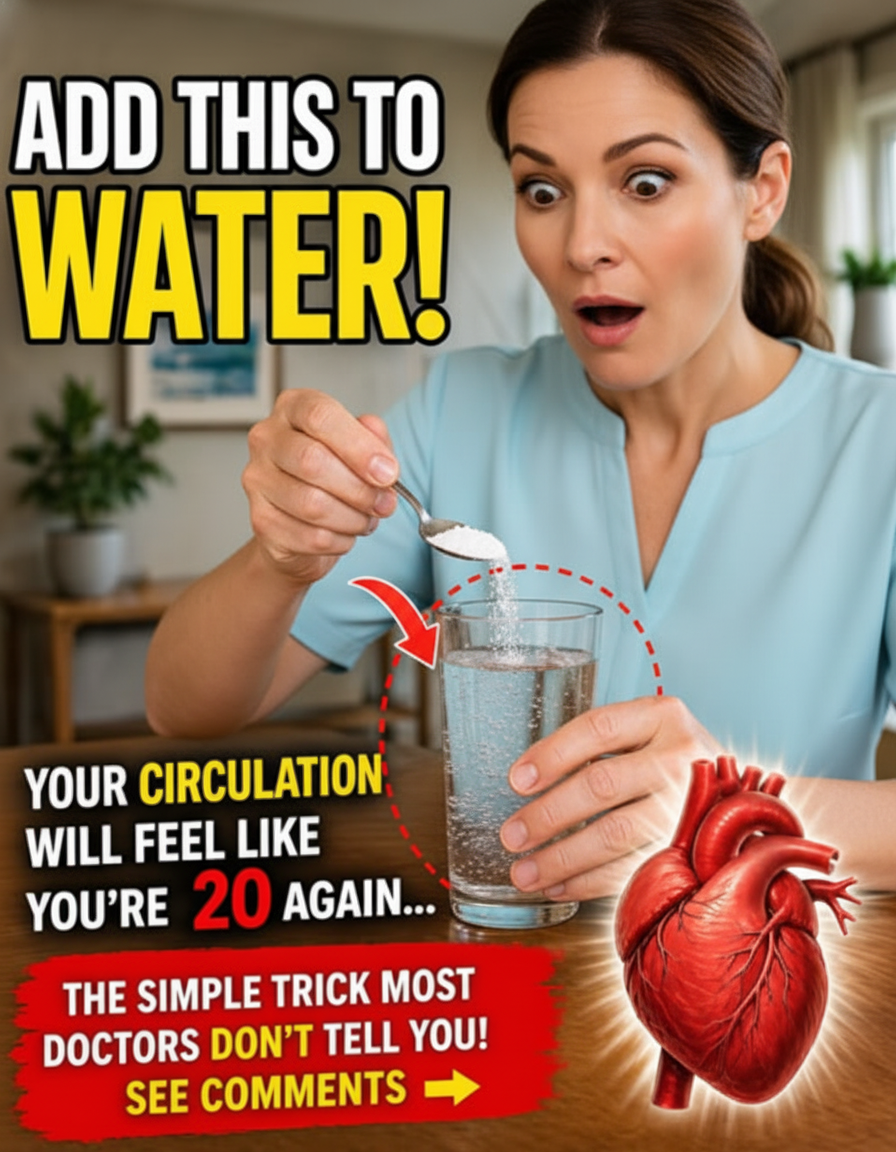
Still wondering if this tiny tweak is worth it? Let’s put it side-by-side:
| Feature | Plain Water | Mineral-Enhanced Water |
|---|---|---|
| Hydration | Basic fluid intake | May support absorption |
| Taste | Neutral | Slightly richer |
| Electrolyte Content | Very low | Contains trace minerals |
| Best Use | Daily hydration | Occasional support |
The big takeaway? You don’t need to ditch your regular water. Think of this as a small, smart upgrade, not a complete overhaul. A little boost, if you will!
Everyday Habits That Support Better Hydration
If you’re serious about feeling more energized and comfortable in your own skin, hydration works best when it’s part of a bigger picture. Here’s what truly helps you nail your hydration goals:
Build a steady hydration rhythm
- Sip water throughout the day – don’t try to chug a gallon all at once.
- Keep a glass or bottle nearby, a constant visual reminder.
- Drink a little *before* you even feel thirsty. Beat the thirst!
Add mineral-rich foods
Your plate can be your hydration ally! Load up on:
- Bananas (potassium power!)
- Spinach (magnesium marvel!)
- Yogurt (calcium champ!)
- Nuts and seeds (tiny mineral bombs!)
Keep your body moving
Even a little bit of movement gets that circulation humming:
- Walking (your daily dose of awesome).
- Gentle stretching (hello, flexibility!).
- Standing up regularly (break up that sitting!).
Limit dehydrating habits
Cut back on the stuff that works against you:
- Too much coffee (it’s a diuretic, folks).
- Alcohol (it’s a dehydrator, plain and simple).
- High-sugar drinks (empty calories and a hydration drain).
And here’s the unvarnished truth… Consistency beats intensity every single time. Little steps, taken daily, add up to big results.
Step-by-Step: How to Try This Safely
If you’re curious to give this simple habit a whirl, follow these straightforward steps to keep it safe and effective:
Step 1: Start small
Just add a tiny, tiny pinch of natural salt to a full glass of water. We’re talking a speck, not a spoonful!
Step 2: Taste it
It absolutely should not taste salty. If it does, you’ve added too much. It should just feel slightly smoother, almost imperceptible.
Step 3: Use occasionally
Once a day is plenty. No need to go overboard; remember, less is often more when it comes to these tiny but mighty adjustments.
Feeling better, more energized, and more ‘fluid’ isn’t just a dream, it’s a real possibility with the right knowledge and habits. We hope this deep dive into hydration and minerals has given you some powerful tools to take charge of your well-being. Don’t stop here! Explore more of our articles on healthy living tips and natural remedies to keep feeling your best, every single day. Your body will thank you!