 By admin
 You’re chilling in your favorite armchair after dinner, just like you have for years, when suddenly your feet feel like blocks of ice, even though the house is warm. Or maybe you stand up from the couch, and that familiar pins-and-needles tingle shoots through your legs again. These little annoyances seem harmless enough, right? After all, you’re not as young as you used to be. But here’s the brutal truth that many folks in their 60s, 70s, and beyond discover way too late: your body is quietly sending out distress signals that your blood isn’t flowing like it should. That poor circulation can sneak up on you like a thief in the night, making everyday tasks a real grind and cranking up your health risks down the road. The good news? Spotting these signs early and making some simple tweaks can actually help you feel more energetic and confident in your golden years. But hold on, there’s one surprising habit at the end of this article that could make a world of difference—keep reading so you don’t miss that game-changer!
Why Poor Blood Flow Becomes More Common After 50
Look, as we rack up the years, our arteries and veins naturally start losing their bounce. Think of it like your plumbing getting old and gunked up. Plaque can build up, and those smaller blood vessels just can’t deliver oxygen and vital nutrients as efficiently as they used to. Research from heavy-hitters like the Cleveland Clinic confirms this nasty reality affects millions of older Americans, especially if you’ve got diabetes, high blood pressure, or spend most of your day glued to a chair. You might try to brush off cold hands or leg aches as “just aging,” but trust me, ignoring these whispers can lead to bigger headaches, like constant swelling or cuts that just won’t heal. So, let’s cut to the chase and look at the 10 warning signs you absolutely need to watch out for.
Sign 1: Constantly Cold Hands and Feet
Your fingers and toes feel like ice cubes, even when everyone else is cozy? That ain’t just the winter chill, buddy. This happens because your blood isn’t reaching your extremities properly. Many seniors notice this when the temperatures drop, but if it’s a year-round thing, you better pay attention. Sure, slapping on warmer socks might help temporarily, but deep down, it’s a screaming clue that your circulation needs a serious boost.
Sign 2: Numbness or “Pins and Needles” Sensations
That tingling party in your legs or hands when you wake up or after you’ve been sitting too long? It’s common, but it’s also your nerves complaining loudly about a low blood supply. Quick tip to get things moving: gently wiggle your toes and fingers when it strikes. It’s a small move, but it can make a difference in your blood flow issues.
Sign 3: Leg Pain or Cramps When Walking
You start walking to the mailbox, and your calves tighten up like they’re in a vise grip. The pain only eases when you finally rest. Doctors call this claudication, and it’s a classic, flashing warning sign of reduced blood flow in your legs. Studies show this hits many over 50, especially if you’ve ever smoked or have high cholesterol. Don’t ignore this leg pain; it’s a critical circulation problem indicator.
Sign 4: Swelling in Legs, Ankles, or Feet
Your shoes suddenly feel tighter by evening, and your socks leave deep, angry marks? That’s fluid building up because your blood is pooling instead of making its way back to your heart properly. Elevating your legs for 15–20 minutes a day can bring some quick relief, but it’s a clear sign of poor circulation in your lower limbs.
Sign 5: Skin Changes or Discoloration
Is the skin on your legs looking pale, bluish, or reddish? Or maybe it’s shiny and thin? Bad blood flow means less oxygen is reaching the surface. Dry, cracked skin or even hair loss on your lower legs often go hand-in-hand with this. These skin changes are undeniable signs of underlying blood circulation issues.
Sign 6: Slow-Healing Sores or Cuts
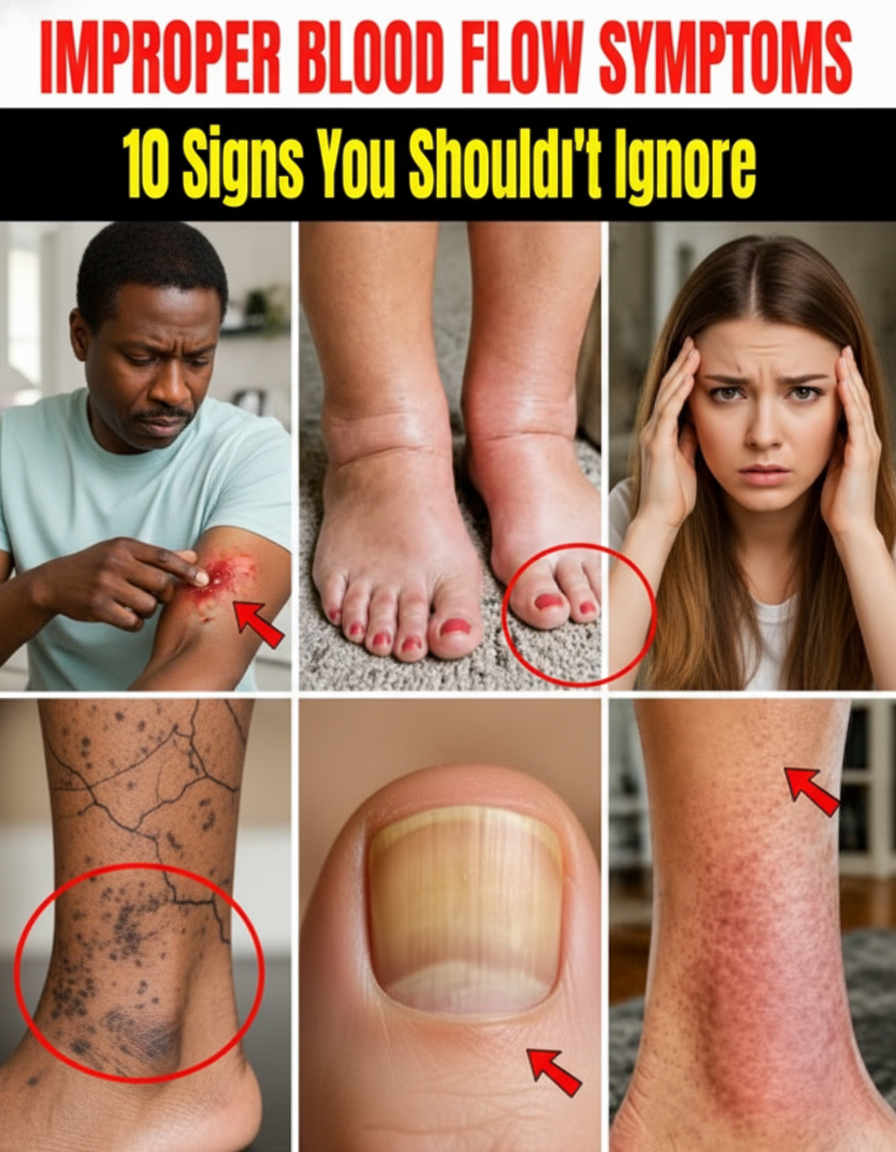
That little scrape on your shin from bumping the coffee table takes weeks, even months, to heal? Reduced blood flow literally slows down the delivery of those crucial healing nutrients. This is especially critical for folks with diabetes—seriously, check your feet daily. Slow wound healing is a major red flag for compromised blood flow.
Sign 7: Weak Nails and Hair Loss on Legs
Your toenails are growing slower and look brittle, almost like they’re giving up. And that leg hair? It’s thinning out, doing a disappearing act. These might seem subtle, but they’re very real signs that your tissues aren’t getting the support they desperately need due to poor circulation.
Sign 8: Fatigue or Shortness of Breath with Mild Activity
Climbing just a short flight of stairs leaves you completely winded, like you just ran a marathon? Your heart and muscles are forced to work overtime when your blood circulation is sluggish. Don’t just blame age; consider your circulatory health.
Sign 9: Varicose Veins or Visible Changes
Those bulging, twisted veins on your legs aren’t just a cosmetic annoyance—they’re screaming that the valves inside aren’t moving blood upward efficiently. These visible changes are strong indicators of venous insufficiency and poor blood flow.
Sign 10: Erectile Dysfunction in Men or Other Intimate Changes
Many people don’t connect this to circulation, but here’s the shocker: robust blood flow is absolutely key for healthy sexual function in both men and women. For men, Erectile Dysfunction (ED) can often be an early warning sign of underlying circulation problems. Ladies, don’t think you’re off the hook either; similar issues can impact your intimate health.
Here’s a quick comparison table to help you track what’s normal vs. what’s really concerning. Don’t just glance; study this, because your body’s trying to tell you something!
| Symptom | Occasional / Normal Aging | Frequent / Possible Poor Flow |
|---|---|---|
| Cold extremities | In very cold weather | Year-round, even indoors |
| Leg cramps | After intense activity | When walking short distances |
| Swelling | After long travel | Daily by evening |
| Healing time | 1–2 weeks | Over a month |
| Skin color | Temporary redness | Persistent pale or blue |
Simple Steps You Can Take Today to Support Better Flow
You don’t need fancy equipment or a medical degree to start improving your blood flow. Start small—these everyday habits have helped countless of my patients feel steadier on their feet and more alive. So, what are you waiting for? Get moving!
- Move more: Aim for a 20–30 minutes of brisk walking or light exercise daily.
Feeling more informed and ready to take charge of your health? That’s what we love to hear! Keep that momentum going and explore more of our expert health tips right here on dogpjs.com. Your body will thank you!