 By admin
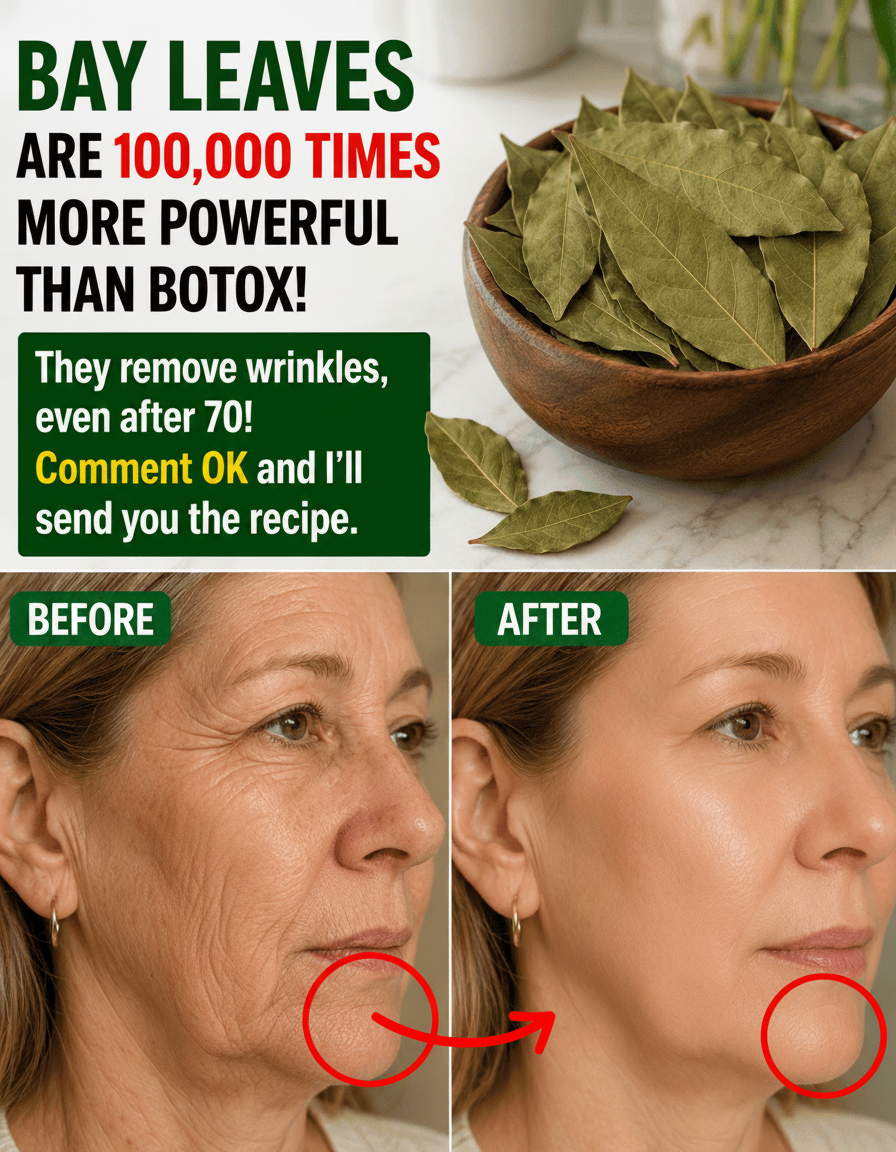
 Ever caught yourself staring at the mirror, wondering when those damn lines around your eyes, mouth, or forehead decided to set up permanent shop? You’re not alone, trust me. Our skin changes as the years roll by, and while there’s grace in aging, a little curiosity about keeping it looking sharp is totally normal. And boom! Then you see it: some viral post screaming that humble bay leaves from your spice rack can erase wrinkles — even past 70 — making Botox look like a joke, all with those jaw-dropping before-and-after pics. A cheap, natural, kitchen fix for anti-aging? Sounds like a dream, right? But hold up, before you start brewing a bay leaf potion, let’s cut through the noise and see what the real evidence says. We’re diving deep into the facts, and we’ll also drop some solid tips for truly supporting your skin appearance over time.
The Viral Buzz That’s Got Everyone Talking (and Maybe Dreaming!)
You know the drill. It’s always the same setup: screaming headlines claiming bay leaves are “100,000 times more powerful than Botox,” swearing they’ll wipe out wrinkles even if you’re pushing 80. Then come the dramatic side-by-side photos – one side showing a face etched with lines, the other miraculously smooth. And of course, they bait you: “Comment ‘OK’ for the secret anti-aging recipe” for steams, toners, or some boiled leaf concoction. It’s pure clickbait gold, designed to hook you right in.
These posts go viral because they hit us where it hurts – that deep desire for easy, gentle ways to care for our aging skin. The visuals are often insanely striking, and the promise? Oh, it feels so hopeful, like a miracle in a jar. But here’s the kicker: those wild numbers and ‘instant’ transformations? They almost always come from some random influencer’s basement, not actual, published medical studies. And those before-and-after photos? Honey, they can be tweaked by everything from lighting and camera angles to facial expressions, hydration levels, or just plain old clever editing. It’s all marketing, not magic.
Why Those ‘Miracle’ Before-and-After Photos Are Often Just a Trick
Let’s talk about the oldest trick in the book: lighting. It changes everything. Harsh overhead light can make every single line look like a canyon, while soft, flattering side light or a tiny head tilt can make your skin texture look smoother in seconds. A totally relaxed face versus a soft smile? Boom, different wrinkle appearance. Throw in a decent night’s sleep, chugging some water that day, or even just a slight edit, and suddenly, that ‘after’ picture creates an illusion of dramatic improvement that has absolutely nothing to do with the supposed ‘remedy’ they’re pushing.
Now, we’re not saying everyone out there is trying to pull a fast one. But when you’ve got wild claims slapped next to carefully crafted visuals and over-the-top language, it’s practically impossible to figure out what *really* caused any perceived shift in skin texture. Here’s the truth bomb: genuine improvements in skin firmness or overall anti-aging effects are *always* gradual, not instant ‘poof!’ miracles. Set your expectations straight.
The Real Deal: How Your Skin *Actually* Changes as You Age
Look, there are solid, natural reasons why those lines and skin texture shifts start showing up, especially after 60. First off, your body slows down on collagen production, meaning less of that crucial protein that keeps your skin structured and firm. Then, your elastin fibers – those stretchy bands that help your skin bounce back – start saying ‘adios.’ Add in years of sneaky sun exposure (yes, even from your daily drive or garden stroll) and you get photoaging, leading to finer lines, uneven tone, and deeper wrinkles. Repeated facial movements, thinning skin, and even just hydration shifts all play their part. Sure, genetics give you a head start, but your daily habits are the real game-changer. Grasping this helps you ditch the fantasy and set realistic expectations for any anti-aging method you consider.
Bay Leaves and Wrinkles: What Science *Actually* Spills (Spoiler: No Magic Here!)
Bay leaves (aka Laurus nobilis) *do* pack a punch with antioxidants and essential oils like 1,8-cineole. And yeah, some lab work and animal studies have poked around their anti-inflammatory and antioxidant potential, which *in theory* could help shield cells from oxidative stress. We even found an older mouse study that looked at a combo of bay leaf and tomato extracts against UV damage. But let’s be crystal clear: what happens in a mouse, or a petri dish, *does not* magically translate to wrinkle reduction in actual humans, nor does it even come close to any established medical treatment for anti-aging.
Now, let’s talk Botox. That stuff works through a *very* specific, heavily researched mechanism: it temporarily chills out muscle activity that causes those pesky dynamic wrinkles. Period. Full stop. No kitchen herb, no fancy home brew, no DIY prep — absolutely *nothing* you whip up at home is going to replicate that targeted effect. Don’t even try.
So, here’s the bottom line, straight from the scientific cavalry: As of today, there are *zero* robust human clinical trials – none, zip, nada – proving that any bay leaf preparations (whether you drink ’em, steam with ’em, or slather ’em on your face) lead to significant, lasting reductions in existing wrinkles or can even hold a candle to established anti-aging solutions. The hype is just that: hype.
Phew! That was a lot to unpack, but getting the real facts out there is what we do best. We hope this deep dive helps you make smarter choices for your skin and avoid falling for the next viral fad. Remember, your journey to healthy, glowing skin is unique, and it deserves real, evidence-backed care.
Got questions or want to explore more no-nonsense advice? Stick around! We’ve got tons more quality content waiting for you right here on dogpjs.com. Your skin (and your wallet) will thank you! We know you love our straight-talk and helpful guides!
Stay fabulous,
The Dogpjs.com Team