 By admin
 10 Critical Breast Cancer Warning Signs Every Woman Over 40 Must Know for Early Detection
Navigating changes in your body can be unsettling, especially as you approach or pass the age of 40, a period often marked by significant hormonal shifts and increased life demands. It’s easy to brush off a subtle breast lump, a fleeting tenderness, or a minor skin alteration as merely signs of aging or everyday stress. However, overlooking these early indicators could potentially delay a crucial medical evaluation, narrowing your treatment options later on. The reassuring news is that by learning to identify 10 key breast cancer warning signs, you empower yourself to act promptly. Furthermore, by the end of this article, you will discover a simple, yet powerful habit that links this awareness to lasting peace of mind.
The Underestimated Threat: Why Early Awareness is Your Best Defense
According to recent projections from the American Cancer Society, an estimated 316,950 women in the United States are expected to be diagnosed with invasive breast cancer in 2025, with over 42,000 projected deaths. While these figures are indeed sobering, they also underscore a powerful message of hope: proactive awareness significantly improves survival rates. What many people often overlook is this crucial point: while routine mammograms are indispensable screening tools, they do not detect every single case. Research indicates that a notable percentage of breast cancers are discovered between scheduled screenings, frequently because a woman personally noticed an unusual change. Therefore, while regular professional screenings are vital, consistent breast self-awareness is equally paramount.
Let’s delve into the 10 breast cancer warning signs that no woman, especially over 40, should ever disregard.
1. A New Lump or Thickening in the Breast or Underarm Area
This is arguably the most recognized and frequently discussed sign of breast cancer, and for good reason. A cancerous breast lump often exhibits specific characteristics:
- Hard or Firm Texture: It may feel distinctively harder than the surrounding breast tissue.
- Irregular Shape: Often not perfectly round, with undefined edges.
- Painless: Many cancerous lumps do not cause pain, which can sometimes lead to delayed detection.
- Immovable: It may feel fixed to the underlying tissue rather than easily movable.
However, it’s critical to remember that not all lumps fit this description; some can be soft, tender, or even movable. This is why any new lump or area of thickening, particularly one that persists or feels different from your normal breast tissue, absolutely warrants a prompt medical evaluation. Leading institutions like the Mayo Clinic confirm that a significant number of breast cancers are initially identified as a palpable lump. The key takeaway is simple: if it’s new, unusual, and persistent, seek professional medical advice.
2. Unexplained Changes in Breast Size or Shape
Has one of your breasts suddenly become noticeably larger or smaller without any clear reason? Have you observed a new asymmetry that wasn’t present before? If your body weight has remained stable and your menstrual cycle (if applicable) hasn’t changed, yet your breast contour or overall size appears different, it’s a change worth investigating. Breast cancer can sometimes subtly alter the internal tissue structure before other, more overt symptoms emerge. Even minor or subtle shifts in breast contour can be an important signal of an underlying issue.
3. Skin Dimpling or Puckering, Resembling an Orange Peel (Peau d’Orange)
If the skin on your breast begins to take on a dimpled or pitted appearance, similar to the surface of an orange, this should be considered a significant red flag. This distinctive texture, medically known as “peau d’orange,” often occurs because cancer cells can block the lymphatic drainage channels within the breast, leading to fluid accumulation and characteristic skin changes. It’s crucial to differentiate these changes from benign skin conditions:
| Skin Change | Common Misconception | Why It Matters for Breast Health |
|---|---|---|
| Dimpling/Puckering | Just a sign of aging skin | Can indicate underlying tissue pulling caused by a tumor |
| Thickened Texture | Dryness or minor irritation | Could signal inflammation or lymphatic obstruction from cancer |
| Persistent Redness | Skin irritation or rash | Requires medical evaluation if it persists and doesn’t resolve quickly |
If these skin changes do not resolve naturally within a short period, it is imperative to consult a healthcare professional.
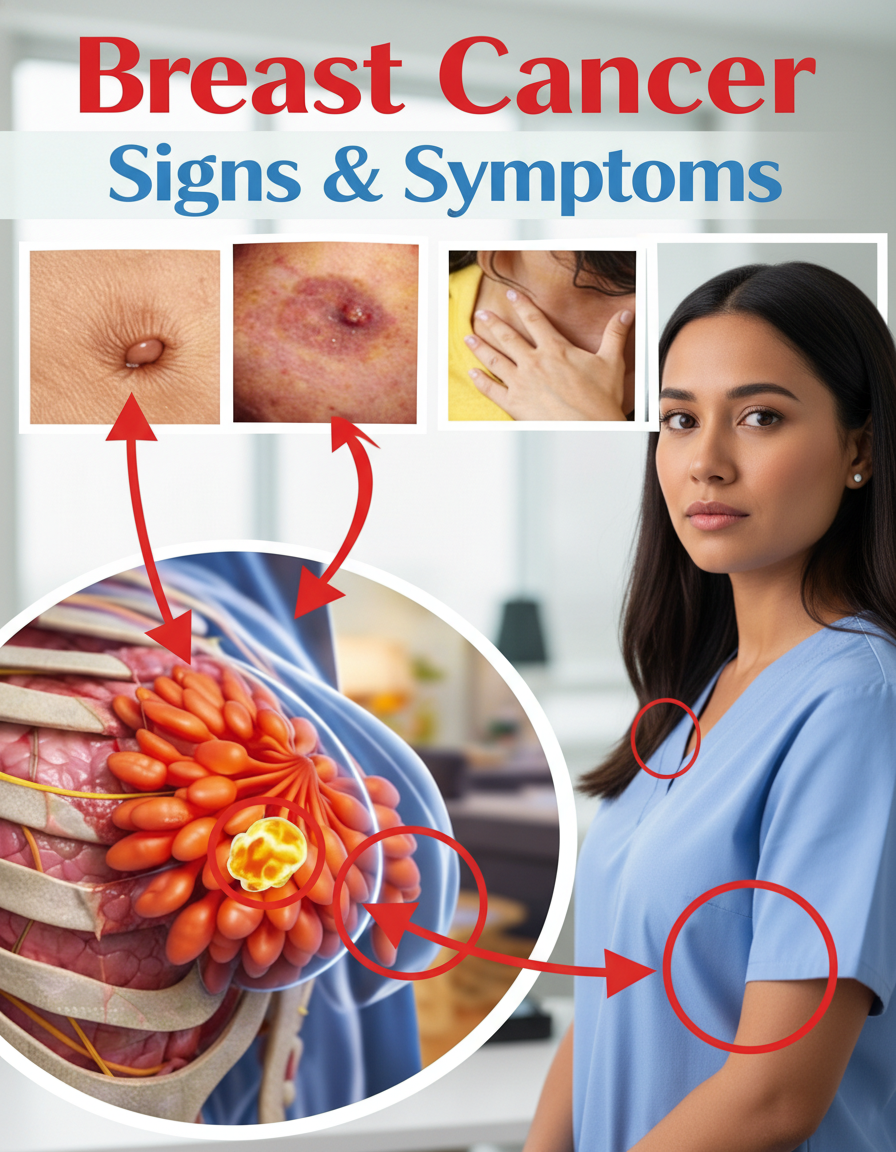
4. Nipple Changes, Including New Inversion, Retraction, or Scaling
A nipple that suddenly begins to turn inward (invert) or retract into the breast when it previously pointed outward is a significant change that warrants immediate discussion with a medical doctor. Other concerning nipple alterations include:
- New Flattening: A nipple that flattens out unexpectedly.
- Crusting or Flaking Skin: Changes resembling a persistent rash or eczema around the nipple.
- Persistent Itching: Unrelenting itchiness of the nipple area.
- Ulcer-like Appearance: Any sore or lesion on or around the nipple that does not heal.
It’s worth noting that some women naturally have inverted nipples from birth, but the key concern here is any new change or development. Scaling or crusting around the nipple that doesn’t improve with standard moisturizers should not be dismissed as a minor skin issue.
5. Persistent Breast Pain Unrelated to Your Menstrual Cycle
While breast pain (mastalgia) is a very common complaint and is rarely the sole indicator of breast cancer, unexplained localized pain that persists over time certainly deserves attention. This is especially true if:
- It endures for several weeks without relief.
- It affects only one breast, rather than both.
- It does not follow your typical hormonal fluctuations or menstrual pattern.
Although the vast majority of breast pain is benign and not cancerous, a small percentage of breast cancer diagnoses have been associated with persistent pain. Therefore, any ongoing or unusual breast discomfort should be thoroughly evaluated by a healthcare provider.
6. Unusual Nipple Discharge, Particularly Bloody or Clear Fluid
Any fluid leaking from the nipple spontaneously (without squeezing), especially if it originates from only one breast, should never be ignored. Types of nipple discharge that require prompt medical evaluation include:
- Bloody Discharge: Any discharge with a reddish or brownish tint.
- Clear, Watery Discharge: Transparent fluid that is not milky.
- Discharge from Only One Duct: Indicating a localized issue rather than a systemic one.
While milky discharge can often be linked to hormonal changes or certain medications, any unexpected discharge, particularly after menopause, is especially important to have assessed. It’s advisable to document the color, consistency, and frequency of any discharge you notice before discussing it with a healthcare provider.
7. Redness, Warmth, or a Persistent Rash on the Breast Skin
Inflammatory breast cancer (IBC) is a rare but aggressive form of breast cancer that often presents with distinct skin changes. These can include:
- Persistent Redness: A flushed or reddish appearance across a significant portion of the breast.
- Unusual Warmth: The affected breast may feel noticeably warmer to the touch than the other.
- Swelling: A rapid increase in breast size or general swelling.
- Thickened Skin or Rash: The skin may appear thickened or present as a rash that doesn’t respond to typical treatments.
Because IBC symptoms can closely mimic those of a breast infection, such as mastitis, it is frequently misdiagnosed. If you are prescribed antibiotics for a suspected infection and your symptoms do not improve, or if there’s no clear cause for the rash/redness, immediate and thorough follow-up is critical. This particular set of signs demands urgent medical evaluation.
8. Swollen Lymph Nodes Under the Arm or Near the Collarbone
Lymph nodes are small, bean-shaped glands that are part of your body’s immune system. They are located in various areas, including under your arm (axillary nodes) and above your collarbone (supraclavicular nodes). If breast cancer cells spread, they often first travel to these nearby lymph nodes. Therefore, noticing a new, persistent lump or swelling in your armpit or above your collarbone should prompt a medical consultation. While swollen lymph nodes can also indicate an infection, any unexplained or persistent swelling in these areas requires professional assessment to rule out more serious conditions.
By understanding and actively monitoring for these 10 warning signs, you become an essential partner in your own breast health. Early detection is not just a phrase; it’s a powerful strategy that significantly improves outcomes for breast cancer patients. Make it your simple habit to regularly observe your breasts, pay attention to any changes, and never hesitate to consult your healthcare provider if something feels or looks different. Your proactive awareness is your greatest asset for long-term peace of mind.