 By admin
 The Unseen Impact of Paternal Age: How ‘Selfish Sperm’ Shape Genetic Risks in Offspring
Opting for fatherhood later in life often reflects a desire for stability and readiness. However, emerging research indicates that a man’s age can subtly yet significantly influence a child’s long-term health in ways many prospective parents might not anticipate. With advancing paternal age, microscopic alterations within sperm cells can elevate the likelihood of transmitting specific genetic mutations associated with various developmental conditions and an increased propensity for certain cancers. While this revelation might be concerning, particularly for couples contemplating conception in their late thirties, forties, or beyond, there’s a crucial silver lining. A deeper comprehension of these cellular mechanisms empowers individuals to make more informed family planning choices, and a fascinating biological phenomenon central to this process could entirely reshape your perspective on paternal age.
Unveiling the Science: Paternal Age and DNA Changes
Extensive genome sequencing initiatives have provided invaluable insights into the dynamic changes occurring in sperm DNA as men age. Notably, findings highlighted by science journalist Michael Le Page reveal that genetic mutations within sperm cells don’t merely accumulate haphazardly over time. Instead, they can proliferate, conferring a distinct competitive edge to certain mutated cells. Researchers have documented compelling observations:
- Approximately one in fifty sperm cells from men in their early thirties harbors a potentially detrimental mutation.
- By the age of seventy, this prevalence escalates significantly to nearly one in twenty sperm cells.
- Over forty specific genes have been pinpointed as potential drivers of this phenomenon.
- Many of these genes play pivotal roles in neurodevelopmental processes and pathways linked to cancer.
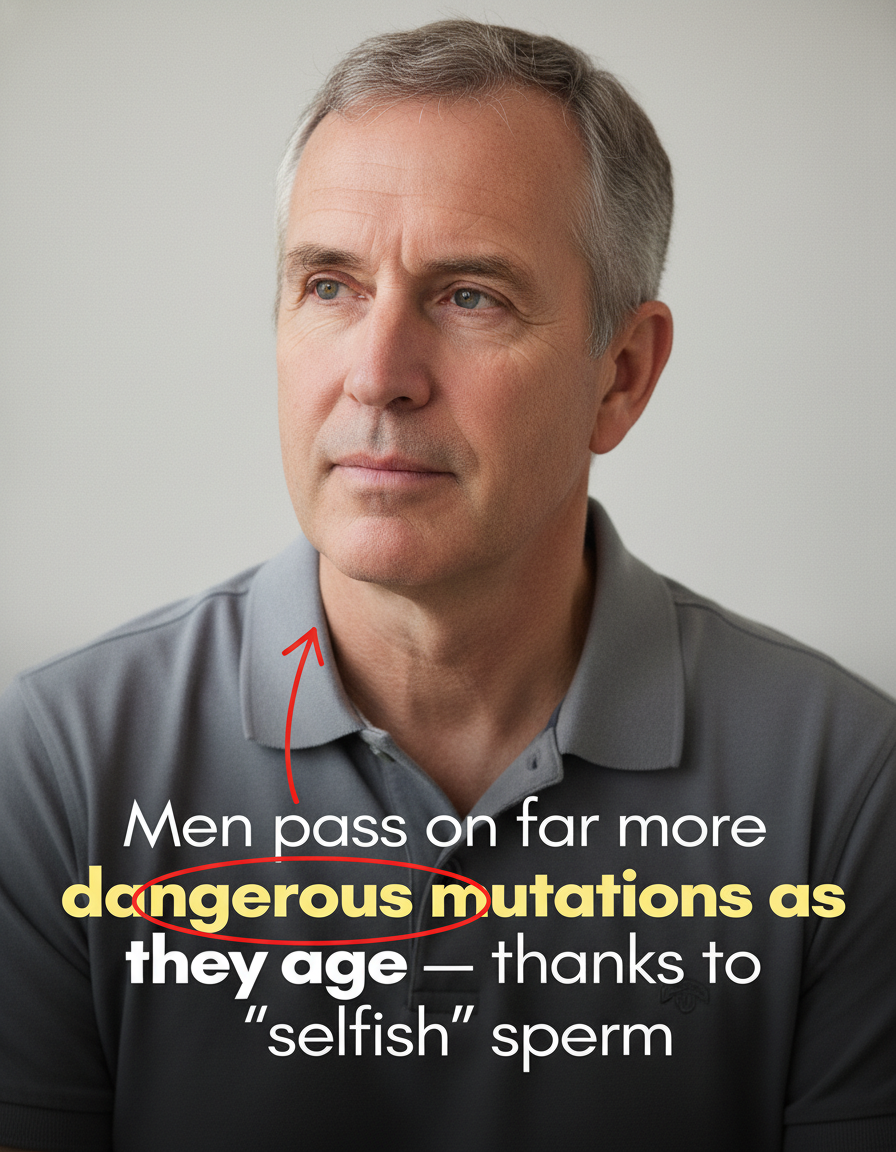
Crucially, this observed increase isn’t solely attributable to the natural aging process. It is primarily propelled by a fascinating biological mechanism that scientists have termed ‘selfish sperm.’
Understanding ‘Selfish Sperm’: A Biological Phenomenon
While the moniker “selfish sperm” might sound striking, it accurately characterizes a precise biological process. Within the testes, specialized stem cells responsible for generating sperm undergo continuous division throughout a man’s lifespan. Occasionally, a spontaneous mutation arises within one of these stem cells. Should this particular mutation bestow a growth advantage—enabling the cell to divide more rapidly or persist for longer periods—it can progressively assert dominance in sperm production. To put it plainly:
- The mutation provides no benefit to the future offspring.
- Its advantage is exclusively for the stem cell itself.
- Consequently, over time, these mutated cells begin to outcompete and displace healthier ones.
This inherent self-serving characteristic is precisely why scientists label them “selfish.” What makes this particularly noteworthy is that these mutations frequently impact genes critical for early brain development and the sophisticated regulation of cell growth—two biological systems exceptionally vulnerable during the intricate stages of fetal development.
The Critical Connection: Neurodevelopmental and Cancer-Related Genes
Scientific investigations indicate a significant overlap between many of the genes identified in this process and those associated with:
- Autism spectrum conditions.
- Severe developmental disorders.
- Elevated susceptibility to certain cancers.
It is crucial to emphasize that this research does not imply that all children born to older fathers will inevitably develop these conditions. The vast majority of children conceived by older fathers are perfectly healthy. Nevertheless, extensive population studies consistently demonstrate a gradual yet discernible increase in risk directly correlated with advancing paternal age, becoming particularly pronounced after the age of forty or fifty. Intriguingly, this risk progression appears to follow an exponential trajectory, rather than a linear one. This signifies that the rate of increase becomes progressively steeper over time, rather than maintaining a constant, steady pace.
Internal Dynamics vs. External Factors: What Truly Shapes Sperm Mutations?
One might instinctively assume that external factors such as smoking, excessive alcohol consumption, or exposure to environmental toxins are the principal culprits behind sperm mutations. However, the research yielded a surprising insight. While detrimental lifestyle habits did indeed elevate mutation loads in blood cells, sperm cells demonstrated a remarkable resilience, appearing largely shielded from many external environmental influences. Stated differently, although lifestyle choices remain vital for overall health and fertility, the specific mutation patterns observed in connection with paternal age predominantly stem from intrinsic stem cell dynamics, rather than being dictated by external exposures. This discovery fundamentally alters our understanding of genetic risk. Historically, reproductive discussions have predominantly focused on maternal age. Yet, a growing body of evidence now compellingly argues that paternal age warrants equally thorough consideration.
A Closer Look: The Progression of Genetic Risk with Age
To provide a clearer perspective on this evolving trend, consider the following simplified progression of mutation risk with age:
- Early Thirties: Roughly one in fifty sperm cells carries a potentially harmful mutation.
- Forties: A gradual but steady increase in mutation rates becomes apparent.
- Fifties: The acceleration of mutation accumulation becomes distinctly noticeable.
- Seventies: Approximately one in twenty sperm cells may carry a harmful mutation.
It is imperative to remember that these figures represent broad averages derived from extensive population studies. Individual genetic outcomes and health profiles can, and often do, vary considerably.
Empowering Future Parents: The Role of This Research in Family Planning
Let’s take a moment to contextualize this information. The primary objective here is not to instill apprehension, but rather to empower through knowledge. A comprehensive understanding of paternal age effects can equip couples to:
- Consider planning pregnancies earlier, if feasible.
- Engage in discussions about available genetic screening options.
- Make well-informed decisions regarding the optimal timing for conception.
- Assess potential risks with a pragmatic, rather than purely emotional, perspective.
Crucially, there’s an important reassuring aspect to remember. While mutation rates do exhibit an increasing trend with age, this knowledge serves as a tool for proactive planning, not a cause for undue alarm.