 By admin
 Many individuals eventually notice their neck skin losing its youthful tautness, developing a looser, somewhat ‘crepey’ texture beneath the chin and across the throat. This prevalent aesthetic shift, colloquially known as ‘turkey neck,’ can diminish the neck’s natural contours, contributing to an aged appearance and potentially impacting self-confidence, particularly when wearing certain clothing styles or posing for pictures.
The encouraging news is that gaining insight into the underlying mechanisms of why neck skin sags can equip you with the knowledge to implement gentle, yet effective, daily practices. These habits can significantly support your skin’s resilience and youthful look over time. This comprehensive guide will delve into the primary factors contributing to the development of sagging neck skin and offer actionable, everyday strategies you can begin incorporating immediately. Make sure to read through to the end, as we’ll reveal an often-missed daily routine adjustment that could surprisingly enhance the look and feel of your neck.
Understanding Why Your Neck Skin Sags
The delicate skin of the neck frequently reveals the tell-tale signs of aging sooner than other facial or body regions. This vulnerability stems from several inherent characteristics: it is considerably thinner, possesses fewer sebaceous (oil) glands for natural lubrication, and endures almost constant movement and environmental exposure. Scientific research consistently demonstrates that the process of skin aging is a complex interplay of intrinsic biological shifts and extrinsic environmental factors, both of which progressively diminish the skin’s natural firmness and elasticity.
Natural Aging and the Reduction of Essential Proteins
As we advance into our 30s and 40s, a natural physiological process begins where the body’s production of vital structural proteins—collagen and elastin—starts to decelerate. Collagen acts as the fundamental scaffolding, providing the skin with its robust framework and strength, while elastin grants it the crucial ability to stretch and then resiliently snap back into place. With the progressive reduction of these indispensable proteins, the skin inevitably loses its inherent firmness, becoming more susceptible to laxity and sagging, particularly in sensitive areas such as the neck. Extensive dermatological studies underscore how this incremental depletion of collagen and elastin is a primary contributor to noticeable skin laxity over several decades. However, this is only one piece of the puzzle…
Sun Exposure: A Major Accelerant for Neck Skin Aging
Among the most significant external contributors to accelerated changes in neck skin is unchecked exposure to the sun’s damaging ultraviolet (UV) rays. UV radiation possesses the potent ability to degrade and fragment collagen and elastin fibers at a much faster rate than the natural aging process alone. Regrettably, the neck area is frequently neglected during the daily application of sunscreen, despite its consistent and direct exposure to outdoor elements. Leading dermatological research consistently emphasizes that photoaging, resulting from years of cumulative sun damage, is a paramount factor in the development of premature skin laxity, fine lines, and textural irregularities on the neck.
The Impact of Rapid Weight Fluctuations
Significant and abrupt weight loss can also profoundly affect the appearance of neck skin. When the body sheds weight rapidly, the skin, which had previously expanded to accommodate increased volume, may not possess the inherent elasticity to retract smoothly and uniformly. As subcutaneous fat deposits diminish, the overlying dermal layer can remain loose and unsupported, resulting in an undesirable ‘droopy’ or slackened appearance. Cultivating and maintaining a stable body weight generally promotes superior skin adaptation and helps preserve its integrity over the long term.
The Persistent Pull of Gravity and Muscle Weakening
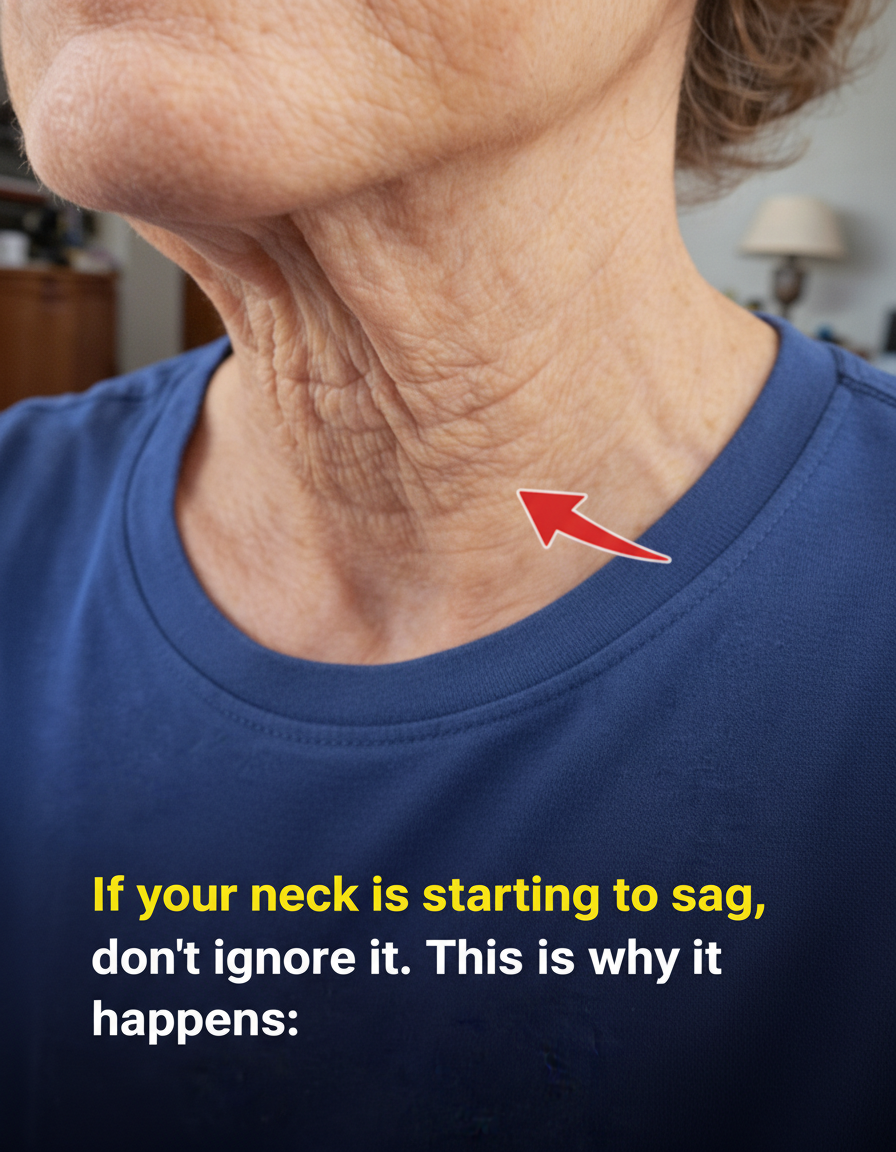
The relentless downward pull of gravity exerts a continuous force on our tissues, and over many years, this effect becomes pronounced on the neck. Specifically, the platysma muscle—a broad, thin sheet of muscle that extends across the front of the neck—can gradually weaken or even exhibit minor separations. This muscular alteration often leads to the formation of distinct vertical bands or folds, which significantly exacerbate the overall appearance of sagging. When these changes in the platysma are combined with other age-related muscular and connective tissue shifts, they contribute directly to the characteristic ‘turkey neck’ contour.
Lifestyle Factors: Posture, ‘Tech Neck,’ and More
Modern daily habits, particularly the prolonged periods spent looking downwards at digital devices such as smartphones, tablets, and computers, introduce significant mechanical stress to the neck. This repetitive motion creates persistent creases and strains the delicate neck skin, a contemporary issue widely recognized as ‘tech neck.’ Such a forward head posture actively contributes to the premature formation of horizontal neck lines and general skin laxity by repeatedly folding and creasing the skin. Over time, consistently poor posture adds cumulative mechanical strain, making the skin appear increasingly wrinkled and loose.
Beyond these environmental and behavioral influences, genetic predisposition also plays a role in how rapidly these visible changes manifest; some individuals are naturally prone to quicker collagen degradation or possess inherently thinner skin. Furthermore, various lifestyle choices can negatively impact skin vitality: smoking, for instance, severely constricts blood vessels, impeding crucial blood flow and nutrient delivery to skin cells. Similarly, chronic psychological stress can indirectly but substantially impair overall skin health and its regenerative capabilities.
Key Contributors to Neck Skin Sagging (Summary):
- The natural decrease in collagen and elastin production, typically commencing in the 30s and 40s.
- Accelerated deterioration caused by cumulative UV damage from unprotected sun exposure.
- The effects of sudden or substantial weight loss on skin elasticity.
- The continuous downward force of gravity coupled with the weakening of the platysma muscle.
- Repetitive strain from forward head posture, commonly known as ‘tech neck,’ due to device usage.
- Underlying genetic predispositions and detrimental lifestyle habits such as smoking or inadequate nutrition.
It is crucial to recognize that these factors rarely act in isolation; they frequently interact and compound each other, explaining why the neck area can exhibit noticeable signs of aging even when facial skin receives diligent care.
Actionable Habits to Promote Firmer-Looking Neck Skin
While no regimen can halt the inevitable march of time completely, adopting a consistent array of small, deliberate actions can significantly contribute to maintaining smoother, more resilient, and youthful-looking skin on the neck. These habits primarily revolve around effective protection, deep hydration, and gentle muscular strengthening—all elements that can be seamlessly integrated into your daily life without demanding excessive effort.
1. Prioritize Daily Sun Protection
Making daily sun protection a non-negotiable part of your routine is paramount. Consistently apply a broad-spectrum sunscreen with an SPF of 30 or higher to your entire neck and décolletage area.