 By admin
 Experiencing persistent bad breath can be incredibly frustrating, particularly when you maintain diligent oral hygiene with regular brushing and flossing, yet still feel self-conscious during conversations. You might occasionally notice a small, off-white or yellowish lump appearing after a cough or throat clearing, often accompanied by an unexpectedly potent, unpleasant odor. This can lead to doubts about your personal hygiene, diet, or even overall health. However, there’s a comforting reality: the underlying reason is often a surprisingly common and treatable condition concealed deep within your throat. By the time you finish reading this article, you’ll gain a clear understanding of this phenomenon and discover practical daily habits that can significantly improve the situation.
The Truth About Tonsil Stones (Tonsilloliths)
These small, foul-smelling deposits are scientifically known as tonsilloliths, but more commonly referred to as tonsil stones. They develop within the tiny crevices and pockets, called crypts, found on your tonsils. Unlike a smooth surface, your tonsils naturally feature an intricate landscape of folds and indentations. For some individuals, these particular spaces are unusually deep, creating ideal conditions for these problematic formations.
Over time, various types of debris can accumulate inside these pockets, including • food particles • dead cells from the mouth lining • mucus • and bacteria. When minerals in your saliva, such as calcium, interact with this trapped material, it can gradually harden into a small, stone-like deposit. Some tonsil stones are as small as a grain of rice, while others may grow to the size of a pea. Indeed, even one tiny stone can significantly contribute to unpleasant breath odor.
Why Do Tonsil Stones Smell So Strong?
The potent odor associated with tonsil stones stems from a fascinating biological process. The bacteria residing within these formations flourish in environments lacking oxygen, and are thus termed anaerobic bacteria. Extensive research in oral health has demonstrated that these specific bacteria generate compounds known as volatile sulfur compounds (VSCs). These sulfur-based gases are precisely what contribute to the characteristic smells often described as • rotten eggs • sulfur-like odors • and persistent halitosis, or chronic bad breath.
This explains why conventional mouthwash often fails to resolve the problem. While it can temporarily freshen the front of the mouth and reduce surface bacteria, it typically cannot penetrate deep into the tonsil crypts where the core odor source lies. Furthermore, the unpleasant smell can intensify dramatically after coughing or throat clearing, as the tonsil stone may become exposed or dislodged, suddenly releasing a concentrated burst of these trapped gases.
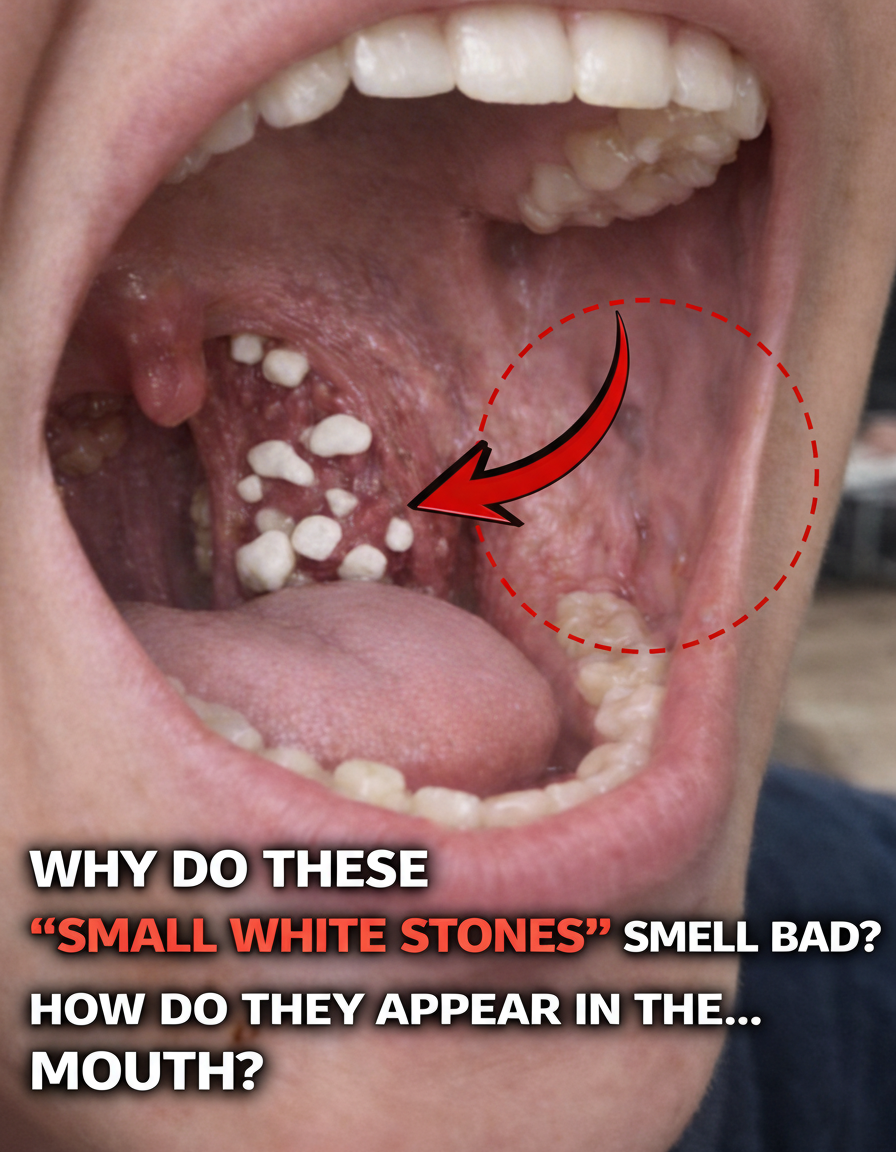
8 Common Signs You Might Have Tonsil Stones
It’s important to note that tonsil stones are not always visible; many people experience symptoms without ever seeing the actual stones. Here are the most common clues: • Persistent bad breath despite good oral hygiene • A bad or metallic taste at the back of the throat • Feeling like something is stuck in your throat • Small white or yellow spots on the tonsils • Mild ear discomfort due to shared nerve pathways • Recurring mild sore throat • Coughing up small, firm lumps • Frequent throat clearing. Many individuals experience several of these signs without connecting them to tonsil stones, and this misunderstanding can persist for years.
Who Is More Likely to Develop Them?
It’s crucial to understand that tonsil stones are not an indicator of poor oral hygiene. Instead, anatomical factors play a significant role in their development. They tend to be more prevalent in: • Individuals with large or deeply cryptic tonsils • Teenagers and young adults • People experiencing post-nasal drip • Those with chronic sinus issues or allergies • Individuals with a history of frequent tonsillitis during childhood. Studies in ear, nose, and throat (ENT) medicine suggest that repeated inflammation of the tonsils can lead to the formation of deeper crypts over time, thereby creating more ample spaces for debris to accumulate. If these descriptions resonate with you, rest assured, you are certainly not alone in this experience.
Why Mouthwash Alone Often Does Not Help
Let’s clarify a common misconception regarding oral rinses. While mouthwash can: • Freshen the surface of the mouth • Reduce bacteria on the tongue and gums • Provide temporary odor control, it generally does not effectively flush out the hardened material nestled deep within tonsil crypts. Consider it akin to spraying air freshener in a