 By admin
 Unmasking Stroke: 9 Early Warning Signs That Can Emerge Up to a Week Before
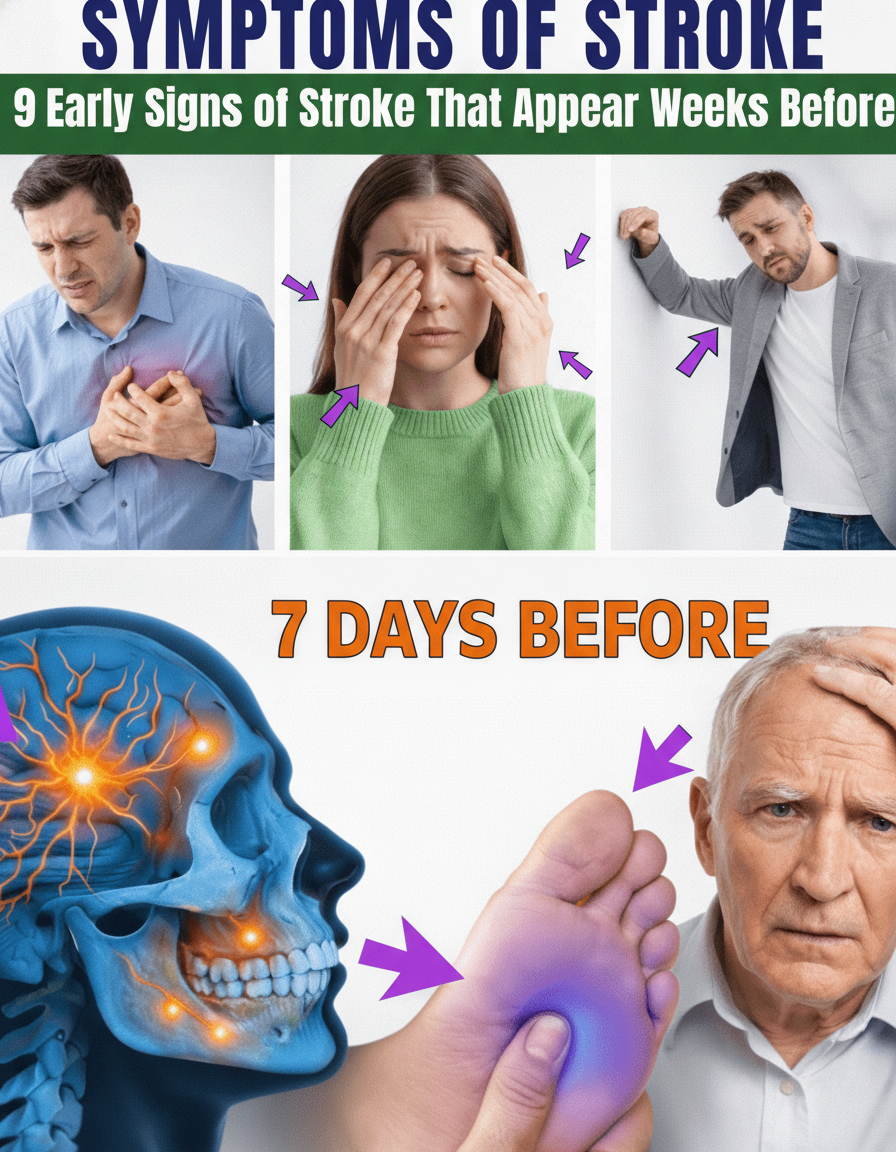
Strokes devastate millions globally each year, often striking unexpectedly and transforming ordinary lives into profound crises. A common source of frustration arises when subtle indicators—such as an abrupt onset of dizziness or persistent, unexplained fatigue—are dismissed as merely the stresses of a demanding day, only to escalate into a far more critical medical emergency. But what if your body discreetly communicated these crucial warnings up to seven days beforehand, offering a vital opportunity for intervention?
This comprehensive guide aims to illuminate these often-overlooked signals, drawing upon credible insights from medical research. By understanding and recognizing these early stroke symptoms, you can enhance your ability to act promptly and safeguard your well-being and that of your loved ones.
Understanding the Silent Build-Up
A stroke occurs when the blood supply to a part of the brain is interrupted, either due to a clot blocking an artery or a blood vessel rupturing. These critical events don’t always manifest without prior indication. Data from reputable organizations like the American Heart Association reveals that a significant proportion—up to 30%—of major strokes are preceded by transient ischemic attacks (TIAs), commonly known as “mini-strokes.” While TIAs resolve swiftly and their symptoms disappear, they serve as potent red flags for an impending stroke.
These crucial warnings can surface days before a full-blown stroke, frequently misattributed to stress, fatigue, or the natural process of aging. However, paying close attention to these temporary neurological disturbances could be the pivotal factor distinguishing between a rapid recovery and enduring neurological challenges. Consider your body as an intricate early alert system, continuously sending subtle messages amidst your daily routine. Initially, dismissing these signals might seem harmless, yet recognizing their pattern empowers you to proactively seek medical attention. Research further indicates that these pre-stroke signs often appear in clusters, making vigilance even more imperative.
9. Persistent and Unexplained Fatigue
Imagine starting your day with your usual energy, only to be overwhelmed by an inexplicable, profound exhaustion that feels as though you’ve completed an arduous marathon without moving from your chair. This isn’t just typical tiredness; it’s a deep, draining fatigue that persists. For many, this might manifest as a sudden loss of usual vigor that lingers for days, sapping their drive and focus.
Neurological studies increasingly link this profound, unexplained fatigue to reduced oxygen delivery to the brain – a potential early indicator of heightened stroke risk. Unlike the weariness from a long day, this type of fatigue is persistent, hits without warning, and doesn’t improve significantly with rest. While it’s easy to attribute it to a demanding schedule, if this profound exhaustion becomes a recurring or lingering issue, it warrants serious attention. Importantly, this particular form of fatigue often coincides with other subtle neurological changes, hinting at further developments.
8. Unprovoked Nausea or Vomiting
Picture yourself enjoying a casual meal, when suddenly an intense wave of queasiness washes over you, leading to nausea or even vomiting, with no apparent cause—no suspect food, no sign of a stomach virus. This perplexing symptom can appear out of nowhere, disrupting your day. It might pass quickly, but its unprovoked nature is key.
Insights from stroke research suggest that these unexplained episodes of nausea or vomiting can be connected to disruptions in the brain’s signaling pathways, occasionally emerging up to a week before a more significant cerebrovascular event. These symptoms can also be accompanied by dizziness, making even simple movements feel unsteady or precarious. If you find yourself wondering if it’s just a bout of indigestion, consider this: when nausea and vomiting occur without a clear trigger, it could be a critical, albeit subtle, message from your body indicating a need for medical evaluation. This sign, however, is just one piece of a larger puzzle; the next symptom impacts how you perceive and process the world around you.
7. Sudden Onset Confusion or Memory Lapses
One moment you’re fully engaged in a conversation or task, and the next, your thoughts become inexplicably foggy, or you struggle to recall a common name or a recent event that should be readily accessible. This can be a profoundly disorienting experience. It’s more than just a momentary distraction; it’s an abrupt inability to process information or retrieve memories.
Medical journals such as “Stroke” emphasize how brief periods of confusion or memory slips can indicate temporary disruptions in blood flow to the brain, frequently as part of a TIA. These are distinct from typical “senior moments” or everyday forgetfulness; they are sudden, pronounced, and can significantly impair focus, concentration, or the ability to make sound decisions. While it might be tempting to dismiss them as a consequence of a busy or stressful day, if these cognitive glitches recur, they demand immediate medical assessment. Interestingly, these mental disruptions often coincide with alterations in visual perception, which leads us directly to the next crucial warning sign.
6. Transient Vision Problems: Blurriness or Double Vision
Imagine looking at your phone or a book, only to find the words appearing doubled, or the entire scene becoming hazy and unclear, even if you’re wearing your corrective lenses. This sudden distortion of vision can be quite alarming and significantly impact your daily activities. It’s not merely eye strain; it’s an abrupt and uncharacteristic change in your visual acuity.
Extensive studies reveal that sudden shifts in vision, such as blurred vision, double vision (diplopia), or even temporary loss of sight in one eye, can result from impaired circulation to the brain’s visual processing centers. These visual disturbances can manifest days before a major stroke, affecting one or both eyes and disrupting everything from reading to driving. If you’re quick to attribute it to prolonged screen time or general fatigue, pause and consider its sudden onset and unusual nature – it could be a vital signal requiring urgent medical attention.