 By admin
 The Green Ring Mystery: Unraveling the Science Behind Hard-Boiled Egg Discoloration and How to Prevent It
Discovering a greenish-gray halo encircling the yolk of your perfectly hard-boiled egg can be quite disheartening. What should be a simple culinary delight often turns into a moment of frustration, leaving you to question your technique or even the egg’s freshness. This common phenomenon, however, is neither a sign of spoilage nor a reflection of poor cooking ability. Instead, it’s a predictable chemical reaction with a clear scientific basis and, thankfully, simple solutions. Join us as we demystify this kitchen conundrum and share practical strategies, including a game-changing tip, to achieve flawless hard-boiled eggs every time.
What Causes the Green Ring in Hard-Boiled Eggs?
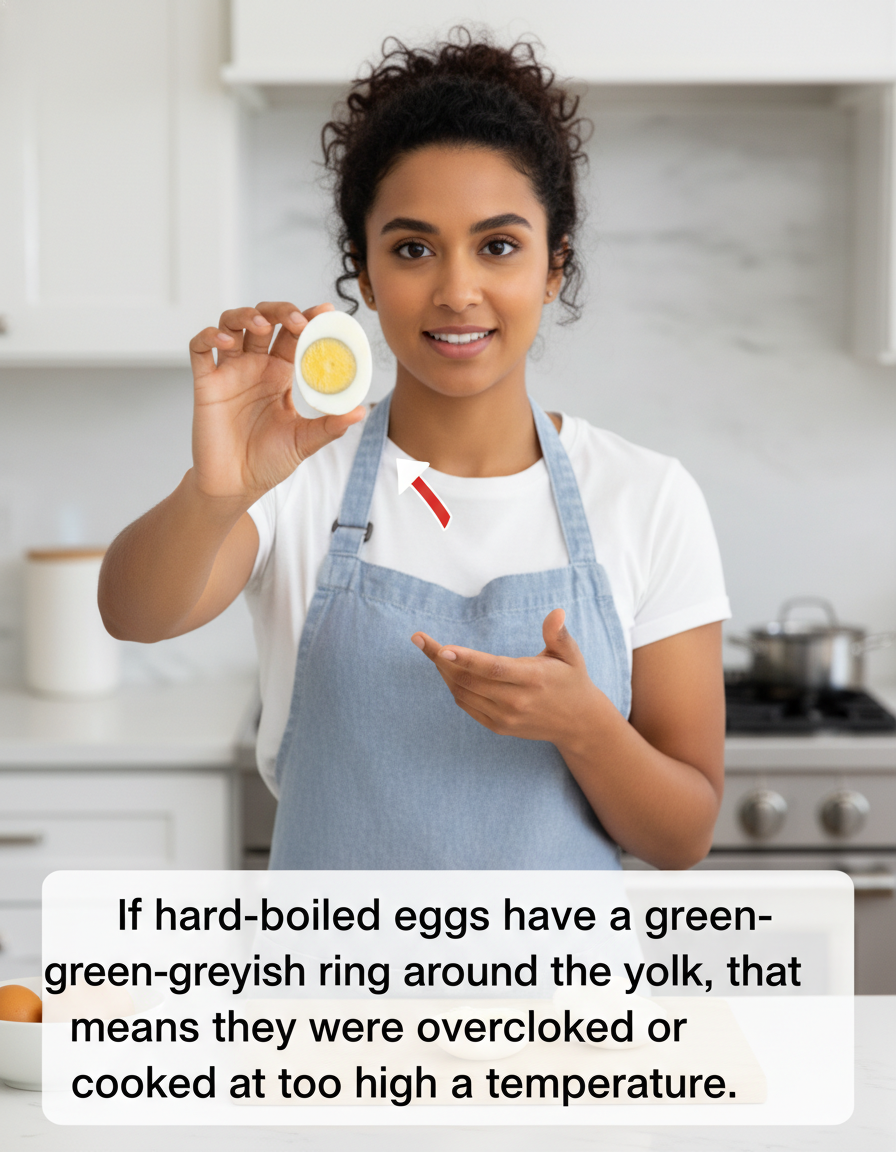
The distinctive greenish or grayish discoloration you sometimes see around the yolk of a hard-boiled egg is not an indicator of spoilage, nor does it signify that the egg is unsafe to eat. This visual anomaly is, in fact, a natural outcome of specific chemical interactions that occur within the egg during the cooking process. Leading food science organizations, such as the American Egg Board, have extensively documented this phenomenon. By grasping the underlying science, you gain the power to prevent this common issue entirely. This noticeable ring typically manifests at the interface where the egg white meets the yolk.
The Science Explained: How Iron and Sulfur Interact
To truly understand this discoloration, we must delve into the fundamental chemistry at play. Egg whites are abundant in sulfur-containing proteins, while egg yolks are a rich source of iron. When an egg is subjected to heat, a series of transformative events begin. The heat causes the proteins within the egg white to denature, which in turn liberates hydrogen sulfide gas. This gas then embarks on a journey, migrating from the white towards the yolk. Upon reaching the iron-rich yolk, the hydrogen sulfide reacts chemically with the iron, culminating in the formation of ferrous sulfide. It is precisely this ferrous sulfide compound that imparts the characteristic greenish hue.
Research published in various food chemistry journals indicates that this specific reaction accelerates significantly once temperatures exceed 158°F (70°C). Interestingly, this process bears a conceptual resemblance to the oxidation that leads to rust formation on metals, highlighting a common theme in chemical reactions. However, the unique conditions of hard-boiling make eggs particularly susceptible.
Why Hard-Boiled Eggs Are More Prone to This Discoloration
Hard-boiled eggs are uniquely susceptible to this discoloration primarily due to the prolonged cooking duration required to achieve a completely firm yolk. This extended period of heat exposure provides ample time for the aforementioned chemical reaction to intensify. In contrast, soft-boiled eggs, which undergo significantly shorter cooking times, seldom exhibit this greenish ring. Furthermore, several other variables can influence the likelihood of its formation. For instance, geographical altitude plays a role; at higher elevations, water boils at a lower temperature, potentially altering cooking dynamics. Even the age of the egg is a factor: older eggs tend to have a higher pH level, which can accelerate the release of sulfur compounds. While very fresh eggs are notoriously difficult to peel, they may actually reduce the occurrence of the ring if cooked appropriately. Here are the primary factors that contribute to this common issue:
- Overcooking: Prolonged exposure to heat beyond the optimal cooking time gives the ferrous sulfide ample opportunity to form and become visible.
- Excessive Heat: Boiling eggs at a vigorous, rolling boil rather than a gentle simmer can elevate internal temperatures too quickly and intensely, accelerating the chemical reaction.
- Lack of Rapid Cooling: Failing to cool eggs promptly after cooking allows residual heat to continue the chemical process, even after they’ve been removed from the stove.
- Egg Age: Older eggs, with their higher pH, are more prone to releasing sulfur compounds, which can exacerbate the green ring formation.
Step-by-Step Guide: How to Prevent the Green Ring
Achieving perfectly cooked hard-boiled eggs without any greenish discoloration is far simpler than you might imagine. By adhering to these straightforward, actionable steps, you can consistently produce beautiful, bright yellow yolks. For best results, consider starting with eggs at room temperature, if feasible. Crucially, always employ a reliable kitchen timer to ensure precision.
Choose the Right Cooking Method
Start by carefully arranging your eggs in a single layer at the bottom of a saucepan. Pour cold water over them, ensuring they are submerged by approximately one inch. Gradually bring the water to a gentle simmer over medium heat. It’s vital to avoid a vigorous, rolling boil, as maintaining a steady, moderate temperature is key to preventing overcooking and the subsequent green ring.
Time It Precisely
Precision timing is paramount. Once the water reaches a gentle simmer, begin timing immediately. These guidelines are for large eggs; adjust accordingly for different sizes or altitude (e.g., add an extra minute for high elevations):
- Soft-boiled: 4-6 minutes for a beautifully runny yolk.
- Medium-boiled: 7-9 minutes for a semi-firm, creamy yolk.
- Hard-boiled: 10-12 minutes for a completely set, firm yolk.
As soon as the timer signals, promptly remove the pot from the heat source.
Cool Them Down Fast
This step is arguably the most critical for preventing the green ring. Immediately prepare an ice bath by filling a bowl with ice and cold water. Using a slotted spoon, carefully transfer the hot eggs directly from the pot into this ice bath. Allow them to remain submerged for 5-10 minutes. This rapid cooling process instantly stops the cooking, preventing further chemical reactions, and also causes the egg contents to contract, making them significantly easier to peel.
Additional Tips for Success
For optimal results and easier peeling, consider using eggs that are a few days to a week old, rather than very fresh ones. While not scientifically proven to prevent the green ring, some culinary enthusiasts suggest adding a pinch of salt or a splash of vinegar to the boiling water, believing it may aid in peeling. Importantly, the USDA’s food safety guidelines strongly endorse rapid cooling methods for eggs to ensure both quality and safety. We encourage you to experiment: try cooking just one egg first, employing these techniques, and observe the remarkable difference.
Observe the distinct outcomes based on different cooking approaches:
| Factor | Typical for Green Ring | Ideal for No Green Ring |
|---|---|---|
| Cooking Heat | Vigorous, rolling boil | Gentle simmer |
| Cooking Time | Exceeding 12 minutes (e.g., 15+ min) | Precisely 10-12 minutes for hard-boiled |
| Cooling Method | Slow air cooling or warm water | Immediate ice bath |
| Egg Freshness | Very fresh (can worsen if overcooked) | Slightly older (1-2 weeks) |
| Yolk Appearance | Noticeably discolored yolk | Vibrant, uniformly yellow yolk |
The contrast is striking, isn’t it? Witnessing this clear difference often provides the motivation needed to refine your egg-boiling technique. But beyond aesthetics, does this green ring truly impact anything else?
Impact on Taste, Safety, and Nutrition
It’s important to clarify that despite its unappealing appearance, the green ring is purely a cosmetic issue. It does not impart any discernible off-flavors to the egg; the taste remains identical whether the ring is present or not. From a safety perspective, there’s absolutely no cause for concern; the ferrous sulfide compound is harmless, and its formation does not indicate the presence of bacteria or toxins. Furthermore, the nutritional value of the egg, including essential proteins, vitamins, and minerals, largely remains intact. While some nutritional studies suggest that extreme overcooking might lead to a minor reduction in certain heat-sensitive nutrients, the green ring itself is not an indicator of significant nutrient loss. Therefore, you can confidently consume eggs with a green ring. However, there’s no denying that aesthetically perfect eggs undeniably enhance the overall culinary experience and enjoyment.