 By admin
 Don’t Miss These 7 Critical Warning Signs of Esophageal Cancer
Have you ever experienced that unsettling sensation of food getting caught in your throat, a fleeting moment you quickly dismiss with a sip of water? What if these seemingly minor occurrences are actually your body’s subtle cries for attention? Esophageal cancer, a serious condition, often develops stealthily, its initial symptoms easily mistaken for common digestive complaints or even the natural process of aging. However, insights from organizations like the American Cancer Society underscore a vital truth: early detection dramatically improves prognosis. Many individuals unfortunately overlook these crucial indicators until the disease has progressed. These often-ignored esophageal cancer warning signs are frequently embedded within our daily habits, making their recognition challenging but profoundly important. Join us as we delve into these critical signals and uncover a vital aspect that could truly impact your health.
Why Esophageal Cancer Often Goes Unnoticed
The esophagus, the muscular tube responsible for transporting food from your mouth to your stomach, typically functions without you noticing it. But when esophageal cancer begins to develop, it causes a gradual narrowing of this passage, leading to initially subtle and non-specific discomfort. A significant challenge in diagnosing this cancer is that its nascent symptoms frequently mimic those of more benign conditions, such as gastroesophageal reflux disease (GERD) or hiatal hernia. Consequently, a majority of cases are diagnosed at advanced stages, with over half of patients already experiencing unexplained weight loss by the time they receive a diagnosis. While intermittent heartburn might not be a cause for concern on its own, its persistent recurrence warrants closer examination. Let’s explore these critical warning signs that can easily be dismissed as part of our regular lives.
The 7 Warning Signs You Might Be Overlooking
We’ll now count down the most prevalent yet frequently ignored indicators of esophageal cancer, supported by insights from esteemed institutions like the Mayo Clinic and the American Cancer Society.
-
Chronic Indigestion or Heartburn
Consider that burning sensation in your chest after a meal, a discomfort you quickly soothe with an antacid. While occasional heartburn is common, persistent acid reflux can inflict significant damage on the esophageal lining over time, escalating your risk. Many individuals dismiss this as a normal consequence of rich or spicy foods. However, medical research strongly advises that ongoing, unrelieved heartburn should never be ignored. This symptom often serves as an initial indicator, frequently accompanied by other, more concerning signs.
-
Hoarseness or Chronic Cough
A persistent raspiness in your voice, unrelated to overuse, or a nagging cough that simply won’t disappear, even without cold symptoms, can be a red flag. Esophageal tumors may irritate nearby nerves or lead to aspiration, where food particles enter the airways. Patients often report a dry, irritating cough that intensifies during the night. While it’s easy to attribute such symptoms to allergies or a lingering cold, their persistence demands professional evaluation. This sign, particularly when chronic, brings an added layer of urgency.
-
Chest Pain or Pressure
Experiencing a dull ache, burning sensation, or pressure in your chest, especially after eating, can be alarming as it often mimics cardiac problems. However, this discomfort can arise when an esophageal tumor grows and exerts pressure on surrounding organs and tissues. Many people mistakenly attribute these feelings to indigestion, gas, or even anxiety. Yet, medical professionals frequently confirm that such chest pain is non-cardiac in origin. If this resonates with your experience, pay close attention, as the next symptom represents a noticeable escalation.
-
Food Feeling Stuck in Throat
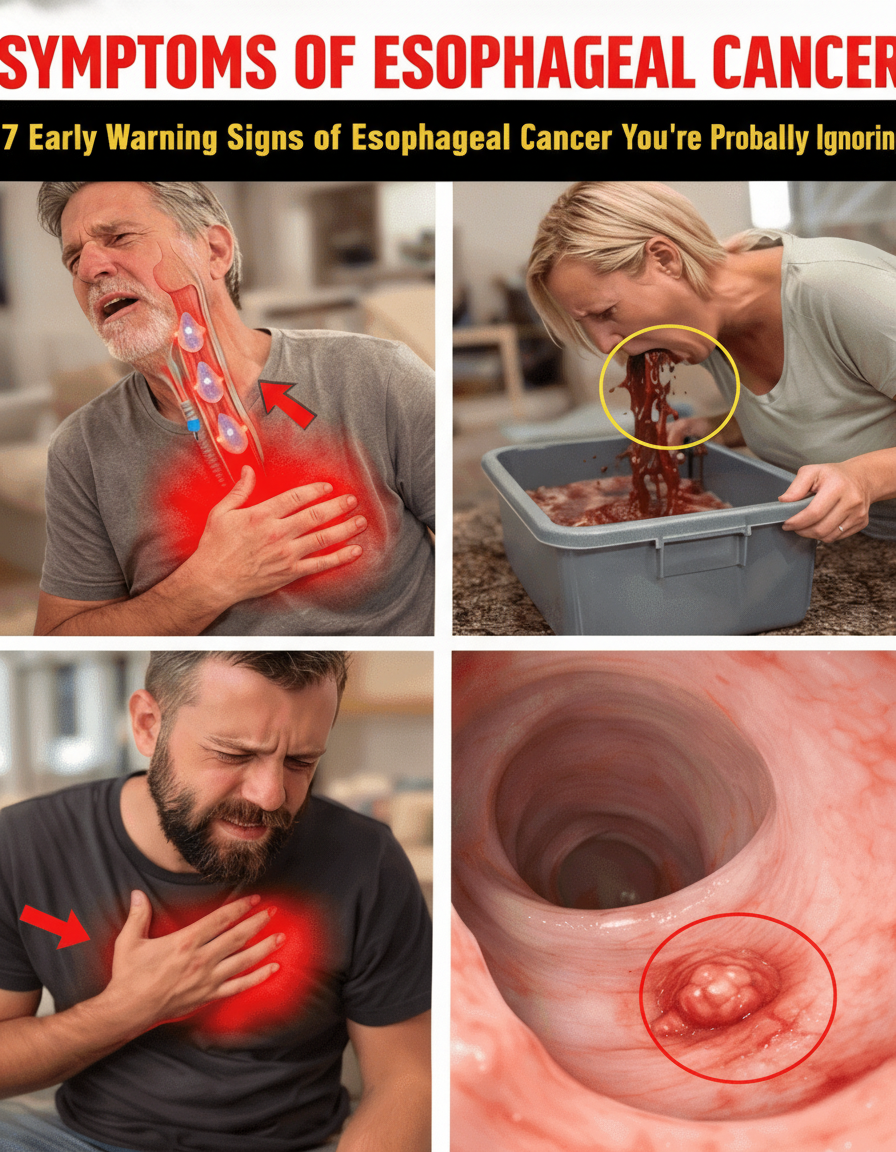
A subtle, yet unsettling, sensation of food hesitating or getting lodged behind the breastbone when swallowing solid foods is a classic early sign. This dysphagia, or difficulty swallowing, occurs as the esophagus begins to narrow due to tumor growth. Individuals often unconsciously adapt by chewing their food more thoroughly or opting for softer textures, unaware of the underlying issue. While initially mild, this symptom can intensify significantly, particularly if accompanied by pain.
-
Painful Swallowing
When each mouthful of food brings sharp discomfort, possibly radiating to your back or chest, it’s a symptom known as odynophagia. This painful swallowing is a more advanced indicator, typically signaling inflammation or a partial obstruction within the esophagus. Dry or coarse foods are common triggers for this pain. Medical research consistently identifies odynophagia as a critical red flag for serious conditions, yet it’s surprisingly often dismissed as merely a severe sore throat. This symptom is directly linked to the subsequent, most common sign.
-
Unintentional Weight Loss
Noticing your clothes fitting loosely without any intentional dietary changes or exercise, coupled with a quiet loss of appetite, can be a significant warning sign. This unintentional weight loss is often driven by a combination of reduced food intake due to swallowing difficulties and increased metabolic demands from the cancer itself. Up to 50% of individuals with esophageal cancer experience a substantial decrease in body weight. While it’s easy to attribute this to stress or other life factors, when combined with other symptoms, it becomes particularly alarming. The most common sign, however, often goes unnoticed for the longest time.
-
Progressive Difficulty Swallowing
This is arguably the most critical and common symptom of esophageal cancer, yet it’s frequently reported late because people gradually adapt. It typically begins as difficulty swallowing solids (dysphagia), then slowly progresses to soft foods, and eventually even liquids. This occurs as the esophageal tumor continues to grow, progressively blocking the passage. It ranks as the top sign because individuals often “adjust” to it over an extended period, unknowingly allowing the condition to advance. Recognizing these patterns is key to early intervention. Let’s further clarify these signs with a comparative overview.
Esophageal Cancer Symptoms: Misconceptions vs. Reality
| Key Warning Sign | Underlying Cause | Common Misdiagnosis |
|---|---|---|
| Persistent Heartburn & Indigestion | Chronic acid exposure damaging esophageal tissue | Routine GERD, dietary sensitivities |
| Difficulty or Painful Swallowing (Dysphagia/Odynophagia) | Esophageal narrowing or obstruction by tumor | Normal aging, anxiety, or minor throat irritation |
| Unexplained Weight Loss & Chest Discomfort | Reduced nutritional intake, tumor-induced pressure | Dieting, stress, general heartburn |
| Chronic Hoarseness & Cough | Tumor irritation of nerves or aspiration risk | Seasonal allergies, common cold, vocal strain |
This comparative overview clearly illustrates how frequently these critical indicators of esophageal cancer are misidentified as less serious ailments. The truth is, recognizing these symptom patterns and their persistence is paramount for timely intervention.
Real Stories: Awareness Made the Difference
To underscore the importance of vigilance, consider real-life scenarios. Take Barbara, a 62-year-old who, for years, dismissed her recurring heartburn. It was only when she developed painful swallowing that subsequent medical evaluations revealed early-stage esophageal cancer. Thanks to prompt treatment, she is now thriving and passionately encourages others not to delay seeking help. Similarly, Tom, 68, initially attributed his persistent hoarseness and gradual weight loss to minor ailments. His chronic cough eventually prompted a thorough medical examination, which fortunately detected localized esophageal cancer. He is now in remission. It’s natural to think, “This won’t happen to me.” However, these powerful narratives demonstrate the profound benefit of listening to your body and acting on its signals. These examples vividly illustrate the life-saving potential of early awareness. So, what proactive steps should you take if these signs resonate with you?
Proactive Steps if You Recognize These Signs
Discovering you might be experiencing these esophageal cancer symptoms can naturally cause concern, but it’s crucial to avoid panic. Instead, focus on taking informed and proactive steps. Your immediate action should be to schedule an appointment with your doctor. Be thorough in describing all your symptoms, their duration, and any patterns you’ve observed. Don’t self-diagnose or dismiss your concerns; only a medical professional can provide an accurate diagnosis. Early consultation can lead to timely diagnostic tests, such as an endoscopy, which are vital for confirming or ruling out esophageal cancer. Remember, advocating for your health by seeking expert medical advice is the most effective way to address any potential issues and ensure the best possible outcome.