 By admin
 Natural Pest Control: Unpacking Baking Soda’s Effectiveness Against Common Household Invaders
Finding unwelcome guests like scurrying cockroaches in your kitchen or waking up to the tell-tale itch of bed bug bites can be incredibly distressing for any homeowner. The presence of these common household pests doesn’t just create an unsanitary environment; it often brings significant anxiety. In the quest for safer, chemical-free pest management solutions, many turn to everyday kitchen staples. Among these, baking soda (sodium bicarbonate) frequently emerges as a popular, seemingly natural remedy. But how effective is this humble ingredient truly when pitted against persistent invaders like cockroaches, ants, bed bugs, and even rodents? This article delves into the potential of baking soda as a DIY pest control method, separating fact from common belief.
Understanding the Science: The Proposed Mechanisms of Baking Soda Against Pests
Sodium bicarbonate, commonly known as baking soda, is a household staple celebrated for its versatility in baking, cleaning, and deodorizing. Its potential application in pest control hinges on two primary theories:
- Gas Production: When baking soda comes into contact with acidic substances, it triggers a chemical reaction that releases carbon dioxide gas. For pests that ingest it, this internal gas buildup is theorized to create fatal pressure within their digestive systems.
- Dehydration: Baking soda is also a desiccant, meaning it possesses moisture-absorbing properties. The theory suggests that direct contact with the powder can draw out essential moisture from the exoskeletons of insects, leading to severe dehydration and ultimately, death.
While these mechanisms sound promising in theory, the practical effectiveness of baking soda against common household pests like ants, cockroaches, and rodents warrants a closer examination.
Baking Soda Against Specific Pests: DIY Methods and Their Efficacy
Cockroaches: Sweet Baits and Beyond
Cockroaches are notoriously resilient, making them a common target for DIY remedies. Several methods propose using baking soda to combat these unwelcome guests:
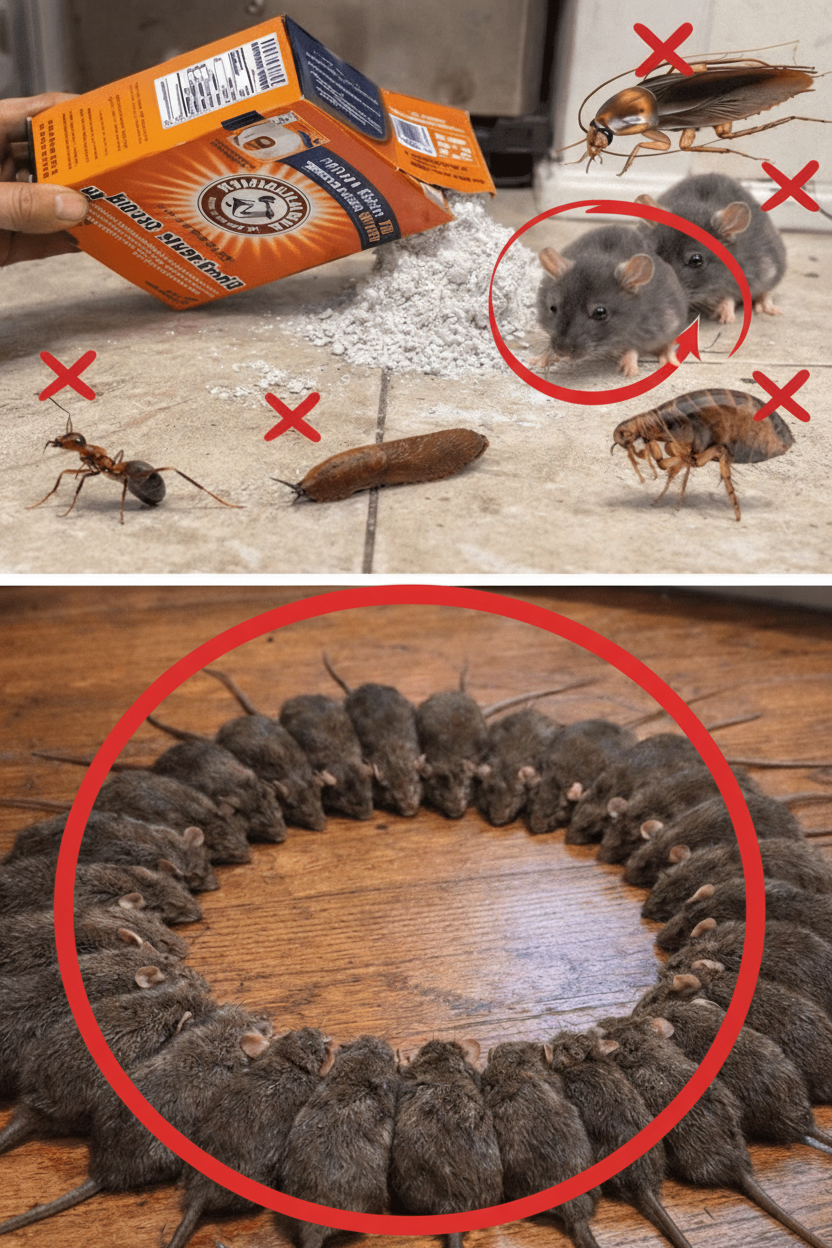
- Sugar-Baking Soda Blend: A widely popular approach involves mixing equal parts of powdered sugar and baking soda. The sugar acts as an irresistible attractant, luring roaches to ingest the mixture. Once consumed, the baking soda is believed to react with their stomach acids, producing gas that proves fatal. Many individuals report a noticeable reduction in cockroach sightings over several weeks when consistently applying this bait. However, it’s crucial to understand that this is not an instant solution and demands patience and persistent application.
- Enhanced Baits (Onion/Peanut Butter/Yeast): To increase the appeal and potential effectiveness, some variations suggest combining baking soda with strong-smelling attractants like chopped onion or peanut butter. The theory remains the same: the bait draws them in, and ingestion leads to internal disruption. Furthermore, adding yeast is sometimes recommended, as yeast itself produces gas, potentially making the bait even more enticing and harmful. While some users claim success with these enhanced baits, results can be inconsistent, with others observing no significant change in cockroach populations.
Ants: Disrupting Their Trails and Colonies
Ants, often seen marching in orderly lines across kitchen counters, are another common household nuisance. The most frequently suggested baking soda solution for ants involves a sugary lure:
- Sweet Bait for Ant Trails: Homeowners often mix baking soda with powdered sugar, similar to the cockroach bait. The idea is that worker ants, attracted to the sugar, will carry the mixture back to their colony, where it will be ingested by other ants, including the queen. The baking soda is then supposed to disrupt their internal systems, potentially leading to the demise of the colony. While anecdotal reports indicate some success in disrupting ant activity, this method isn’t entirely foolproof. Some sources suggest that ants might detect and avoid the unusual taste of baking soda, rendering the bait less effective in certain situations.
Rodents (Mice and Rats): A Controversial Approach
Mice and rats are notorious for finding their way into homes, especially when food sources are abundant. A common, albeit controversial, DIY method for rodent control involves baking soda:
- Sugar/Flour-Baking Soda Bait: This technique suggests mixing baking soda with flour or sugar and placing it in areas where rodent activity is observed, such as near droppings. The underlying theory is that rodents, unlike many other animals, are unable to effectively expel gas. Ingesting baking soda would then lead to an internal buildup of gas, causing severe discomfort and potentially death. While some individuals claim success with this method, it raises significant ethical concerns regarding its humane nature. Given the potential for prolonged suffering, and the difficulty in confirming its efficacy, many experts recommend considering alternative, more humane solutions like traps or professional pest control services for significant infestations.
Bed Bugs: Limited Efficacy and Expert Disagreement
Dealing with a bed bug infestation is often described as a nightmare, making any potential remedy, including baking soda, appealing. However, its effectiveness against these elusive pests is largely disputed:
- Sprinkling Powder on Mattresses: The method involves spreading a thick layer of baking soda powder on mattresses, carpets, and other infested areas. The hope is that the baking soda will absorb moisture from the bed bugs’ bodies, leading to dehydration. Unfortunately, extensive research and expert consensus largely debunk the efficacy of baking soda as a standalone or primary solution for bed bug elimination. While isolated anecdotal reports might suggest a minor reduction in activity, this approach is not widely supported by entomologists or pest control professionals as a reliable treatment. For effective bed bug eradication, professional intervention is almost always recommended.
General Pest Deterrence: The Barrier Method
Beyond targeted baits, baking soda is sometimes used as a general deterrent:
- Sprinkling Powder as a Barrier: A simple method involves sprinkling a line of baking soda powder along baseboards, windowsills, and other known entry points or pathways frequented by pests. The theory is that the powder can absorb oils from the insects’ exoskeletons, potentially acting as a deterrent or irritant. However, evidence suggests that while it might offer some minor, temporary repulsion for certain insects, its effectiveness as a long-term or robust barrier is quite limited. To maintain any perceived effect, consistent application and regular cleaning (e.g., vacuuming) are essential, as the powder can easily be disturbed.
Conclusion: A Balanced Perspective on Baking Soda for Pest Control
While baking soda presents itself as an appealing, non