 By admin
 Critical Warning Signs of a Blood Clot You Must Not Ignore
Imagine you’re navigating your day, perhaps enjoying a peaceful walk or simply relaxing at home, when an unusual sensation strikes: a deep, persistent ache in your chest or a cramping feeling in your leg that just won’t subside. These occurrences aren’t always dramatic; they can often manifest subtly, easily mistaken for common daily discomforts. However, such subtle cues could signal the presence of a blood clot, a potentially life-threatening condition. Whether it’s a deep vein thrombosis (DVT) in the legs or, more critically, a pulmonary embolism (PE) in the lungs, timely recognition is paramount. Individuals over 45, those with prolonged periods of immobility, recent surgical procedures, or specific underlying health issues face an elevated risk. The challenge lies in that many early indicators are often dismissed until severe complications emerge. Could understanding these crucial warning signs be the key to safeguarding your health? Let’s explore the symptoms that demand your attention, backed by insights from reputable health organizations like the Mayo Clinic, CDC, and Cleveland Clinic.
Why Blood Clots Are So Challenging to Identify Early
Blood clots develop when blood thickens and begins to coagulate within veins, most frequently in the deep veins of the legs. This condition, known as deep vein thrombosis (DVT), often presents without prominent warning signals; indeed, nearly half of all DVT cases initially show no obvious symptoms. A far more dangerous scenario arises if a segment of the clot dislodges and travels to the lungs, leading to a pulmonary embolism (PE) – a severe and potentially fatal medical emergency. The insidious nature of early blood clot symptoms is their tendency to mimic everyday complaints such as muscle soreness, general fatigue, or typical signs of aging. How frequently do we brush off a mild leg ache, assuming it will simply resolve itself? Paying close attention to recurring patterns in your health is vital, as recognizing these shifts can be instrumental in protecting your well-being.
Essential Blood Clot Symptoms That Could Save Your Life
Here are the key indicators of a blood clot that warrant immediate attention:
Unilateral Swelling in an Arm or Leg
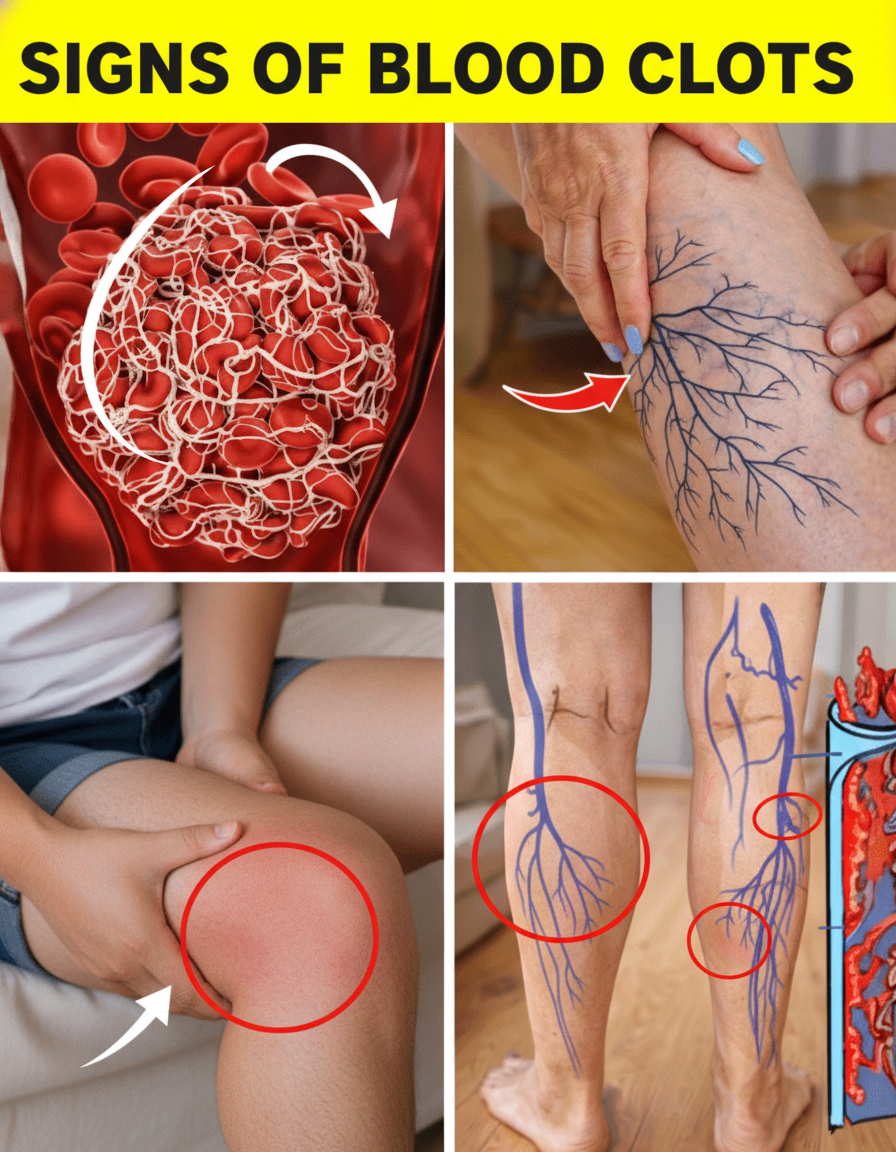
One of the earliest and most telling signs of a potential blood clot is sudden, unexplained swelling that affects only one limb, typically the calf, thigh, or arm. This unilateral swelling indicates that blood flow might be obstructed by a clot. Both the Mayo Clinic and CDC emphasize this as a critical symptom of DVT, highlighting the importance of comparing limbs for any noticeable difference.
Persistent, Cramp-Like Discomfort
Experiencing pain or a cramping sensation in your calf, thigh, or even your arm that feels like a persistent muscle cramp and doesn’t ease with rest is a significant red flag. This discomfort often intensifies with movement, making it distinct from typical muscle soreness. If such a sensation lingers or worsens, especially without a clear cause like strenuous exercise, it’s crucial to seek medical evaluation.
Localized Warmth in the Affected Area
A noticeable increase in skin temperature over the swollen or painful region can be another indicator. This localized warmth is a common sign of inflammation occurring around a developing blood clot. You might detect this difference by gently touching and comparing the affected limb to the unaffected one, noting if one feels distinctly warmer.
Skin Discoloration or Unusual Changes
The skin overlying a clot may exhibit changes in color, appearing reddish, purplish, or bluish. It might also look unusually shiny or feel uncomfortably tight to the touch. For individuals with darker skin tones, these color changes can be more subtle, necessitating a close examination for any atypical shifts in skin tone or texture. Such discoloration directly reflects the clot’s restriction of oxygenated blood flow.
Sudden Shortness of Breath
An abrupt and inexplicable onset of difficulty breathing, particularly if it worsens with physical activity or exertion, is a hallmark symptom of a pulmonary embolism (PE). This is a critical medical emergency requiring immediate attention, as it indicates a clot may be obstructing blood flow to the lungs.
Sharp Chest Pain Aggravated by Breathing
If you experience a sudden, sharp, or stabbing pain in your chest that intensifies when you take a deep breath, cough, or move, it could be a sign of a PE. This type of chest pain can sometimes be confused with a heart attack, underscoring why it should never be dismissed and always warrants prompt medical evaluation.
Rapid or Irregular Heartbeat
A racing pulse or an erratic heartbeat can signal a blocked artery in the lungs, often due to a pulmonary embolism. This symptom can manifest even when you are at rest and is a serious cause for immediate concern, as the heart works harder to compensate for reduced blood flow.
Coughing Up Blood
Developing an unexplained cough that produces blood-streaked or bloody mucus is a significant warning sign. This symptom suggests that a blood clot may be impacting your lungs, potentially causing irritation and bleeding within the respiratory system.
Lightheadedness, Dizziness, or Fainting
A sudden sensation of lightheadedness, dizziness, or even a complete fainting spell can occur due to a drop in blood pressure or oxygen levels, particularly in the event of a PE. This alarming symptom demands immediate medical assessment to determine its cause and prevent further complications.
Excessive Sweating or Clammy Skin
Experiencing cold, clammy skin accompanied by heavy, unexplained sweating are also common indicators that your body is under significant stress, potentially from a severe medical event like a pulmonary embolism.”
“`