 By admin
 Understanding Forward Head Posture: Essential Insights for Healthy Aging After 60
Forward head posture (FHP) is a prevalent postural deviation characterized by the head shifting forward beyond the line of the shoulders. This seemingly minor shift can significantly increase the mechanical load placed on the delicate muscles and structures of the neck and upper spine. Scientific studies consistently demonstrate that for every inch the head projects forward, the strain on the cervical spine can amplify dramatically. Over time, particularly as we age, this sustained stress can manifest as chronic discomfort, reduced neck mobility, and even impact overall quality of life.
In cultures that prioritize longevity and active aging, such as Japan, the emphasis on maintaining proper body alignment through gentle, consistent habits has long been a cornerstone of health. Renowned physicians like the late Dr. Shigeaki Hinohara, who practiced medicine well into his later years, were strong advocates for incorporating simple, daily movements to foster holistic well-being. While no single exercise offers a miraculous cure, embracing easy-to-follow routines can cultivate greater awareness of one’s posture and encourage the development of healthier habits. The encouraging truth is that even small, mindful efforts, when consistently applied, can yield noticeable and cumulative benefits.
The Science Behind Gentle Neck Movements for Postural Correction
Research in rehabilitation and physical therapy journals consistently underscores the efficacy of targeted exercises in supporting improved head and neck positioning. Specifically, strengthening the deep neck flexor muscles and gently stretching tight areas can counteract the forward pull often associated with FHP. For instance, engaging the deep cervical flexors helps to gently draw the head back into a more neutral alignment.
Studies published in reputable, peer-reviewed sources like PubMed highlight that a consistent regimen of specific exercises can lead to measurable improvements in the craniovertebral angle – a key indicator of head alignment – over a period of several weeks. These corrective approaches are designed to be low-impact, making them particularly well-suited for older adults when introduced gradually. The fundamental principle is consistency rather than high intensity; short, regular sessions are more effective in building lasting habits without overwhelming the body.
A Simple 4-Minute Daily Routine to Support Better Alignment
This gentle routine draws inspiration from established senior health practices, including those popular in Japan, and widely recommended exercises for posture support. It focuses on cultivating awareness, gentle muscle activation, and tension release. No specialized equipment is required, though a small towel might be useful for one step. Aim to perform this routine once or twice daily, starting slowly to ensure comfort and proper form.
Step 1: Warm-Up Neck Mobility (Approximately 1 Minute)
Begin by sitting or standing in a comfortable position, ensuring your shoulders are relaxed. Gently nod your head up and down as if affirming “yes,” keeping the movements small, smooth, and controlled. Next, slowly tilt your head from side to side, bringing your ear towards your shoulder without forcing the movement. Conclude this warm-up with slow, controlled neck circles, performing 3-5 repetitions in each direction. This prepares the neck muscles by increasing blood flow and loosening the surrounding tissues.
Step 2: Enhanced Chin Tuck (Core Movement – Approximately 1-2 Minutes)
This crucial exercise specifically targets the deep muscles responsible for drawing the head back into optimal alignment. Sit or stand tall, maintaining a gaze straight ahead. Place a finger lightly on your chin as a guide. Gently slide your chin straight back, as if attempting to create a subtle double chin, without tilting your head up or down. Hold this position for 3-5 seconds, focusing on feeling a gentle engagement at the front of your neck. Slowly release and repeat 8-10 times.
Pro Tip: Initially, perform this exercise in front of a mirror to ensure correct alignment. Many individuals find it helpful to visualize a string gently pulling the crown of their head upwards. Studies indicate that variations of this movement effectively engage key stabilizing muscles in the neck.
Step 3: Towel or Resistance Support (Approximately 1 Minute)
For additional gentle feedback and resistance: Roll a small towel into a cylindrical shape and position it behind your neck, specifically at the base of your skull. While maintaining the chin tuck position, gently press the back of your head into the towel. Hold this light resistance for 5-10 seconds, then release. Repeat this 5-8 times. This provides mild resistance to strengthen the neck muscles without causing strain.
Step 4: Thoracic Extension Release (Closing – Approximately 30-60 Seconds)
Stand with your back against a wall or sit upright in a chair with good posture. Place your hands behind your head, allowing your elbows to point outwards. Gently arch your upper back slightly, focusing on opening the chest, while keeping your lower back in a neutral position. Hold this stretch for 10-15 seconds, breathing deeply, then slowly release. This movement helps to open the often-rounded upper back, complementing the neck work and promoting a more upright overall posture.
Anticipating Progress: The Journey to Better Posture
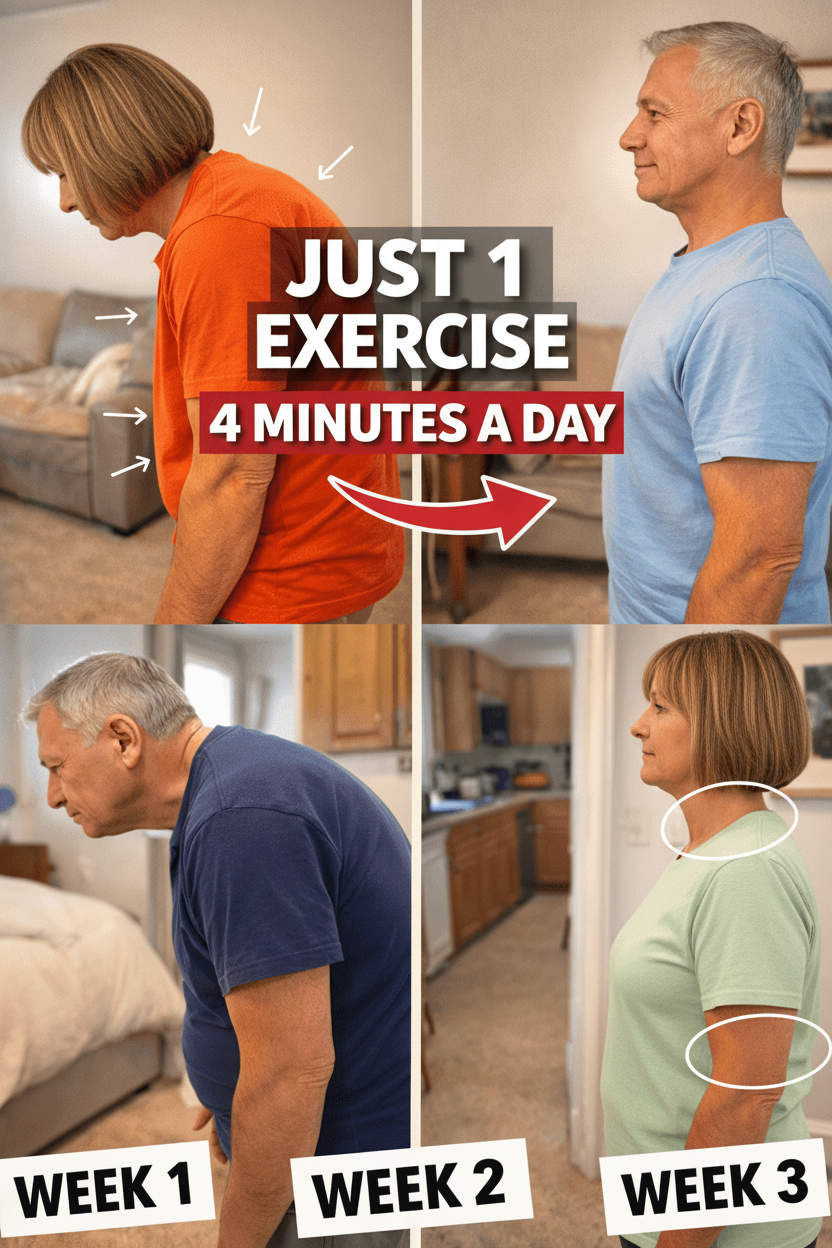
Many individuals who integrate this routine into their daily lives report subtle yet significant improvements over time. Here’s a general progression to expect:
Week 1 — You may notice increased awareness of your head position throughout the day, leading to less automatic slouching and greater mindfulness of posture.
Week 2 — Your neck might feel gentler and more relaxed after sessions, and you may find it easier to maintain a taller, more upright posture while sitting or standing.
Week 3+ — A more natural upright stance may begin to emerge, potentially accompanied by a reduction in daily tension buildup in the neck and shoulders. Of course, individual results can vary based on consistency and personal factors.
Additional Tips to Support Everyday Alignment
To ensure lasting progress and integrate better posture into your daily life, consider weaving these simple habits into your routine:
- Set periodic phone reminders (e.g., hourly) to briefly check your posture. When reminded, roll your shoulders back and gently perform a quick chin tuck.
- Adjust your computer monitor or tablet screen height so that your eyes naturally meet the top third of the display. This encourages a neutral head position.
- Incorporate short, mindful walks into your day, focusing on maintaining an upright posture and looking straight ahead rather than down at the ground.
”
}
“`