 By admin
 7 Subtle Prostate Cancer Symptoms Men Often Ignore (And Why Early Detection Matters)
For many men over 40, daily life proceeds without a second thought to the subtle shifts occurring within their bodies. Yet, these minor changes could be critical indicators of more serious underlying health issues, such as prostate problems. Prostate cancer frequently progresses silently in its initial stages, presenting symptoms that are easily dismissed as insignificant or attributed to the natural aging process, everyday stress, or other common ailments. This tendency to disregard early warning signs often leads to a delayed diagnosis, sometimes when the condition has advanced beyond its most treatable phase. Organizations like the American Cancer Society highlight that prostate cancer impacts approximately one in eight men, underscoring the vital role of symptom awareness in encouraging timely medical consultations. The good news, however, is empowering: proactive attention to your body and open discussion of any unusual developments with a healthcare professional can dramatically improve the chances of early detection and better outcomes. This comprehensive guide will explore seven frequently overlooked signs, drawing on research from respected institutions like the Mayo Clinic and WebMD, and provide actionable steps to take if you experience any concerning symptoms. Make sure to read until the end for a simple, daily practice recommended for supporting optimal prostate health.
What Makes These Signs So Easy to Overlook?
Prostate cancer doesn’t always announce its presence with clear, unmistakable symptoms right away. In its nascent stages, many individuals experience no symptoms at all. When changes do manifest, they frequently mimic symptoms of benign conditions, such as an enlarged prostate (Benign Prostatic Hyperplasia or BPH), urinary tract infections (UTIs), or simply the natural process of aging. Extensive studies indicate that alterations in urinary patterns are among the earliest clues, yet men commonly dismiss these as “normal” until they become significantly worse. The crucial element here is to recognize persistent patterns or clusters of symptoms rather than isolated incidents. If you observe several of these indicators persisting for more than a couple of weeks, it is strongly advised to bring them to your doctor’s attention during your next medical check-up.
1. Increased Urination Frequency, Especially at Night
One of the most commonly reported yet frequently ignored early indicators is an increased need to urinate more often than usual. This might involve waking up multiple times during the night to use the bathroom (a condition known as nocturia) or experiencing a heightened urge to urinate throughout the day. This phenomenon occurs because an expanding prostate gland can exert pressure on the bladder and urethra, thereby reducing the bladder’s capacity to hold urine. Research from the Mayo Clinic emphasizes that frequent nighttime bathroom visits, in particular, can disrupt sleep and diminish daily energy levels, yet they are often brushed aside as an inevitable aspect of aging.
2. Difficulty Initiating or Maintaining Urine Flow
Struggling to begin urination, noticing a weak urinary stream, or experiencing a flow that repeatedly starts and stops can be a significant sign that the prostate is impacting the urethra. Men often describe this as urinary hesitancy or a persistent sensation that their bladder has not completely emptied. According to the American Cancer Society, these types of urinary flow issues are present in many cases and frequently overlap with non-cancerous prostate conditions, which explains why they are often undervalued or overlooked.
3. Weak or Interrupted Urine Stream
Closely related to the previous point, a distinctly weaker urinary stream or one that tapers off into a dribble at the end is another prevalent yet subtle symptom. You might find that it takes considerably longer to finish urinating or that you need to strain slightly to maintain the flow. Experts at WebMD clarify that this occurs as the prostate gland enlarges and progressively narrows the urinary passage. Many men unconsciously adjust to these changes without recognizing that they are not typical or healthy.
4. Burning Sensation or Pain During Urination
A mild burning sensation experienced while passing urine, or discomfort felt immediately afterward, can serve as an often-overlooked warning sign. While such feelings are frequently associated with urinary tract infections, persistent dysuria (painful urination) without a clear infectious cause warrants prompt medical evaluation. Reputable sources like Johns Hopkins Medicine note that this symptom can be indicative of certain prostate concerns and should not be dismissed if it continues over time.
5. Blood in Urine or Semen
Discovering blood, even in minute quantities, in your urine (hematuria) or semen can be alarming. However, it is sometimes dismissed as a solitary occurrence or attributed to minor physical strain. The urine might appear pinkish, distinctly red, or even cola-colored. The Mayo Clinic categorizes this as a crucial symptom that demands immediate medical review, as it could signal underlying issues within either the urinary or reproductive tracts.
6. Pelvic or Lower Back Discomfort
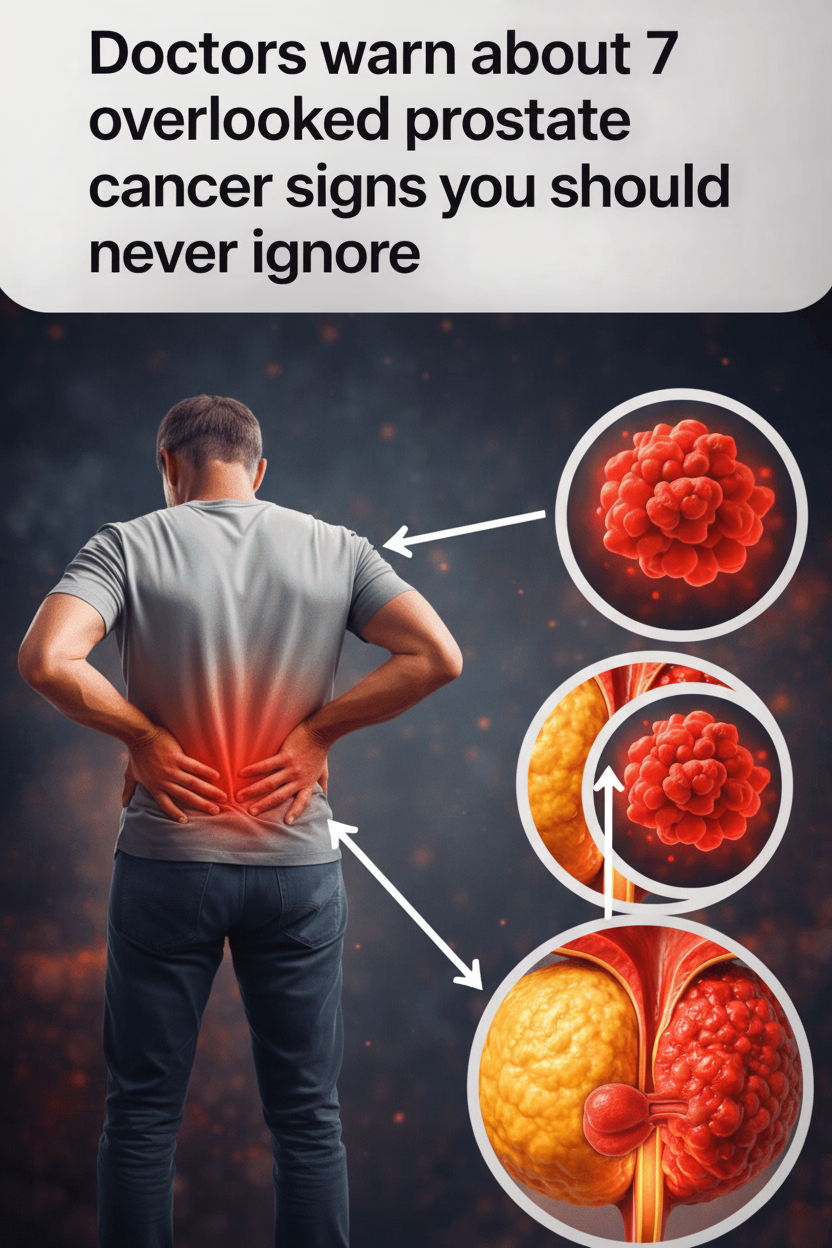
A persistent, dull ache or a feeling of pressure in the pelvic region, lower back, hips, or upper thighs can develop gradually. This discomfort may originate from localized pressure exerted by the prostate or, in more advanced scenarios, indicate the spread of cancer to bones. The American Cancer Society emphasizes that while bone or pelvic pain often manifests in later stages, earlier, milder discomfort is frequently misdiagnosed as simple muscle strain or soreness from prolonged sitting.
7. Changes in Sexual Function
Experiencing difficulty achieving or maintaining an erection (erectile dysfunction), a noticeable reduction in semen volume during ejaculation, or discomfort/pain during ejaculation are sensitive signs that many men are hesitant to discuss. These changes can be directly linked to prostate health, as the prostate plays a role in affecting surrounding nerves and blood flow critical for sexual function. WebMD reports that issues such as erectile difficulties or painful ejaculation are present in some prostate cancer cases and are highly valuable information to share with a doctor, despite any potential embarrassment.
Quick Comparison: Common vs. Concerning Urinary Changes
Understanding the distinction between typical age-related urinary changes and those that warrant medical attention is crucial for prostate health. While some minor variations in urinary habits can be benign, persistent or worsening symptoms like those listed above should never be ignored. To support overall prostate well-being, consider incorporating a simple daily habit: staying well-hydrated throughout the day with water and reducing caffeine and alcohol intake, especially in the evenings. Regular physical activity and a balanced diet rich in fruits, vegetables, and healthy fats also contribute significantly. Most importantly, schedule regular check-ups with your healthcare provider and openly discuss any concerns, as early detection remains your best defense against prostate cancer.