 By admin
 Hiatal Hernia: 10 Common Symptoms You Should Know
Many individuals frequently encounter post-meal discomfort, such as a burning sensation in the chest or an uncomfortable feeling of premature fullness. These seemingly minor issues can significantly impact daily routines, transforming meal times into sources of stress and leading to disturbed sleep or persistent anxiety about potential symptom flare-ups. Leading medical institutions, including the Mayo Clinic and Cleveland Clinic, highlight that such persistent digestive distress often points to conditions where a section of the stomach protrudes through the diaphragm. Recognizing these prevalent indicators early is crucial for identifying emerging patterns and facilitating timely discussions with a healthcare professional.
Understanding a Hiatal Hernia
A hiatal hernia develops when a portion of the stomach pushes upward through the hiatus—an opening in the diaphragm—and into the chest cavity. The diaphragm, a crucial muscle separating the chest from the abdomen, plays a vital role in respiration. While minor hiatal hernias are quite prevalent, particularly in individuals over 50, they frequently present without any noticeable symptoms. Conversely, larger hernias can facilitate the reflux of stomach acid and contents back into the esophagus, leading to irritation and discomfort. Medical studies confirm that a significant number of cases are asymptomatic; however, when symptoms manifest, they are typically associated with acid reflux or the physical pressure exerted by the displaced stomach.
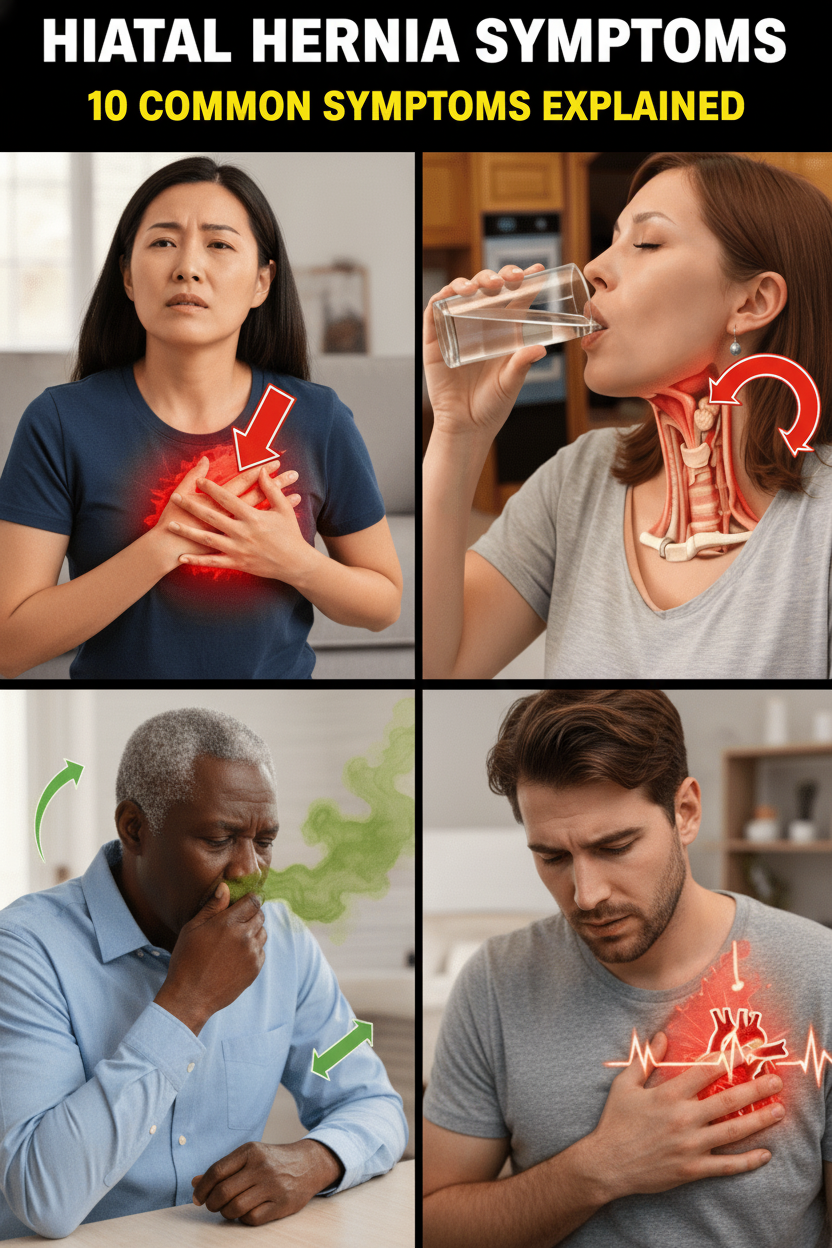
10 Key Signs and Symptoms of Hiatal Hernia
Based on information from trusted medical sources, here are ten frequently reported signs and symptoms associated with a hiatal hernia. It’s important to remember that these indicators can often resemble symptoms of other conditions, making professional medical evaluation absolutely essential for accurate diagnosis.
- Heartburn: Characterized by a burning sensation in the chest, typically experienced after meals or when reclining. This occurs due to the backflow of stomach acid into the esophagus.
- Acid Reflux or Regurgitation: Manifests as a sour or bitter taste in the mouth, caused by food or liquid unexpectedly flowing back up from the stomach. This can also present as a sensation of food being caught in the throat.
- Chest Pain or Discomfort: A non-cardiac chest pain that often feels like pressure. This discomfort frequently intensifies after eating or when bending over.
- Difficulty Swallowing (Dysphagia): A sensation where food seems to get lodged in the throat or chest, necessitating increased effort to swallow.
- Feeling Full Quickly (Early Satiety): Experiencing a sense of satisfaction after consuming only a small amount of food, even if still hungry. This symptom arises because the displaced stomach has limited capacity for expansion.