 By admin
 Have you ever paused to truly examine your fingernails? Beyond their cosmetic appearance, your nails can serve as surprising indicators of your overall health. Subtle alterations in their color, texture, or shape may signal underlying health issues that extend far beyond routine nail maintenance. It’s common for individuals to dismiss these nuanced cues, attributing them to the natural aging process, minor injuries, or daily wear and tear. However, paying closer attention to these details can prompt you to address potential bodily concerns sooner rather than later. The encouraging news is that gaining insight into these specific signs equips you with the knowledge to proactively enhance your well-being. This article delves into nine frequently observed nail characteristics that scientific research connects to various facets of your health, alongside actionable strategies for cultivating robust, healthy nails starting today.
Why Your Nails Can Be Health Barometers
Your nails are not merely inert structures; they originate from living tissue and inherently reflect the internal processes of your body over extended periods. Reputable institutions such as the Mayo Clinic and Cleveland Clinic have published studies indicating that alterations in nail appearance frequently arise from nutritional deficiencies, circulatory problems, or other systemic health patterns. While it’s true that not every variation signifies a serious condition—many are benign or transient—any persistent or abrupt changes warrant careful observation. The remarkable aspect of this is that by understanding these indicators, you gain the ability to identify potential health issues early, empowering you to make well-informed decisions regarding your lifestyle and daily routines.
1. The Benchmark of Healthy Nails: What to Look For
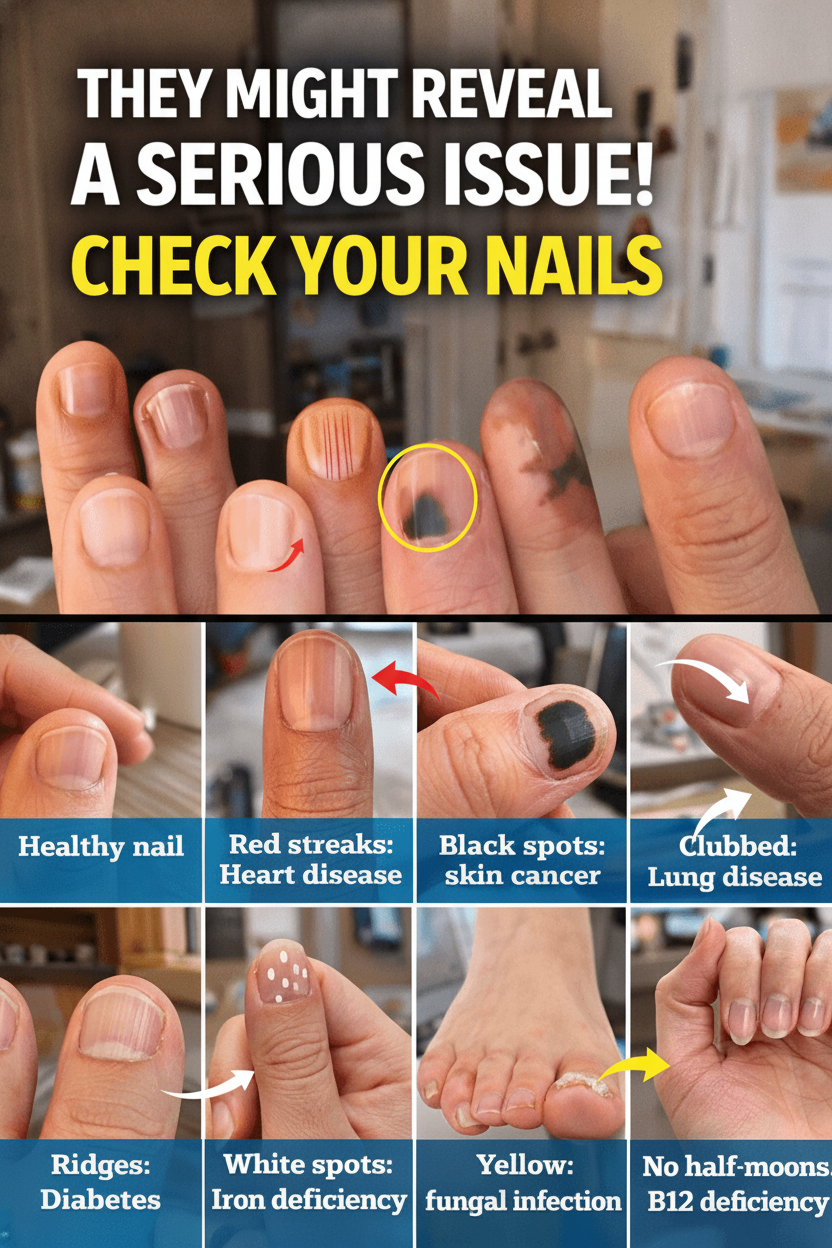
A healthy nail generally presents as smooth, possessing a subtle pink hue, often with a faint white crescent (known as the lunula) visible at its base. It should feel firm, devoid of prominent grooves or discolored spots. The nail’s surface ought to be uniform, and it should adhere firmly to the nail bed beneath. Consistent moisturizing practices and a well-rounded diet are crucial for preserving this optimal appearance. Should your nails consistently align with this description, it serves as an excellent indicator of diligent overall self-care.
2. Vertical Ridges: Common, Often Age-Related, or Nutritional Indicators
Fine vertical lines, extending from the cuticle to the nail tip, are a frequent occurrence as individuals age and are typically benign. Studies suggest these longitudinal ridges