 By admin
 In the hustle of daily life, women often dismiss minor bodily changes as inconsequential, attributing them to fatigue, stress, or a busy schedule. However, some of these seemingly trivial symptoms can be crucial early indicators of cancer, quietly signaling a need for attention. Recognizing these subtle warning signs promptly significantly improves the chances of early diagnosis and successful treatment. This comprehensive guide highlights 14 such symptoms that women frequently overlook, some of which may be quite unexpected.
Why Are These Critical Early Indicators Often Missed by Women?
Several factors contribute to this oversight:
- Symptoms may emerge subtly and progress slowly, making them easy to disregard.
- Many signs can mimic common, benign conditions, leading to self-diagnosis and delayed medical consultation.
- Women frequently prioritize the needs of others, neglecting their own health concerns.
- There’s often a reluctance to “make a fuss” or appear overly anxious about health issues.
Crucially, these symptoms warrant immediate attention when they are new, persist for an unusual duration, or progressively worsen over time.
14 Subtle Cancer Signs in Women That Are Far Too Easy to Ignore
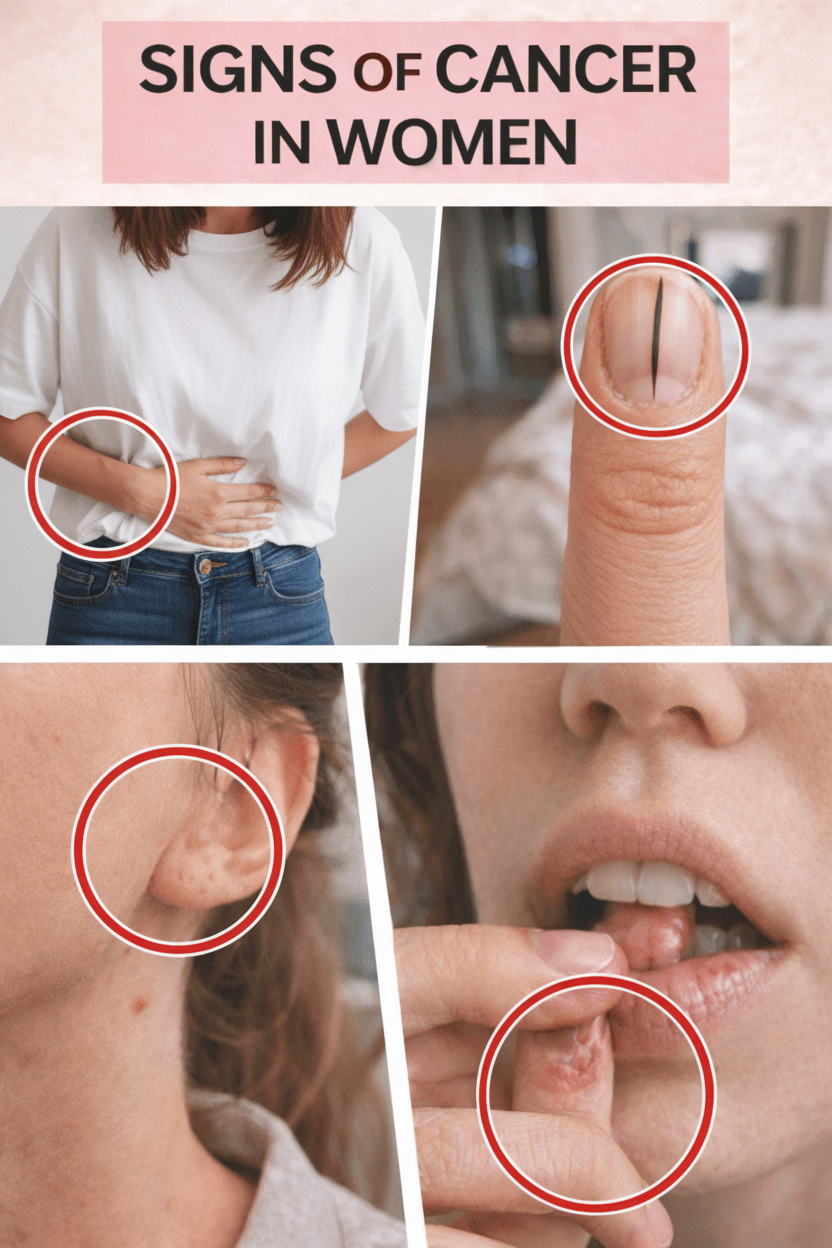
1. Persistent Bloating That Doesn’t Resolve
While occasional bloating is common, chronic abdominal swelling or tightness that lasts for several weeks, even without significant food intake, is a red flag. This symptom becomes particularly concerning for women when accompanied by:
- Feeling unusually full very quickly after starting to eat.
- Experiencing persistent pelvic or abdominal pain and pressure.
- An increased frequency of urination.
These combined symptoms can sometimes indicate ovarian cancer or other serious conditions, necessitating prompt medical evaluation.
2. New Dark Vertical Line on a Nail (Melanonychia)
The appearance of a new, dark, vertical stripe on a single fingernail or toenail, known as melanonychia, is a sign many women might dismiss. However, it requires careful attention, particularly if the stripe:
- Shows signs of widening.
- Has an irregular or blurred border.
- Exhibits pigment spreading into the surrounding skin or cuticle.
This specific change is rarely associated with melanoma (a serious form of skin cancer) by the general public, making medical consultation imperative if observed.
3. Persistent Abdominal or Pelvic Discomfort (Unrelated to Menstruation)
Beyond typical menstrual discomfort, a dull, nagging, or vague ache in the abdomen or pelvis that doesn’t subside is a significant symptom for women to monitor. This type of discomfort is often characterized by:
- Its continuous presence, failing to resolve on its own.
- An exacerbation of symptoms after meals.
- A duration spanning several weeks or even months.
Many women mistakenly attribute this to common digestive issues or transient gynecological problems, delaying a potentially vital diagnosis.
4. A New or Evolving Mole, Particularly After Age 30
Regular self-skin checks are crucial, especially for women over 30. Pay close attention to any new moles or changes in existing ones, using the “ABCDE” criteria for melanoma detection:
- Asymmetry: One half of the mole does not match the other.
- Border: The edges are irregular, ragged, notched, or blurred.
- Color: The mole has uneven color, or shades of black, brown, and tan.
- Diameter: The mole is larger than 6 millimeters (about the size of a pencil eraser).
- Evolving: The mole is changing in size, shape, color, or elevation, or any new symptom like bleeding, itching, or crusting.
A mole that stands out as distinctly different from your other moles (the “ugly duckling” sign) should always prompt a dermatologist visit.
5. A Mouth Sore That Persists for Over Three Weeks
Any lesion, ulcer, or patch in the mouth that doesn’t heal within three weeks warrants immediate medical attention. This includes:
- Persistent white or red patches inside the mouth.
- Small sores or ulcers on the tongue, inner cheek, gums, or floor of the mouth.
- Areas that bleed easily upon touch or irritation.
Women often attribute these symptoms to minor irritations, stress, or dietary factors, delaying a potentially life-saving diagnosis of oral cancer.
6. Persistent Hoarseness or Noticeable Voice Changes
A change in voice, such as hoarseness, that lasts for more than three to four weeks should not be ignored. This symptom is particularly concerning for women if:
- You are not suffering from a cold or respiratory infection.
- You do not have known allergies that might affect your vocal cords.
- You haven’t been overusing your voice through activities like singing or public speaking.
Prolonged hoarseness could be an early sign of laryngeal or thyroid cancer, making a medical consultation essential.
7. Unexplained Bleeding, Especially Post-Menopause
Any form of unusual bleeding is a critical warning sign for women. Specifically:
- Post-Menopausal Vaginal Bleeding: Any vaginal bleeding occurring one year or more after confirmed menopause is considered abnormal and requires immediate investigation to rule out uterine or endometrial cancer.
- Inter-Menstrual Bleeding: For women still menstruating, bleeding between regular periods warrants medical attention.
- Post-Coital Bleeding: Bleeding after sexual intercourse is also a concerning symptom that should be promptly discussed with a healthcare provider.
These types of bleeding can be indicators of various gynecological cancers.
8. A New Lump in the Breast or Armpit, Regardless of Pain
Discovering a lump in the breast or armpit is a common concern for women. While it’s true that the majority of breast lumps are benign, it’s crucial to understand that:
- Many painful lumps are often benign.
- Even most painless lumps are not cancerous.
- However, any newly discovered lump or mass that you can feel, whether painful or not, necessitates immediate medical evaluation by a healthcare professional. This is a primary indicator for potential breast cancer and early detection is vital.
9. Persistent, Unrelenting Fatigue Distinct from Normal Tiredness
Fatigue is a common complaint, but a profound, chronic exhaustion that is fundamentally different from typical tiredness can be a subtle cancer symptom in women. Key characteristics of this concerning fatigue include:
- Waking up feeling completely drained, even after a full night’s sleep.
- Rest and sleep providing no significant relief from the exhaustion.
- The fatigue persisting for many weeks or months.
- An intensity far surpassing your usual levels of tiredness.
This type of fatigue is often systemic and can indicate underlying health issues, including certain cancers.
10. Unexplained Weight Loss Without Intent
Significant, unintentional weight loss is a key warning sign that women should never ignore. If you experience a loss of 5-10% or more of your body weight over a period of 6 to 12 months, without making any conscious efforts such as:
- Altering your dietary habits.
- Increasing your physical activity or exercise routine.
- Having a readily identifiable illness like a severe infection.
This type of unexplained weight loss is a critical symptom that warrants urgent medical investigation to rule out various underlying conditions, including several types of cancer.
11. Widespread Itchy Skin Without a Visible Rash
Generalized itching across the body, especially when no obvious rash or skin condition is present, can be an unusual but important cancer symptom. This symptom is particularly concerning for women if:
- The itching is intense and persistent.
- It worsens significantly during the night.
- There are no visible signs of common skin conditions like eczema or psoriasis.
- You haven’t introduced any new detergents, perfumes, or foods that could trigger an allergic reaction.
Persistent, unexplained itching can sometimes be linked to certain blood cancers (like lymphoma) or liver issues.
12. Persistently Swollen Lymph Nodes
Lymph nodes, small glands that are part of your immune system, can swell due to infections. However, if lymph nodes remain enlarged for more than three to four weeks, particularly in specific areas, it’s a cause for concern. Pay special attention to swelling in:
- The area above your collarbone.
- Your armpits.
- Various locations in your neck.
These persistent swellings, especially without an accompanying infection, can be a sign of lymphoma, leukemia, or other cancers spreading.
13. New or Significantly Different Headaches
While headaches are common, a sudden change in their pattern or severity can be a red flag for women. Seek medical advice if you experience:
- A completely new type of headache or a significant change in your headache pattern, especially if you are over 40-45 years old.
- “The worst headache of your life,” which can indicate a serious underlying condition.
- Headaches accompanied by nausea or vomiting, particularly in the morning.
- Headaches combined with other neurological symptoms, such as vision changes, weakness, or numbness.
These could be signs of a brain tumor or other neurological issues requiring prompt investigation.
14. Persistent Changes in Bowel Habits
Alterations in bowel habits that last for several weeks should be a significant concern for women, as they can indicate colorectal cancer. Pay close attention to these warning combinations:
- Alternating bouts of diarrhea and constipation.
- Stools that are unusually narrow or &