 By admin
You settle into bed, weary from the day, and drift off to sleep without much trouble. But then, sometime between 1 AM and 4 AM, you’re roused by an urgent need to urinate – perhaps once, twice, or even three times. The most frustrating part? Once you’re back in bed, falling asleep again becomes a frustrating struggle.
Many individuals dismiss this pattern as a natural part of “getting older” or simply attribute it to “drinking too much liquid.” However, emerging research suggests that for a significant number of people, repeatedly waking up at night to urinate could be an early indicator of underlying cardiovascular issues. What’s even more surprising is how many people have experienced this for years without ever connecting it to their heart health.
Understanding Nocturia: More Than Just a Full Bladder
The medical term for needing to wake up one or more times during the night to ur urinate is nocturia. While various factors can contribute to this condition, many commonly recognized causes include:
- Consuming excessive fluids, particularly caffeinated or alcoholic beverages, in the evening.
- Enlargement of the prostate gland in men.
- An overactive bladder.
- Diabetes.
Indeed, these are all legitimate and widespread causes of nocturia. Yet, there’s a crucial underlying factor that is frequently overlooked, and it has a direct connection to your heart.
The Unexpected Connection Between Nocturia and Cardiac Function
When the heart’s pumping efficiency is compromised, especially during the day when you’re active and upright, fluid tends to accumulate in the lower extremities, such as the legs and feet. This is a common symptom of various heart conditions.
Here’s how this fluid retention leads to increased nighttime urination:
When you lie down flat at night, two significant physiological changes occur:
- The gravitational pressure on the veins in your legs diminishes.
- Your body begins to reabsorb and redistribute the accumulated fluid from your lower body back into your bloodstream.
Consequently, your kidneys suddenly receive a much larger volume of blood and fluid to filter. This increased filtration leads to a surge in urine production, which then prompts you to wake up and head to the bathroom. This phenomenon is specifically known as nocturnal polyuria related to heart function and is frequently observed in individuals with:
- Mild to moderate heart failure.
- Early stages of reduced cardiac pumping capacity.
- Long-standing high blood pressure that has begun to impact the heart.
Scientific Evidence Supports the Link
A growing body of research, including numerous large-scale studies conducted in recent years, has consistently underscored this critical connection:
- Individuals who wake up two or more times per night to urinate face a significantly elevated risk of experiencing cardiovascular events within the subsequent 5 to 10 years.
- Nocturia occurring two or more times nightly is recognized as an independent risk factor for conditions such as hypertension (high blood pressure), heart failure, and atrial fibrillation.
- Among patients already diagnosed with heart failure, a staggering 70-80% experience nocturia. Notably, this symptom often manifests even before other common signs like shortness of breath or leg swelling appear.
7 Potential Indicators That Your Nocturia May Be Heart-Related
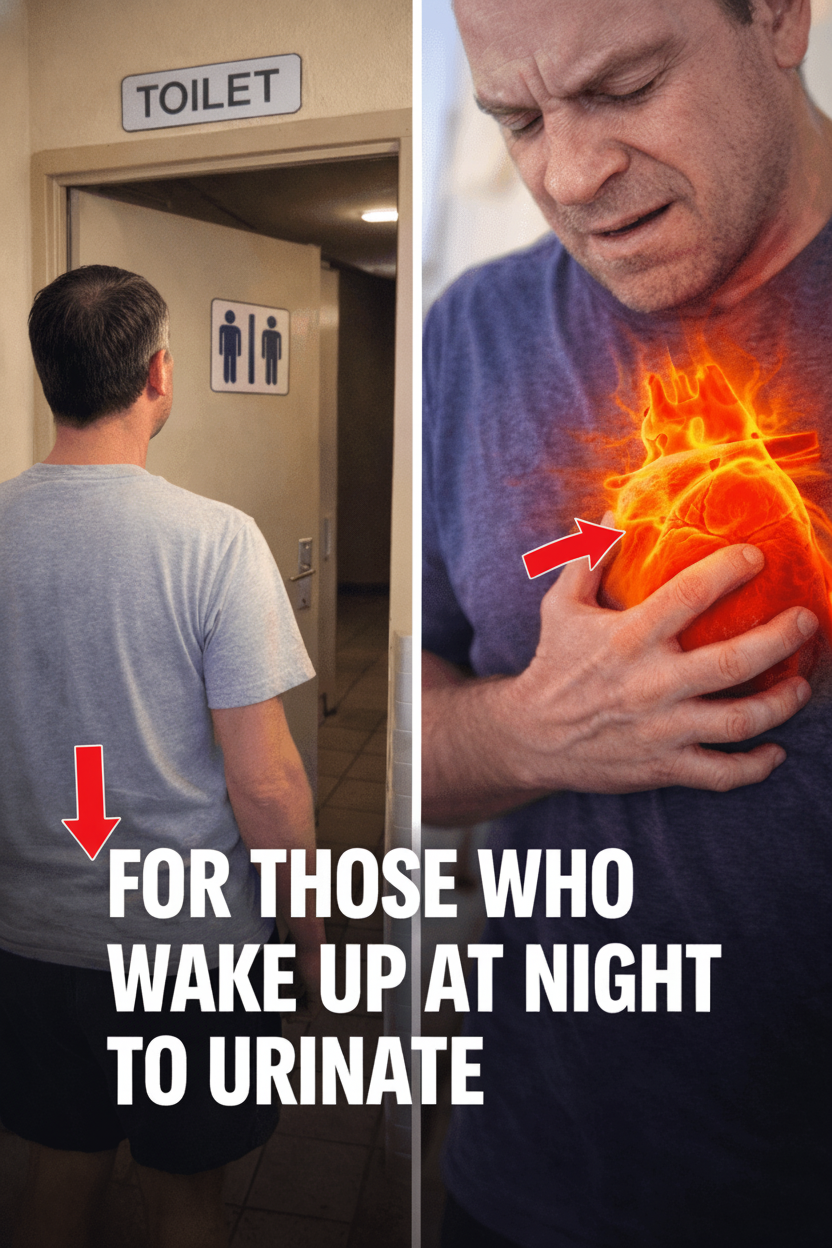
While occasional nighttime urination can be normal, pay close attention if your frequent trips to the bathroom are accompanied by any of these signs, as they may suggest a cardiac connection:
- You consistently wake up two or more times (especially three or more times) almost every night.
- Your legs or feet frequently feel heavy or appear slightly swollen by late afternoon or evening.
- Upon waking to urinate, you notice your heart beating unusually fast or irregularly for a brief period.
- You experience unusual fatigue in the morning, even after seemingly getting enough hours of sleep.
- You find yourself short of breath during routine activities, such as climbing stairs or walking briskly.
- Your blood pressure readings at home are consistently difficult to control or show a gradual increase.
- You are over 50 years old and have a history of high blood pressure, diabetes, or high cholesterol.
Steps to Take If You Suspect a Heart-Related Issue
If you recognize these warning signs, it’s crucial to take proactive steps towards understanding and addressing the situation:
-
Keep a Detailed Record for 3-7 Days:
Honestly document the following: how many times you wake up to urinate each night, the approximate time of each occurrence, the estimated volume of urine (a lot or just a little), and whether you notice any leg swelling in the evening.
-
Mind Your Evening Fluid Intake:
For a few days, try reducing your fluid consumption, particularly coffee, tea, and alcohol, after 7-8 PM. Observe if this significantly improves your nighttime urination frequency.
-
Elevate Your Legs in the Late Afternoon:
Spend about 30-45 minutes in the late afternoon lying down or sitting with your legs elevated. This simple action can help reduce fluid accumulation in your lower body before nightfall.
-
Consult a Healthcare Professional When You Have Sufficient Information:
If you have multiple warning signs, it’s essential to seek medical advice. The most appropriate specialists include:
- A cardiologist (heart specialist).
- An internal medicine doctor with expertise in cardiology.
- In certain instances, a nephrologist (kidney specialist).
Common diagnostic tests that may be performed include:
- 24-hour blood pressure monitoring.
- Echocardiography (an ultrasound of the heart).
- Blood tests, such as BNP/NT-proBNP (markers for heart failure), kidney function tests, and electrolyte levels.
- A urine test and, if necessary, a 24-hour urine volume measurement.
Encouraging News: Significant Improvement is Possible
The good news is that when heart function issues are identified early and managed with appropriate treatment, many individuals experience remarkable improvements:
- The number of nighttime bathroom trips often decreases significantly.
- Overall sleep quality improves markedly.
- Daily energy levels become noticeably better.
Recognizing the signs and seeking timely medical attention can make a profound difference in managing your heart health and improving your quality of life.