 By admin
 Breast cancer remains a significant global health concern, impacting millions of women annually. Often, initial signs are subtle, easily mistaken for typical hormonal shifts, natural aging processes, or minor daily fluctuations. The prospect of a serious health issue developing unnoticed can understandably cause apprehension, especially amidst a busy lifestyle where personal health checks might be overlooked. However, cultivating a strong awareness of your own body is a powerful tool. It empowers you to identify changes promptly and seek timely medical consultation. Continue reading to discover crucial insights, and stay tuned for a practical tip at the end that can enhance your ability to detect subtle changes sooner than you might expect.
Why Understanding Your Breasts is Crucial for Early Detection
Leading health authorities, including the American Cancer Society, Mayo Clinic, and the CDC, consistently highlight the profound importance of understanding your own breast anatomy and what constitutes ‘normal’ for you. This personal familiarity is key to recognizing any unusual developments sooner. It’s vital to remember that early-stage breast cancer frequently presents without pain, and some individuals may not experience any overt symptoms initially. Consequently, combining diligent self-awareness with routine professional screenings forms the cornerstone of effective breast health management. Evidence strongly suggests that when breast cancer is diagnosed at an early, localized stage, the range and efficacy of treatment options significantly improve, leading to a higher probability of successful outcomes. This proactive approach begins with observing your body not with apprehension, but with a thoughtful sense of curiosity and care.
1. A Persistent Lump or Thickened Area in the Breast or Underarm
The discovery of a new lump or a distinct area of thickening within the breast tissue or underarm is among the most commonly reported initial indicators. While the American Cancer Society notes that most lumps are ultimately benign, this particular change often serves as the first noticeable sign for many individuals. A suspicious lump might present as firm, irregularly shaped, and surprisingly, often painless. You might encounter it incidentally during a shower, a routine self-examination, or simply while dressing. It’s crucial not to overlook the underarm (axillary) region, as swelling or lumps can originate there. These masses can vary considerably in size; some smaller ones may only be detectable through advanced imaging rather than by touch. The critical factor is persistence: if a new lump or thickening remains present beyond a single menstrual cycle or shows no signs of resolving, it warrants prompt medical evaluation.
Quick Self-Check Tip: To perform a thorough self-check, lie flat on your back with a pillow positioned beneath one shoulder. Using the pads of your three middle fingers, apply gentle pressure in small, overlapping circular motions. Methodically cover the entire breast area, extending up into the underarm. Follow a consistent pattern, such as an up-and-down sweep, ensuring comprehensive coverage. Always compare both breasts. For optimal comparison, repeat this self-examination monthly, ideally at the same point in your menstrual cycle.
2. Unexplained Alterations in Breast Size, Shape, or Visual Presentation
Beyond palpable lumps, a noticeable difference in how one breast looks or feels compared to the other, even without a distinct mass, can be a significant indicator. Experts at the Mayo Clinic emphasize that any new swelling, whether localized to a specific part of the breast or affecting the entire breast, or a sudden onset of asymmetry in size or shape, merits immediate attention. Such changes might manifest as:
- One breast appearing distinctly larger or swollen relative to the other.
- A noticeable shift in the breast’s contour, causing it to sit differently or unevenly within a bra.
- Gradual yet discernible differences that evolve over a period of weeks or months.
These transformations often unfold slowly, underscoring the value of consistent monthly self-observation to help subtle shifts become more apparent. Being vigilant about these external variations is particularly important, as internal tissue changes can frequently be the underlying cause.
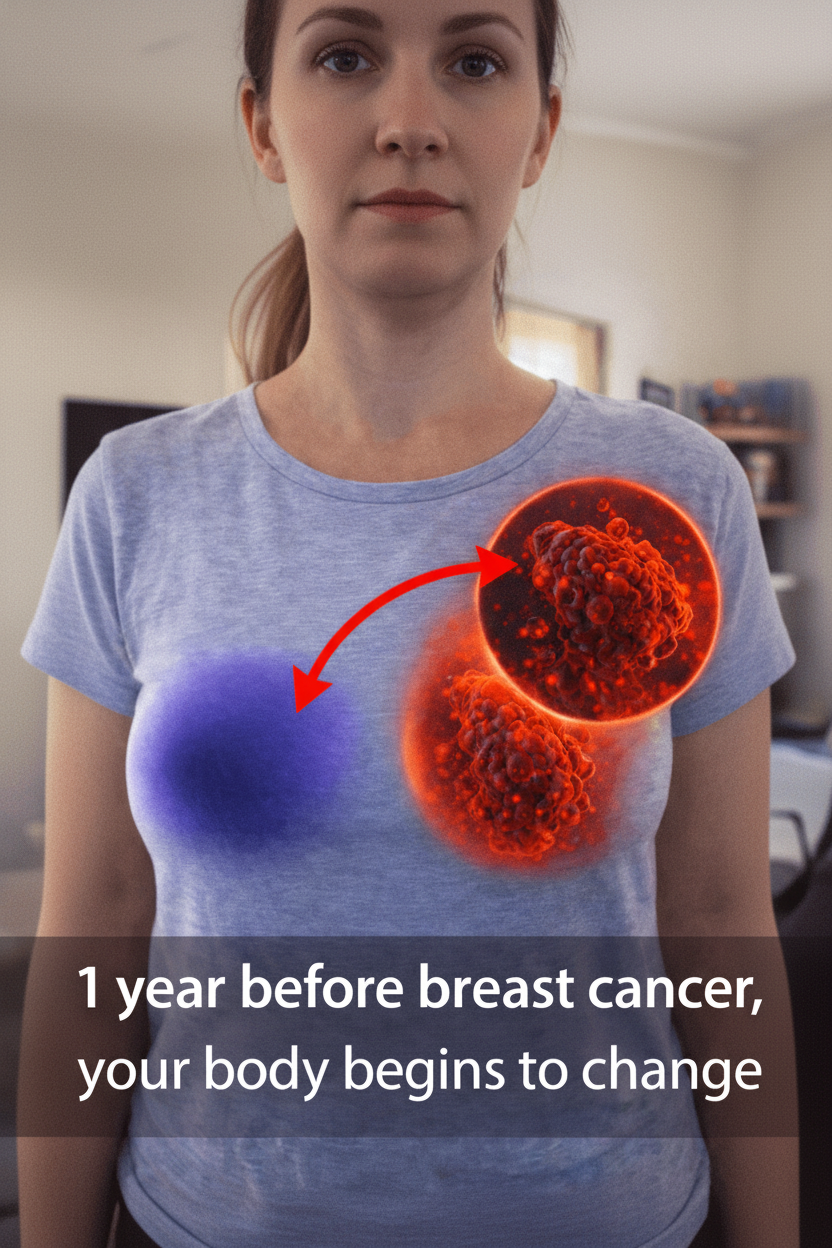
3. Visible Skin Alterations: Dimpling, Redness, or Texture Shifts
The skin covering the breast can offer critical visual cues regarding underlying changes. The CDC identifies irritation, characteristic dimpling (often likened to an “orange peel” texture, or peau d’orange), or persistent redness as significant potential warning signs. Be attentive to:
- Puckering or indentations that become more pronounced when you lift your arms.
- Areas of skin that appear thickened, unusually red, or inflamed.
- Dry, scaly, or flaky patches, especially those localized around the nipple area.
Crucially, these skin changes may develop without any accompanying pain, making them particularly easy to dismiss initially. However, many women successfully detect these early alterations simply by incorporating a quick visual check into their daily routines, such as while dressing or showering.
Pro Tip for Checking Skin: Position yourself in front of a mirror in a well-lit area. Begin by raising both arms high above your head. Next, place your hands firmly on your hips and gently press inward. Carefully observe your breasts for any signs of pulling, puckering, dimpling, or uneven skin texture. Making this a regular practice will help you establish a baseline for your normal skin appearance and quickly identify anything out of the ordinary.
4. Nipple Alterations or Unusual Discharge
Changes involving the nipple are often subtle and can be easily overlooked, yet they hold significant diagnostic importance. Trustworthy sources, including the American Cancer Society, outline several crucial possibilities that warrant attention:
- A nipple that suddenly begins to turn inward (retraction) or appears inverted, particularly if it previously projected outward.
- Any spontaneous nipple discharge that is clear, bloody, yellow, or green, especially if it occurs without squeezing or if it’s from only one breast and persistent.
- Persistent sores, crusting, scaling, or a rash-like appearance on or around the nipple.
- Any noticeable change in the direction of the nipple or its overall shape.
These nipple-related symptoms, whether visual or involving discharge, should always prompt a visit to a healthcare professional for proper evaluation. While not all nipple changes indicate cancer, they should never be ignored.
Understanding these four early warning signs is a powerful step towards safeguarding your breast health. Remember, early detection significantly improves treatment outcomes. The simple daily habit mentioned earlier? It’s consistently performing self-checks and visual examinations, coupled with regular professional screenings. By staying informed and proactive, you empower yourself with the knowledge to recognize changes and seek timely medical advice, ensuring the best possible care for your body.