 By admin
 Unmasking Early Cancer: 3 Critical Pain Locations You Should Never Ignore
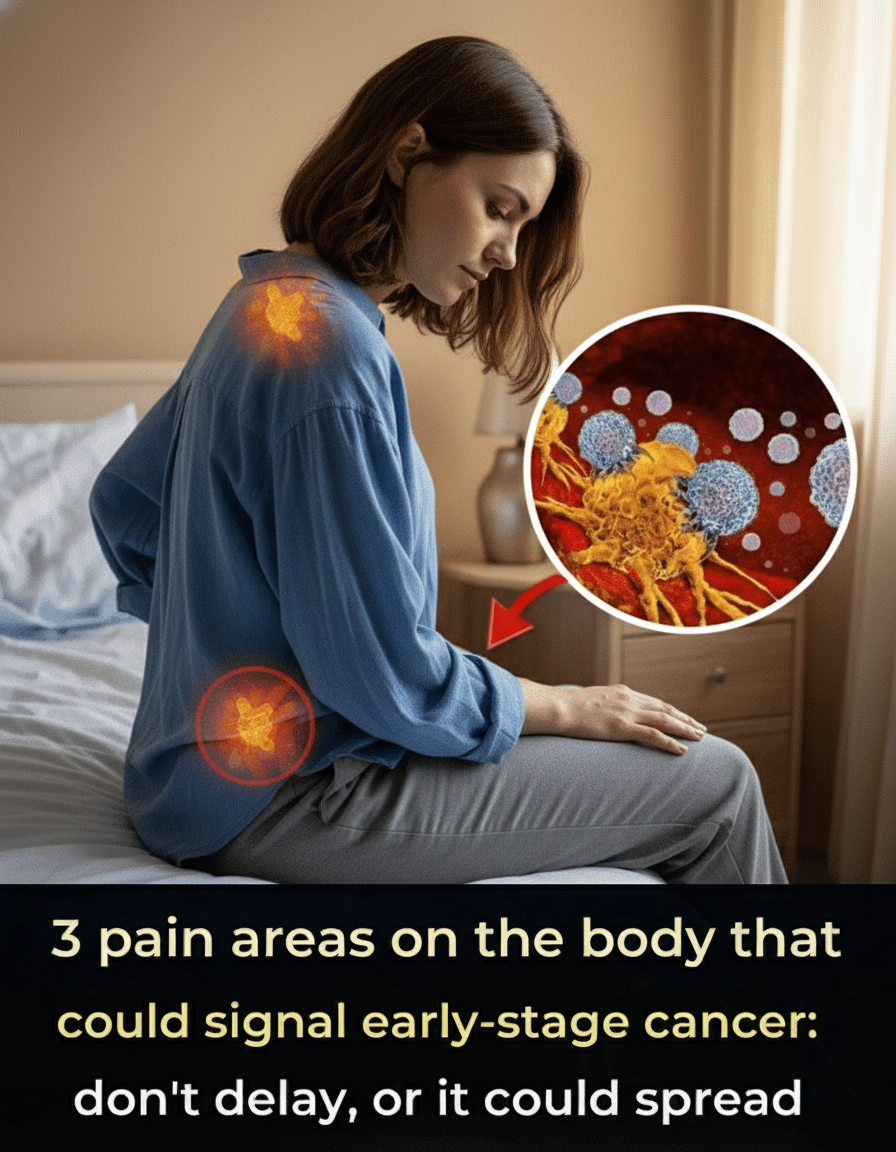
It’s common for individuals to dismiss persistent aches and discomfort, attributing them to everyday factors like stress, aging, or minor injuries. Yet, a persistent, localized pain can sometimes be your body’s subtle but crucial alert to an underlying serious condition, potentially even cancer. The alarming reality is that many delay seeking medical attention, often waiting until more advanced symptoms emerge. This article highlights three specific pain locations frequently cited by experienced oncologists and cancer patients as early indicators that were unfortunately overlooked for too long.
1. Persistent Upper Back or Shoulder Blade Discomfort (Often Unilateral)
This particular pain pattern is frequently underestimated and among the most overlooked early indicators of cancer. Patients often describe a similar progression when consulting doctors:
- The discomfort develops subtly and incrementally.
- It manifests as a deep, internal pressure, akin to intense thumb compression.
- Symptoms intensify during the night or when lying flat.
- Standard pain relievers offer minimal efficacy.
- Treatments like stretching, massage, or physiotherapy yield virtually no lasting relief.
Cancers Frequently Associated with Upper Back/Shoulder Blade Pain:
- Lung cancer (particularly in the upper lobes)
- Pancreatic cancer
- Liver cancer
- Esophageal cancer
- Certain metastatic breast cancers
Crucial Points to Consider:
- This pain does NOT necessarily present with a cough.
- Significant weight loss may NOT yet be apparent.
- You might otherwise appear and feel perfectly healthy.
A Rapid Self-Assessment:
If you experience one-sided back or shoulder blade pain that:
- Has persisted for over 3–4 weeks, AND
- Has progressively worsened, AND
- Shows no improvement with conventional muscle or musculoskeletal treatments,
Then this situation warrants prompt and thorough medical evaluation.
2. Persistent Right Shoulder Pain Accompanied by Upper Abdominal Discomfort
This specific pain presentation is so characteristic that it’s frequently encountered by specialists in digestive system cancers. Patients often report a combination of symptoms including:
- A dull, irritating discomfort, fullness, or bloating sensation in the upper right quadrant of the abdomen.
- Pain that projects upwards to the right shoulder or right shoulder blade (known as referred pain).
- A persistent sensation of “something being present” in the abdomen, even when food intake has been minimal.
- Occasional, transient episodes of mild nausea.
Cancers Most Commonly Linked to This Pain Profile:
- Liver cancer or liver metastases
- Gallbladder cancer
- Pancreatic cancer (particularly affecting the head of the pancreas)
- Certain types of stomach cancers
- Right colon cancers (less common)
A Critical Caution:
It’s not uncommon for individuals experiencing these symptoms to receive diagnoses such as “fatty liver,” “gastritis,” or advice to “simply lose weight” for extended periods. Meanwhile, a potentially malignant tumor may be silently progressing.
3. Persistent Lower Back, Pelvic, or Hip Pain (Often Unilateral and Worse at Night)
This pain presentation is frequently misattributed to common musculoskeletal issues like:
- “Disc problems”
- “Sciatica”
- “Arthritis”
- The natural process of “aging”
Concerning Red-Flag Characteristics that Warrant Further Investigation:
- The pain feels deep and aching, rather than sharp or shooting.
- It significantly worsens when lying down or during nighttime hours.
- Standard pain medication offers minimal relief.
- There is no notable improvement following 4–6 weeks of dedicated physical therapy.
- Patients may occasionally experience an indistinct sensation of “fullness” or pressure within the pelvis.
- Subtle, gradual alterations in bowel or bladder habits might also emerge.
Cancers Most Frequently Associated with This Pain Location:
- Prostate cancer (highly prevalent in men over 55)
- Ovarian cancer (frequently diagnosed in women)
- Uterine / Cervical cancer
- Colorectal cancer
- Bladder cancer
- Kidney cancer
- Multiple myeloma & bone metastasis
Quick Reference Table: Key Pain Patterns to Heed
| Location | Pain Characteristics | Most Commonly Related Cancers | Most Critical Red Flag |
|---|---|---|---|
| Upper back / Shoulder blade | Deep, one-sided, intensifies at night | Lung, Pancreas, Liver, Esophagus | Virtually no relief from muscle-focused treatments |
| Right shoulder + upper right abdomen | Radiating upwards, feeling of abdominal fullness | Liver, Pancreas, Gallbladder | Persists despite “normal” or reassuring initial scans (e.g., ultrasound) |
| Lower back / Pelvis / Hip | Deep, often unilateral, much worse when lying down | Prostate, Ovarian, Colorectal, Myeloma | Worsens at night + no improvement after 4–6 weeks of therapy |
What Immediate Steps Should You Take? (Practical Guidance)
If you are experiencing any of these concerning pain patterns, proactive steps are essential. Here’s what you should do:
Document Your Symptoms Thoroughly:
- Record the precise location of your pain.
- Note when the pain is at its most severe.
- Detail the duration for which the pain has persisted.
- Identify any factors that alleviate or exacerbate the pain.
- Assess the average pain intensity over the past two weeks using a scale (0 = no pain, 10 = worst pain imaginable).
- Make a comprehensive list of all other minor changes or symptoms, even if they seem unrelated.
Schedule a Medical Consultation Promptly:
- Book an appointment with your doctor without delay.
- During your consultation, articulate your concerns clearly and concisely. Emphasize the following points:
- “This specific pain has been ongoing for [X] weeks/months.”
- “It predominantly affects one side of my body.”
- “The pain intensifies significantly at night.”
- “Conventional pain management strategies have provided no relief whatsoever.”
Remember, early detection significantly improves outcomes for many cancers. Do not hesitate to advocate for your health.
”
}
“`