 By admin
 Do you frequently wake up feeling utterly drained, even after what seemed like a restorative night’s sleep? Perhaps you’ve observed an unusual amount of hair shedding, or find yourself constantly struggling with a parched mouth and fragile nails. These seemingly minor, daily irritations are often dismissed as mere consequences of stress, the natural aging process, or simply “how things are.” Yet, your body possesses remarkable mechanisms for communicating early warnings when its reserves of vital vitamins and minerals begin to dwindle. Overlooking these subtle indicators for an extended period can pave the way for more significant health issues to silently emerge. The encouraging news is that many of these tell-tale signs become readily apparent once you understand what to seek, and even modest, consistent adjustments to your dietary regimen can frequently yield a significant positive impact.
Within this comprehensive guide, you will uncover the ten most prevalent indicators that nutrition specialists meticulously monitor, identify the specific nutrients typically implicated, and learn actionable steps you can implement starting today. Make sure to read through to the conclusion, as we reveal one straightforward daily practice that offers support for nearly every single deficiency highlighted in this article.
Why Your Body Communicates These Vital Signals
It’s crucial to understand that essential nutrients operate not in isolation, but as an intricate network. When even a single vital vitamin or mineral falls below its optimal concentration, various bodily systems inevitably begin to exhibit stress. Areas such as the skin, hair, energy production pathways, nervous system, eyes, and gums are typically among the first to signal distress. This is primarily because these tissues possess high cellular turnover rates and maintain a relentless demand for a continuous supply of nutrients.
Academic research, frequently featured in esteemed publications like Nutrients and the American Journal of Clinical Nutrition, consistently underscores that nuanced nutrient shortfalls are considerably more widespread than the general public often perceives, particularly within contemporary diets rich in ultra-processed foods. Nonetheless, there’s a profoundly positive aspect to this: the human body demonstrates an extraordinary capacity for restoration and healing when provided with the fundamental building blocks it requires.
1. Persistent Dry Mouth: Beyond Simple Dehydration
Experiencing a consistently parched mouth, even when you maintain adequate fluid intake, can indicate a range of underlying issues. Suboptimal blood sugar regulation is a frequently cited culprit that individuals often discuss with their healthcare providers. Furthermore, a connection commonly observed by nutrition professionals is insufficient thiamine (vitamin B1), a crucial nutrient integral to efficient nerve transmission and the metabolic conversion of carbohydrates into energy.
Quick Self-Assessment: Do you find yourself feeling unusually fatigued following meals rich in starches? Does the sensation of dryness linger despite your best efforts to stay hydrated? To naturally enhance your thiamine levels, consider incorporating small, frequent sips of water, chewing sugar-free gum to encourage saliva production, and integrating more whole grains, lean pork, sunflower seeds, or fortified breakfast cereals into your daily diet.
2. Impaired Night Vision or Blurred Sight
Struggling with focus or experiencing diminished clarity in low-light conditions serves as a quintessential indicator of inadequate vitamin A levels. This lipid-soluble vitamin is indispensable for preserving the integrity of the cornea and bolstering the function of the retina’s photoreceptor cells, which are responsible for light detection.
Excellent dietary sources of preformed vitamin A (retinol) encompass organ meats like liver, various types of fish, eggs, and dairy products. Beta-carotene, a plant-derived precursor that your body skillfully transforms into vitamin A, can be abundantly found in vibrant sweet potatoes, carrots, spinach, kale, and butternut squash. To optimize the absorption of these orange and dark-green vegetables, it’s beneficial to consume them alongside a small amount of healthy fats.
3. Noticeable Hair Thinning or Increased Shedding
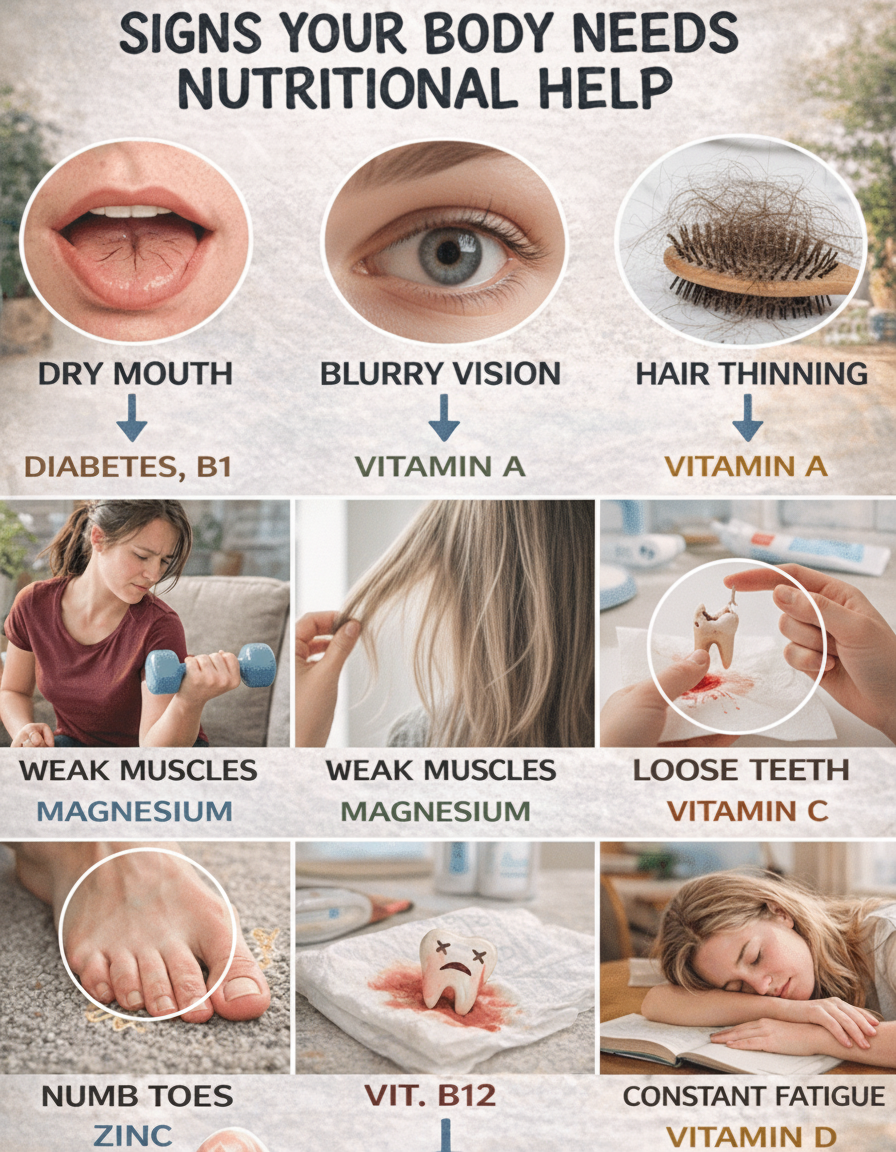
When your hair appears dull and lackluster, and you observe an unusual accumulation of strands in your shower drain, a deficit in protein frequently underlies the issue. Hair shafts are predominantly composed of keratin, a fibrous protein. Consequently, a prolonged insufficient intake of protein compels the body to allocate its limited resources to more critical physiological functions, often at the expense of robust hair growth.
To support healthy hair and overall bodily functions, target a daily protein intake of 0.8 to 1.2 grams per kilogram of your body weight, sourced from a diverse array of options:
- Start your day with protein-rich choices like eggs and Greek yogurt.
- Incorporate legumes such as lentils, chickpeas, or black beans into your salads.
- For dinner, opt for lean proteins like salmon, chicken, turkey, or plant-based alternatives like tofu.
- Snack on a modest portion of nuts or seeds.
4. Unexplained Muscle Weakness, Cramps, or Spasms
Magnesium is an indispensable mineral, serving a pivotal function in facilitating proper muscle relaxation, enabling efficient nerve signal transmission, and driving energy production within cellular structures. When magnesium concentrations decline, individuals commonly experience nocturnal leg cramps, a pervasive sensation of generalized weakness, or even involuntary eyelid twitching.
To bolster your magnesium intake, prioritize these nutrient-dense foods:
- Leafy greens such as spinach and Swiss chard
- Seeds and nuts like pumpkin seeds and almonds
- Legumes including black beans and edamame
- High-quality dark chocolate (with 70% or higher cocoa content)
- Unrefined whole grains, such as quinoa and brown rice
5. Gums That Bleed Easily or Loosening Teeth
Robust collagen is fundamental for maintaining the integrity of firm gums and securely anchoring teeth within their sockets. A deficiency in vitamin C critically impairs collagen synthesis, a process that can manifest as inflamed, bleeding gums and, in more advanced scenarios, lead to dental instability.
Abundant quantities of vitamin C can be found in a variety of produce, including citrus fruits, bell peppers, strawberries, kiwi, broccoli, and Brussels sprouts. Given that vitamin C is a water-soluble vitamin and not stored effectively by the body for extended periods, it is essential to incorporate at least one rich source into your diet daily.
6. Numbness or “Pins and Needles” Sensation in Extremities
The characteristic “pins and needles” sensation, medically termed paresthesia, particularly when experienced in the toes or fingers, is often strongly correlated with an individual’s vitamin B12 status. This vital nutrient plays a crucial role in safeguarding the protective coverings of nerve fibers (myelin sheath) and is indispensable for the healthy maturation of red blood cells.
Since vitamin B12 is primarily found in animal-derived products, excellent sources include:
- Meat (especially beef liver and lean cuts)
- Poultry (chicken, turkey)
- Fish (salmon, tuna, cod) and shellfish
- Eggs
- Dairy products (milk, cheese, yogurt)
- Fortified cereals and plant-based milks (for vegans/vegetarians, though supplementation is often recommended)