 By admin
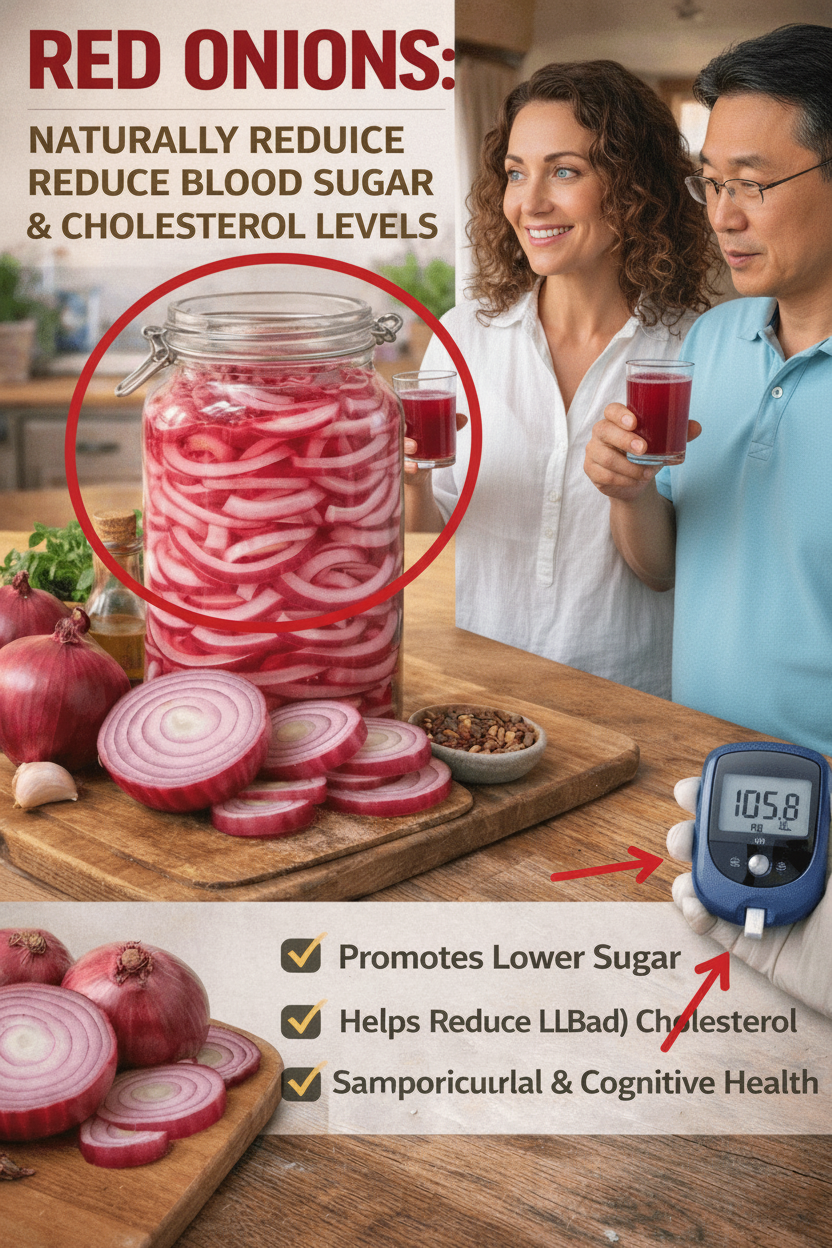
 Red Onions: Unlocking Natural Support for Blood Sugar and Cholesterol Management
Many individuals globally grapple with the challenge of maintaining optimal blood sugar levels and managing cholesterol, critical components of overall health and wellness. These health concerns can often feel daunting, particularly when lifestyle adjustments seem complex or when constant monitoring of health metrics leads to anxiety. The encouraging news is that incorporating simple, nutrient-dense foods into your daily diet, such as vegetables rich in beneficial compounds, can offer significant supportive effects as part of a holistic health strategy.
But what if a common, everyday vegetable held the key to supporting these vital aspects of health? Red onions, celebrated for their vibrant purple hue and distinct, pungent flavor, stand out due to their rich concentration of powerful compounds like quercetin and various sulfur-based elements. A growing body of research indicates that regular inclusion of red onions in meals may contribute positively to metabolic and cardiovascular well-being. Continue reading to explore why red onions deserve a prominent place on your plate, including practical and enjoyable ways to consume them, and what scientific studies reveal about their potential health benefits.
What Makes Red Onions Nutritionally Special?
Red onions are a prized member of the Allium family, which also includes garlic, leeks, and chives. They are particularly renowned for containing a higher concentration of antioxidants compared to many other onion varieties. Their characteristic deep purple or reddish color is attributed to anthocyanins, potent plant pigments that also act as antioxidants. Furthermore, red onions boast a significantly higher concentration of quercetin, a flavonoid, when compared to their white or yellow counterparts. These plant compounds function as robust antioxidants, actively helping to neutralize free radicals and combat oxidative stress throughout the body.
Another crucial component is their unique array of sulfur compounds, which not only contribute to the onion’s sharp, characteristic taste but are also linked to many of its potential health-promoting properties. Collectively, these bioactive compounds elevate red onions beyond a mere flavor enhancer, making them a remarkably nutrient-dense food choice. Scientific investigations frequently highlight the elevated levels of quercetin in red onions, drawing considerable attention in research focused on metabolic health and disease prevention.
How Red Onions May Support Healthy Blood Sugar Levels
Maintaining stable blood sugar is fundamental for consistent energy levels, optimal bodily function, and long-term wellness. Emerging research actively investigates the mechanisms through which onions might positively influence glucose metabolism. Promising results have been observed in animal studies; for instance, extracts derived from onion bulbs, when administered alongside conventional treatments, demonstrated a significant reduction in fasting blood glucose levels in diabetes models. One particular investigation reported reductions of up to 50% with higher doses, suggesting potential impacts on insulin dynamics or the body’s glucose processing capabilities.
Observations in human subjects also hint at favorable outcomes. In smaller-scale studies, consuming raw red onions appeared to enhance glucose handling, with participants exhibiting improved blood sugar responses after meals. The key compounds, quercetin and various sulfur compounds, are believed to contribute to these effects by potentially bolstering insulin sensitivity or by slowing down the breakdown and absorption of carbohydrates. It is important to note, however, that many of these findings originate from controlled laboratory settings or animal models, underscoring the need for more extensive, large-scale human clinical trials to fully elucidate these benefits. Nevertheless, integrating onions as part of a diverse and balanced diet aligns well with general recommendations for supporting healthy blood sugar management.
Here are some of the principal compounds in red onions thought to contribute to these effects:
- Quercetin: May enhance the responsiveness of cells to insulin, improving glucose uptake.
- Sulfur compounds (e.g., allyl propyl disulfide): Potentially influence insulin production, its release, or the liver’s processing of glucose.
- Chromium: A vital trace mineral known to play a supportive role in carbohydrate and glucose metabolism.
The Link Between Red Onions and Cholesterol Management
Cardiovascular health is intricately linked to the delicate balance of cholesterol within the body. Onions have also been a subject of scrutiny for their potential role in cholesterol regulation. Meta-analyses of randomized controlled trials suggest that regular onion supplementation can lead to improvements in lipid profiles. Documented benefits include modest yet significant reductions in total cholesterol and low-density lipoprotein (LDL) or “bad” cholesterol, alongside a potential for increases in high-density lipoprotein (HDL) or “good” cholesterol.
In one animal study, the administration of onion powder effectively lowered LDL cholesterol while simultaneously preserving beneficial HDL levels, indicating a protective mechanism against the accumulation of arterial plaque. Human trials utilizing quercetin-rich onion extracts have mirrored these trends, showing reductions in both total and LDL cholesterol after consistent intake over time. These beneficial effects are hypothesized to stem from the antioxidants present in red onions, which may reduce the oxidation of lipids, and from sulfur compounds that can influence fat metabolism pathways. While red onions are certainly not a standalone remedy for cholesterol issues, their consistent consumption fits seamlessly into dietary patterns designed to promote robust heart health.
Practical Ways to Add More Red Onions to Your Diet
One of the most appealing aspects of red onions is their remarkable versatility and ease of integration into almost any meal. Their crisp texture and tangy flavor can elevate a wide array of dishes. Below is a simple, step-by-step guide to preparing refreshing quick-pickled red onions, a preparation many find incredibly enjoyable and versatile:
- Select Fresh Onions: Choose firm, blemish-free red onions with shiny, intact skins.
- Prepare the Onions: Peel off the outer layers and thinly slice 2-3 medium onions using a mandoline or a sharp knife.
- Jar the Slices: Carefully place the thinly sliced onions into a clean, heat-proof glass jar.
- Make the Brine: In a small saucepan, combine 1 cup of vinegar (apple cider or white vinegar works best), 1 cup of water, 1-2 tablespoons of honey or sugar (adjust to taste), and a pinch of salt. Heat the mixture gently until the sugar and salt are fully dissolved, then remove from heat and allow it to cool slightly.
- Submerge and Seal: Pour the warm brine over the sliced onions in the jar, ensuring they are completely submerged. Seal the jar tightly.
- Refrigerate and Enjoy: Allow the pickled onions to cool to room temperature before refrigerating for at least 30 minutes, or ideally overnight, to let the flavors meld. These quick-pickled red onions can be stored in the refrigerator for up to 2-3 weeks and are fantastic on salads, sandwiches, tacos, or as a vibrant side dish.
Beyond pickling, red onions can be enjoyed in numerous other ways: thinly sliced raw in salads, added to sandwiches and burgers for a tangy crunch, incorporated into vibrant salsas, or lightly sautéed in stir-fries and roasted vegetable medleys. Their unique flavor profile and nutritional density make them an excellent addition to a health-conscious kitchen.
In conclusion, red onions offer a flavorful and nutrient-rich approach to supporting healthy blood sugar and cholesterol levels. While they are not a magical cure-all, their consistent inclusion in a balanced diet, rich in whole foods, can contribute significantly to overall metabolic and cardiovascular wellness. Embrace the vibrant potential of red onions and discover how this humble vegetable can play a powerful role in your journey towards better health.