 By admin
 Safeguarding Your Spine After 50: Essential Habits for Robust Bone Health
Do you ever experience a twinge of stiffness when bending down, or catch a glimpse of your reflection and notice your shoulders appearing more rounded than before? Many individuals over 50 find themselves feeling self-conscious when loved ones comment on a perceived loss of height or a tendency to lean forward. What often goes unrecognized is that these subtle alterations can be early indicators that your spinal structure is gradually losing its strength.
The encouraging news is that adopting specific daily practices can significantly bolster bone strength and maintain healthy posture as you age. Towards the end of this article, we’ll reveal a straightforward routine that often surprises people with its profound impact.
Why Your Spine Becomes More Vulnerable with Age
The spine serves as the fundamental support system for your entire body. It enables us to stand upright, move with flexibility, and crucially, encases and shields the spinal cord – the vital communication pathway between your brain and the rest of your body. Composed of 33 individual bones called vertebrae, the spine also features resilient discs between each bone and a network of supportive muscles, all working in harmony to allow for bending and fluid movement.
When bones maintain their optimal density and strength, the spine naturally preserves its correct alignment. However, with the natural progression of aging, bone density can progressively diminish. This reduction in bone mass sets the stage for potential problems. As vertebrae weaken, several issues may manifest over time:
- Decreased flexibility and range of motion
- A noticeable forward curvature or stooped posture
- A gradual reduction in overall height
- Increased susceptibility to painful fractures
Extensive research in bone health consistently highlights that bone density typically begins to decline steadily after the age of 50, particularly if the body isn’t receiving adequate nutrients or engaging in sufficient physical activity. Yet, there’s a powerful takeaway: numerous lifestyle habits that promote strong bones are remarkably simple to implement and can be started today.
Understanding Osteoporosis and Its Impact on Posture
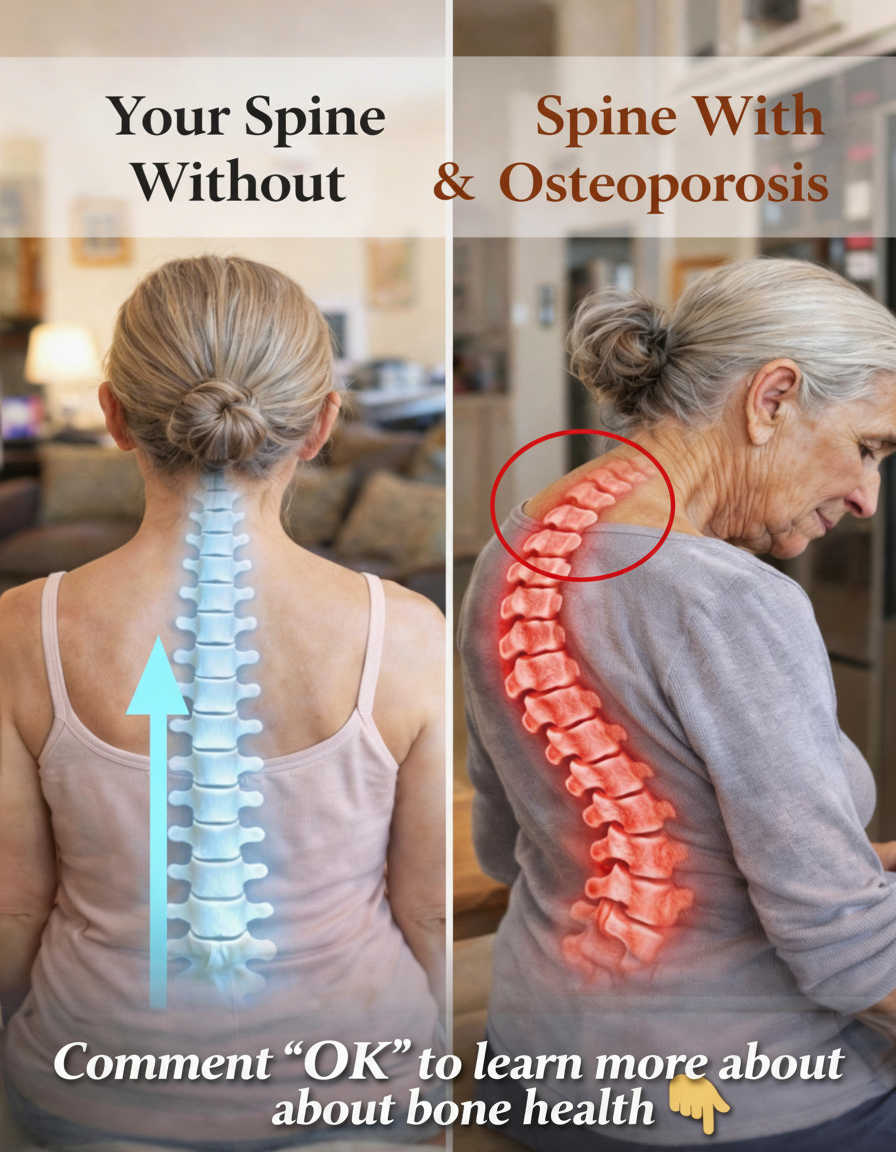
Osteoporosis is a medical condition characterized by bones becoming progressively less dense and more fragile. Instead of having a robust, compact internal structure, osteoporotic bones develop microscopic pores and spaces, severely compromising their integrity. This deterioration often progresses slowly and silently, without any apparent symptoms in its initial stages. Frequently, individuals only become aware of the condition after experiencing a fall or a fracture.
The spine is one of the most commonly affected areas. When the vertebral bones weaken, they may compress slightly under the body’s weight. Over an extended period, this compression can lead to the distinctive forward-leaning posture, often referred to as a dowager’s hump, sometimes observed in older adults.
To better illustrate the difference, consider this comparison:
- Healthy Bone: Features a dense, compact structure providing excellent support for the spine and helping maintain proper posture.
- Lower Density Bone (Osteoporotic): Exhibits a more porous structure with tiny internal spaces, significantly increasing the risk of compression and potentially leading to gradual changes in posture.
It’s crucial to remember that bone health is a dynamic process, significantly influenced by a multitude of daily habits, including nutrition, physical activity, and overall lifestyle choices. Even minor, consistent improvements can yield profound, positive differences in your long-term well-being and spinal resilience.
Daily Eating Habits That Support Bone Strength
Your diet plays a pivotal role in nurturing healthy bones. Bones are living tissues that are in a constant state of renewal and regeneration. For this complex process to function optimally, your body requires a consistent supply of specific nutrients. One of the most critical is calcium.
According to widely accepted nutritional guidelines, adults over the age of 50 typically benefit from consuming approximately 1000 to 1200 mg of calcium daily. Foods naturally rich in calcium include:
- Dairy products like milk and yogurt
- Various types of cheese
- Dark leafy green vegetables such as spinach or kale
- Small fish like sardines and salmon (especially those with edible bones)
- Almonds and other nuts
- Calcium-fortified foods and beverages
However, calcium alone is insufficient. Vitamin D is equally vital because it acts as a key facilitator, enabling your body to absorb calcium effectively from your diet. Without adequate vitamin D, the calcium you consume cannot be utilized efficiently. Natural sources of vitamin D include:
- Moderate exposure to sunlight
- Fatty fish such like salmon, mackerel, and tuna
- Egg yolks
- Fortified dairy products or plant-based milk alternatives
An interesting observation from various studies is that individuals who combine a balanced, nutrient-rich diet with regular physical activity tend to maintain significantly stronger bones compared to those who rely solely on dietary interventions.
Movement That Helps Keep the Spine Strong
A common misconception is that protecting the spine necessitates avoiding movement. In reality, the opposite is often true. Bones thrive on gentle, consistent stress generated by physical activity. When muscles engage and pull on bones during exercise, the body receives critical signals to maintain and even enhance bone strength and density.
Weight-bearing movement, in particular, is exceptionally beneficial for spinal health. Examples of effective weight-bearing activities include:
- Walking briskly or hiking
- Light resistance training using weights or resistance bands
- Dancing
- Mind-body practices like Yoga or Pilates
- Climbing stairs
These activities not only encourage the body to preserve bone density but also simultaneously strengthen the essential muscles that provide critical support to the spine. This leads us to another crucial, yet often overlooked, factor: the strength of your core muscles. Robust muscles around the abdomen and lower back are fundamental for stabilizing the spine, improving posture, and reducing the risk of injury. Incorporating exercises that target these core muscles, such as planks, bridges, and controlled movements, can significantly contribute to a resilient and healthy spine as you age.
By consistently integrating these simple nutritional and movement habits into your daily life, you can actively protect your spinal health, maintain robust bone strength, and enjoy greater mobility and independence well beyond 50.