 By admin
 Brain Aneurysm Risks: 10 Subtle Warning Signs for Women Over 60
Imagine a woman in her sixties, engaged in daily tasks – perhaps enjoying a quiet morning coffee or tending to chores – when an unexpected headache strikes. It’s easy to dismiss such an event, attributing it to the usual suspects: daily stress, a restless night, or simply the natural progression of aging. What if, days later, this discomfort returns, perhaps accompanied by blurred vision or an uncharacteristic wave of fatigue? Again, these sensations might be brushed aside, considered typical for those over sixty.
However, what many women don’t realize is that the body often communicates crucial neurological signals long before a serious cerebrovascular issue fully manifests. Recognizing these subtle indicators can be truly life-altering. Pay close attention, as one particular symptom discussed further in this article has even surprised seasoned medical professionals.
Why Prioritizing Brain Health Becomes Critical for Women Over 60
Reaching one’s sixties is often a time of accomplishment and new beginnings – children are grown, retirement is on the horizon, and life’s pace may finally ease. Yet, beneath this tranquil surface lies a significant biological transformation that warrants greater attention. Following menopause, women experience a natural decline in estrogen levels. Scientific studies published in reputable journals like Stroke and Neurosurgery indicate that estrogen plays a vital role in maintaining the strength and elasticity of blood vessel walls. Without this protective hormonal influence, certain vascular conditions, including brain aneurysms, may become more prevalent in older women.
It’s crucial to understand that not every new sensation signals danger. However, a critical insight often overlooked is that our bodies frequently send subtle ‘whispers’ before they ‘shout.’ Neurologists and physicians frequently observe that some patients recall experiencing mild, unusual sensations weeks or even months before a major vascular event, such as a ruptured aneurysm. These preliminary signs are commonly misidentified as ordinary fatigue, eye strain, minor digestive upset, or simply attributed to the aging process. By learning to discern the patterns of symptoms outlined below, you can better identify when a symptom truly merits professional medical evaluation instead of being dismissed.
Commonly Noticed, Yet Easily Misinterpreted Symptoms (1-3)
1. Sudden, Severe Headaches
Let’s begin with a symptom often experienced but rarely interpreted correctly. An aneurysm-related headache is distinct; it’s often described as the “worst headache of your life,” appearing abruptly and reaching its peak intensity almost instantly. Unlike gradual tension headaches, this type presents with an unprecedented severity and character, feeling entirely different from any previous headache.
2. New Visual Disturbances or Drooping Eyelid
Changes in vision or eye movement can be particularly telling. These might include the sudden onset of double vision (diplopia) or a noticeable drooping of one eyelid (ptosis). Such visual anomalies can occur when an expanding aneurysm exerts pressure on adjacent nerves responsible for eye function and movement.
3. Unusual Facial Tingling or Numbness
Some women may experience peculiar sensations around the face, such as persistent tingling, numbness, or a feeling of pressure in the cheek, forehead, or jaw area. These can range from a mild, electric-like sensation to a constant dull pressure.
The Critical Distinction: While occasional headaches or eye strain are incredibly common and usually benign, it’s the unusual nature of these symptoms that demands attention. If a headache is extraordinarily sudden, exceptionally severe, or feels fundamentally different from anything you’ve experienced before, medical consultation is highly advised. Many neurologists recommend maintaining a simple symptom diary to track recurring headaches or vision changes, noting their intensity, duration, and any accompanying symptoms.
Symptoms Often Mistaken for Aging or Minor Ailments (4-6)
4. Neck Stiffness Accompanied by Headache
While neck stiffness is often linked to arthritis or muscle strain, its appearance alongside a severe headache, especially if combined with light sensitivity (photophobia), warrants a deeper look. Physicians will often investigate potential neurological origins in such cases, rather than immediately attributing it to musculoskeletal issues.
5. First-Time Seizure-Like Activity After Age 60
Any new episode resembling a seizure – including sudden confusion, involuntary body twitching, or unexplained staring spells – occurring for the first time after the age of sixty demands immediate medical evaluation. These are never normal signs of aging and could indicate an underlying neurological issue.
6. Sudden Balance Problems or Unilateral Tinnitus
Experiencing sudden dizziness, difficulty maintaining a straight gait, or new, persistent ringing in just one ear (unilateral tinnitus) can also be indicative of neurological involvement. These symptoms often disrupt daily life and should not be ignored.
Why These Signs are Crucial: The brain is the central coordinator of all movement, balance, and sensory input. When its intricate systems are compromised, even slightly, symptoms may manifest subtly at first, preceding more significant problems. It’s important to reiterate that these signs alone do not definitively diagnose a dangerous condition. However, the pattern of symptoms – especially when multiple indicators appear concurrently or persistently – is what medical professionals analyze closely.
The Most Surprising and Misunderstood Symptom (7)
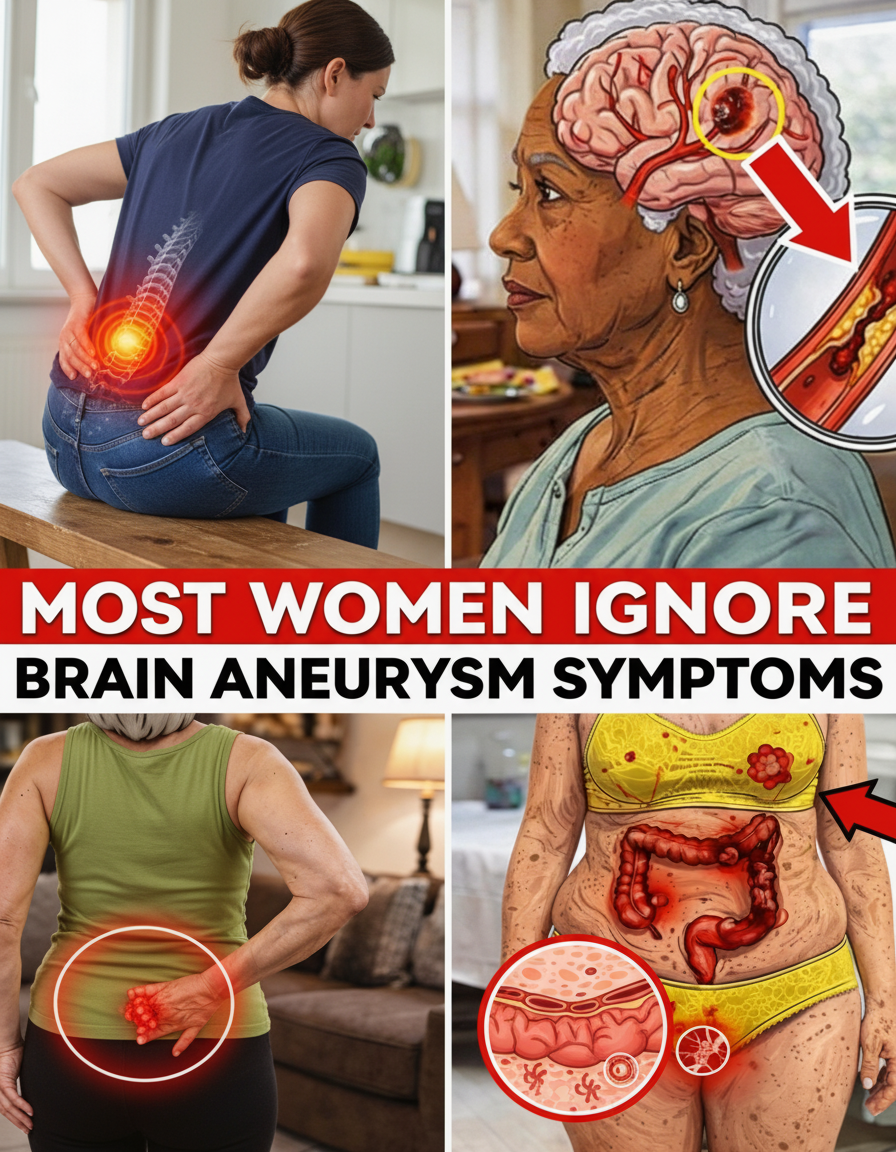
7. Persistent Lower Back or Abdominal Discomfort
This particular symptom often takes both patients and, at times, even doctors by surprise. Some women describe ongoing lower back pain or unusual pressure in the abdominal region that stubbornly resists conventional treatments for digestive or musculoskeletal problems. Because these sensations so closely mimic common ailments, individuals frequently consult various specialists without receiving a definitive diagnosis.
The Neurological Connection: The remarkable truth is that the brain maintains intricate communication with numerous organs throughout the body via complex nerve pathways. When specific regions of the brainstem or surrounding cranial structures become irritated or affected – for instance, by an expanding aneurysm – the signals transmitted through these extensive nerve networks can generate ‘referred’ sensations in distant body parts, such as the lower back or abdomen. This phenomenon highlights how a problem originating in the brain can manifest in seemingly unrelated areas, making accurate diagnosis particularly challenging.
Additional Subtle Neurological Indicators (8-10)
8. Subtle Changes in Speech or Comprehension
While a sudden inability to speak or understand is a clear emergency, more subtle changes can also occur. This might include difficulty finding the right words (aphasia), slurred speech that comes and goes, or trouble understanding simple instructions. These intermittent issues are easily dismissed as tiredness or a momentary lapse.
9. Profound and Unexplained Fatigue
Beyond typical tiredness, some women report an overwhelming, debilitating fatigue that is new, persistent, and has no clear cause. This isn’t just feeling sleepy; it’s a deep exhaustion that impacts daily functioning and doesn’t improve with rest. While many conditions can cause fatigue, when it’s sudden and severe, it warrants investigation.
10. Unexplained Personality or Behavioral Changes
Changes in mood, behavior, or cognitive function can be particularly alarming. This might involve sudden irritability, confusion, memory problems, or a noticeable shift in personality that is out of character. Such changes, especially if new and persistent, can signal neurological distress and should never be attributed solely to aging without medical review.
Empowering Yourself Through Awareness and Early Action
For women over 60, understanding the potential for subtle brain aneurysm warning signs is not about inducing anxiety, but about empowerment through knowledge. While many of these symptoms can indeed be attributed to less serious conditions or the natural aging process, their sudden onset, unusual intensity, or persistent nature, especially when appearing in combination, should prompt immediate medical attention.
Early detection of an unruptured brain aneurysm can lead to timely intervention, potentially preventing a life-threatening event. If you or a loved one experience any of these signs, particularly if they feel “different” or concerning, do not hesitate to consult a healthcare professional. Trust your instincts and advocate for a thorough evaluation. Your proactive approach to brain health can make all the difference.
”
}
“`