 By admin
 The Persistent Problem of Household Pests
The sight of a cockroach scurrying across the kitchen floor, the tell-tale bites of hidden bed bugs, or the unwelcome presence of ants marching across countertops can be deeply unsettling for any homeowner. While chemical pest control solutions are often effective, concerns about their safety for families and pets have driven many to seek out natural, chemical-free alternatives.
Among the most frequently discussed home remedies is baking soda, or sodium bicarbonate. This common kitchen staple is lauded for its versatility, but can it truly stand as a viable weapon against household invaders like cockroaches, ants, bed bugs, and even mice? Let’s delve into the science, methods, and realistic efficacy of using baking soda for pest management.
The Science Behind the Soda: How It *Might* Work
Baking soda’s potential as a pest control agent stems from two primary properties:
- Gas Production: When sodium bicarbonate comes into contact with acids, it produces carbon dioxide gas. For pests that ingest it, especially those with simple digestive systems or those unable to expel gas easily (like many insects and rodents), this internal reaction is theorized to cause significant pressure and disruption, potentially leading to fatal internal damage.
- Dehydration (Desiccation): Baking soda is a known desiccant, meaning it absorbs moisture. When powdered baking soda comes into direct contact with insects, particularly those with an exoskeleton, it’s hypothesized to absorb vital moisture from their protective outer layer, leading to dehydration and ultimately, death.
These theories form the basis for various DIY pest control methods. However, the actual effectiveness can vary significantly depending on the type of pest and the application method.
Baking Soda in Action: DIY Pest Control Methods and Their Efficacy
Homeowners have devised numerous ways to utilize baking soda against common pests. Here, we explore some of the most popular approaches and their reported success rates:
Method 1: Creating Barriers with Sprinkled Powder
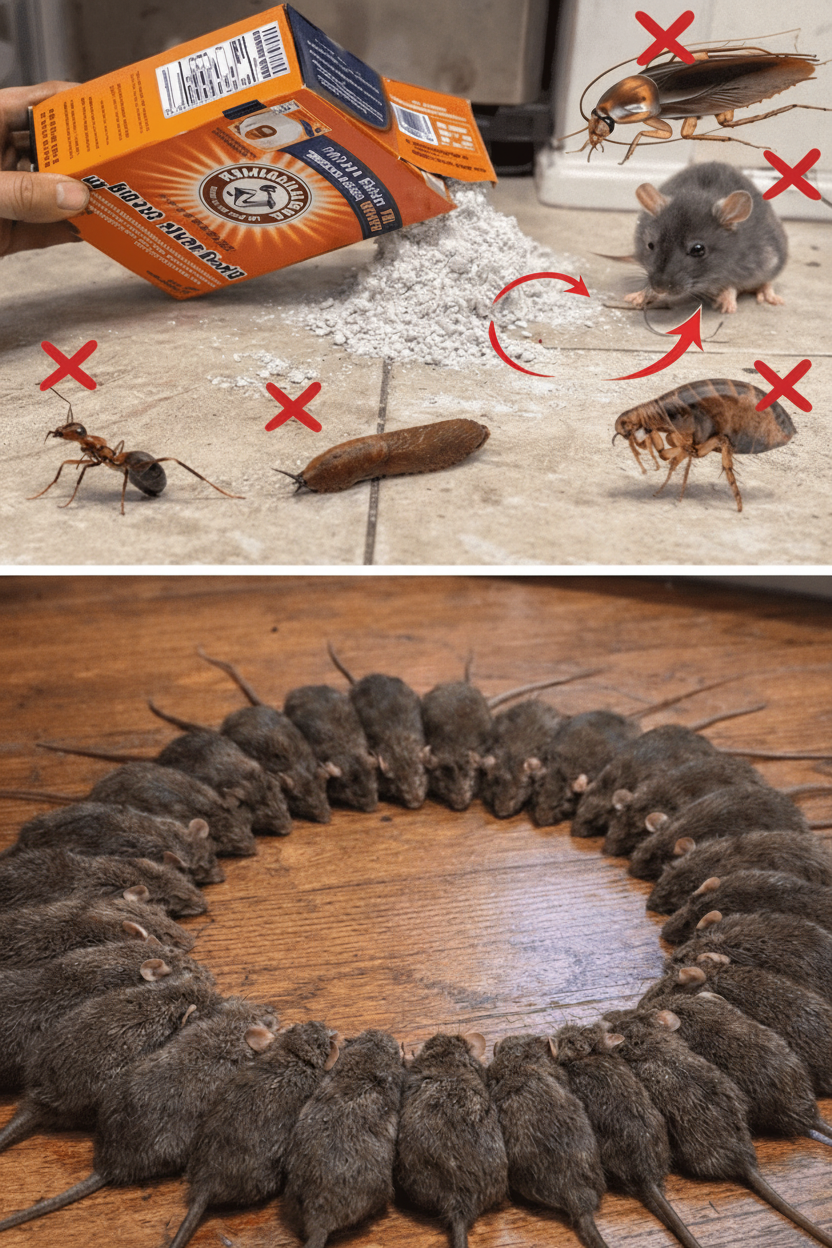
One of the simplest methods involves scattering baking soda along baseboards, window sills, and other areas where pests are known to frequent or enter. The idea is that the powder acts as a physical deterrent, potentially absorbing oils from insects’ exoskeletons or causing discomfort upon contact.
- Efficacy: Anecdotal evidence suggests this method offers only limited deterrence. While it might discourage some minor pest activity, it’s generally not effective against established infestations. Consistent reapplication after cleaning is crucial, but its long-term impact often remains minimal.
Method 2: Sweet Baits for Rodents (Mice and Rats)
Mice and rats are notorious for infiltrating homes in search of food. A common home remedy involves mixing baking soda with an attractant like flour or sugar and placing it near rodent droppings or activity areas. The theory is that rodents, unable to expel gas easily, will suffer internal pressure upon ingesting the baking soda mixture.
- Efficacy: Results are mixed. While some homeowners report success, concerns exist regarding the humane aspects of this method. For serious rodent infestations, professional pest control or proven trapping methods are typically more effective and often more humane.
Method 3: Tackling Bed Bugs with Powder or Paste
Dealing with bed bugs can be a nightmare, making the idea of a simple baking soda solution appealing. Some individuals spread a thick layer of baking soda on mattresses, carpets, or upholstery, hoping it will absorb moisture and dehydrate the bugs.
- Efficacy: Research and expert consensus largely debunk the effectiveness of baking soda against bed bugs. While it may absorb some surface moisture, it is generally considered ineffective against these resilient pests. Experts overwhelmingly recommend professional intervention for bed bug infestations.
Method 4: Disrupting Ant Trails with Sugar Mix
Ants are drawn to sweet foods, a characteristic homeowners often try to exploit. This method involves mixing baking soda with powdered sugar (as an attractant) and placing it along ant trails or near their entry points. The aim is for worker ants to carry the mixture back to the colony, disrupting its activity.
- Efficacy: This method has yielded variable success. Some users report a reduction in ant activity, but its effectiveness can be inconsistent. Ants might detect and avoid the baking soda due to its unusual taste, or the amount carried back may not be sufficient to eliminate an entire colony. It can serve as a temporary deterrent for minor ant issues.
Method 5: Cockroach Bait with Strong Scents (Onion/Peanut Butter)
Cockroaches are attracted to strong smells. One method suggests combining baking soda with chopped onion or peanut butter to create a potent bait. The hypothesis is that the attractive scent draws roaches to the mixture, and ingestion of the baking soda then disrupts their internal systems.
- Efficacy: Outcomes are inconsistent. Some homeowners observe a decrease in cockroach populations, while others report no significant change. The effectiveness can depend on the roach species and other available food sources in the environment.
Method 6: Simple Sugar and Baking Soda Blend for Cockroaches
A widely cited DIY solution for cockroaches involves mixing equal parts sugar (as an attractant) and baking soda. This blend is scattered in areas frequented by roaches, such as under sinks or behind appliances.
- Efficacy: Many users report this as one of the more successful home remedies for cockroaches, observing a gradual reduction in sightings over several weeks of consistent application. However, it is not an instant solution and requires patience and regular reapplication to see potential results.
Method 7: Enhancing Baits with Yeast or Other Attractants
To potentially boost the appeal and efficacy of baking soda baits, some suggest adding yeast or other strong attractants to the mixture. Yeast, in particular, produces gas, which might make the bait more enticing to certain pests, complementing the baking soda’s theorized effects.
- Efficacy: Anecdotal evidence suggests this *may* increase the bait’s allure and effectiveness in some instances, but comprehensive scientific validation for this enhancement is limited.
Conclusion: A Balanced Perspective on Baking Soda for Pest Control
Baking soda, a non-toxic and readily available household item, certainly presents an appealing option for those seeking natural pest control solutions. Its theorized mechanisms of internal disruption and dehydration offer a seemingly simple approach to dealing with common invaders.
However, it’s crucial to maintain a balanced perspective. While some anecdotal reports suggest success for minor issues, particularly with certain types of ants and cockroaches, the effectiveness of baking soda is highly variable and often limited compared to conventional pest control methods. For resilient pests like bed bugs or severe infestations of any kind, scientific evidence largely discredits its standalone use, and professional intervention is typically recommended.
Baking soda can serve as a supplementary or temporary deterrent for minor pest nuisances, but it should not be considered a guaranteed solution for established or persistent pest problems. For lasting relief and comprehensive pest management, consulting professional services remains the most reliable course of action.