 By admin
 Unraveling the Green Ring: Your Guide to Perfectly Cooked Hard-Boiled Eggs
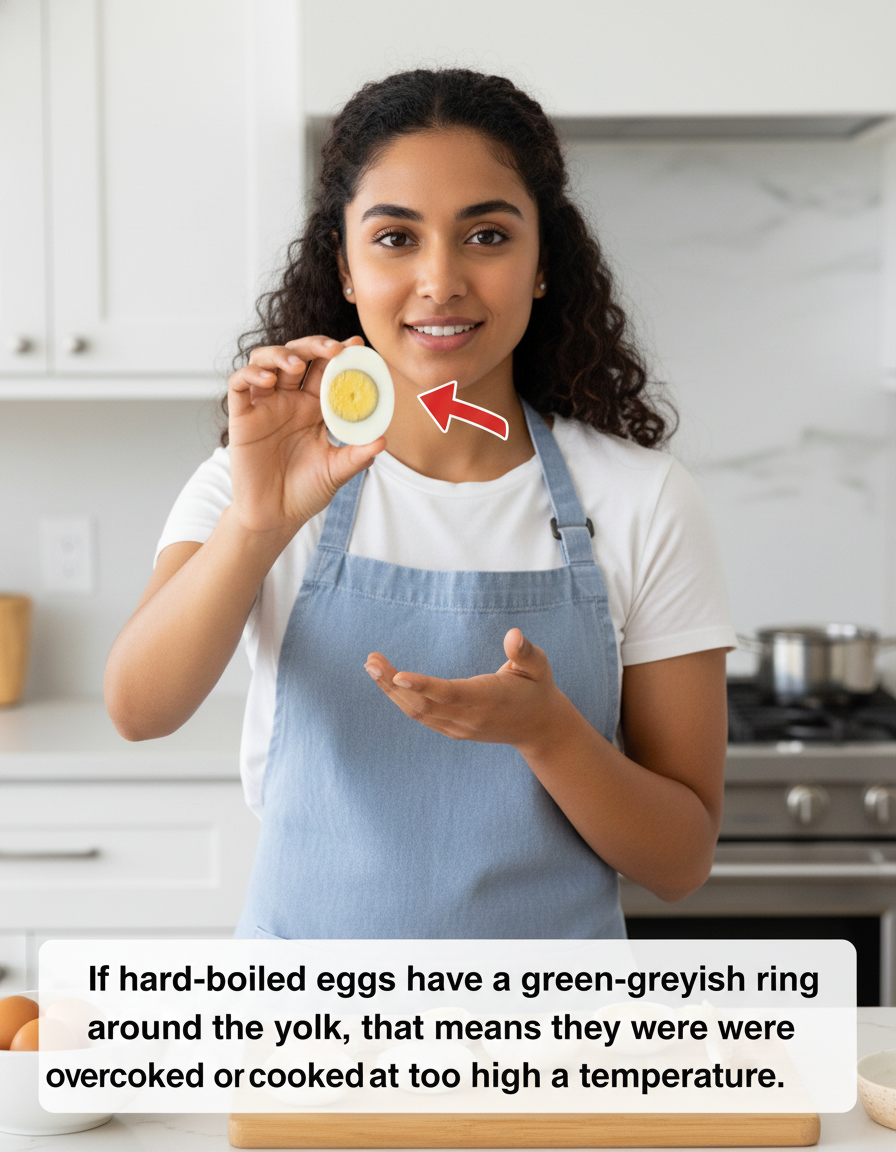
There’s nothing quite as satisfying as peeling a hard-boiled egg to reveal a vibrant, creamy yellow yolk. However, many home cooks have encountered the slightly disheartening sight of a greenish-gray ring encircling the yolk. This common occurrence can lead to questions about your cooking technique or even the egg’s freshness, turning a simple kitchen task into a moment of frustration.
The good news? This widespread issue isn’t a sign of spoilage or poor cooking skills. Instead, it’s a natural chemical reaction with a straightforward scientific explanation and, more importantly, simple, effective solutions. Join us as we delve into the science behind this discoloration and equip you with practical tips to achieve consistently perfect, bright yellow yolks every time. Plus, stick around for a surprising insight that might just revolutionize your egg-boiling routine!
What Causes the Green Ring in Hard-Boiled Eggs? The Science Explained
That distinctive greenish or grayish halo around the yolk isn’t an indicator that your egg has gone bad. Far from it! This visual phenomenon is a harmless, natural byproduct of the cooking process. Food science experts, including those at the American Egg Board, have thoroughly explained the chemical interplay that leads to this common discoloration.
Specifically, the ring forms at the interface where the egg white meets the yolk – a crucial boundary for this chemical transformation.
The Chemistry Behind the Hue: Iron, Sulfur, and Heat
To understand the green ring, we need to look inside the egg itself:
- Egg whites are rich in proteins that contain sulfur compounds.
- Egg yolks are an excellent source of iron.
When an egg is subjected to heat during boiling, a fascinating reaction begins. The heat causes the proteins in the egg white to denature, releasing hydrogen sulfide gas. This gas, seeking an escape, migrates towards the center of the egg – the yolk. Upon reaching the yolk, the hydrogen sulfide gas reacts with the iron present there, forming a compound known as ferrous sulfide. It is precisely this ferrous sulfide that creates the greenish-gray color you observe.
Research published in food chemistry journals indicates that this reaction significantly accelerates when temperatures exceed 158°F (70°C). Interestingly, this process bears a chemical resemblance to how rust forms on metal, highlighting its natural, albeit unwanted, occurrence.
Why Hard-Boiled Eggs Are More Prone to Yolk Discoloration
While the chemical reaction is clear, why is it so prevalent in hard-boiled eggs specifically? The answer lies primarily in the duration and intensity of heat exposure required to achieve a fully set yolk. Unlike soft-boiled eggs, which have shorter cooking times and rarely display this ring, hard-boiled eggs demand extended heat, which amplifies the iron-sulfur reaction.
Several factors can contribute to the likelihood and intensity of this discoloration:
- Overcooking: Exceeding the optimal cooking time allows more hydrogen sulfide gas to form and react, intensifying the ring.
- High Heat: Boiling eggs too vigorously or at excessively high temperatures speeds up the chemical reaction.
- Lack of Rapid Cooling: Residual heat within the egg continues the cooking process even after removal from the stove, prolonging the reaction.
- Egg Age: Older eggs tend to have a higher pH level, which can cause sulfur compounds to release more readily, increasing the chances of a green ring. Fresher eggs, while sometimes harder to peel, may be less prone to this issue if cooked correctly.
Culinary scientists have confirmed these factors through various experiments, underscoring that prevention is entirely within your control.
Achieving Perfect Hard-Boiled Eggs: A Step-by-Step Prevention Guide
Preventing the green ring and achieving consistently perfect hard-boiled eggs is simpler than you might imagine. Follow these actionable steps to master the art:
1. Choose the Right Cooking Method
- Gently place your eggs in a single layer at the bottom of a pot.
- Cover the eggs with cold water by about one inch.
- Bring the water to a gentle simmer over medium heat. Crucially, avoid a vigorous, rolling boil, as this can lead to uneven cooking and increase the risk of discoloration.
2. Time Your Cook Precisely
Timing is paramount. As soon as the water reaches a gentle simmer, remove the pot from the heat, cover it, and let the eggs sit in the hot water for the following durations (for large eggs):
- Soft-boiled: 4-6 minutes for runny yolks.
- Medium-boiled: 7-9 minutes for semi-firm yolks.
- Hard-boiled: 10-12 minutes for fully set, bright yellow yolks.
Pro Tip: Always use a timer! Adjust cooking times slightly for smaller or larger eggs, and add approximately one minute for every 1,000 feet of altitude above sea level.
3. Cool Them Down Fast
This step is critical for halting the cooking process and preventing the green ring:
- Immediately prepare an ice bath in a separate bowl (a mix of ice and cold water).
- Transfer the eggs directly from the hot pot into the ice bath.
- Let them cool in the ice bath for 5-10 minutes. This rapid cooling not only stops the chemical reaction but also causes the egg contents to contract, making them significantly easier to peel.
Additional Tips for Flawless Hard-Boiled Eggs
- Egg Freshness: While very fresh eggs can sometimes be harder to peel, using eggs that are 1-2 weeks old can make peeling easier without significantly increasing the risk of a green ring if cooked correctly.
- Additives: Some cooks suggest adding a pinch of salt or a splash of vinegar to the boiling water, believing it aids in peeling. While not scientifically proven to prevent the green ring, it’s a common practice.
- USDA Guidelines: The U.S. Department of Agriculture (USDA) food safety guidelines strongly support the practice of quick cooling to ensure food safety and quality.
- Experiment: Don’t hesitate to boil one egg first as a test. Compare your results and adjust your timing or method as needed.
Consider the stark contrast:
- With a Green Ring: Often results from a high, rolling boil, cooking for 15+ minutes, air cooling, and potentially very fresh eggs. The outcome is a discolored, sometimes rubbery yolk.
- Without a Green Ring: Achieved through a gentle simmer, precise cooking for 10-12 minutes, immediate ice bath cooling, and eggs that are 1-2 weeks old. The result is a vibrant, perfectly set yellow yolk.
Seeing this difference provides great motivation to refine your technique!
Impact on Taste, Safety, and Nutrition: Is the Green Ring Harmful?
Beyond its visual appeal, many wonder if the green ring affects the egg’s edibility. Rest assured, the greenish-gray discoloration is purely cosmetic. It has absolutely no impact on the taste or flavor of the egg; ringed eggs taste identical to their perfectly yellow counterparts.
From a safety standpoint, the ferrous sulfide compound is entirely harmless. It does not indicate the presence of bacteria, toxins, or any form of spoilage, making the egg perfectly safe to consume. Nutritionally, the essential proteins, vitamins, and minerals within the egg remain intact. While extreme overcooking might lead to a minor reduction in some heat-sensitive nutrients, the green ring itself is not responsible for any significant nutritional loss. So, if you happen to find a green ring, there’s no need to discard your egg.
However, achieving that flawless, bright yellow yolk undeniably enhances the overall enjoyment and presentation of your culinary creations. With these simple adjustments, you can consistently prepare hard-boiled eggs that are not only delicious and safe but also visually appealing.