 By admin
 Let’s be real: for most folks, the word ‘dialysis’ barely registers. It’s just a medical term, a vague concept. But for millions of patients worldwide? It’s not just a concept; it’s a life sentence, dictating every single moment, every single day. That crushing reality is precisely what makes the very idea of a portable dialysis machine so incredibly powerful. And here’s the kicker: when a Canadian teenager suggested she could build a version for roughly $500, it wasn’t just science judges who sat up and took notice. This wasn’t just a science project; it exploded into global conversations, igniting a spark of hope for patients that treatment might, one day, feel less like a cage.
Picture this: it’s 2015, and Anya Pogharian, a student in Montreal, stares down an old, stubborn medical problem. She wasn’t an expert, but she asked a question that felt almost audacious in its simplicity: Why does dialysis still have to be so massive, so expensive, and always tied to a clinic? That question, fueled by raw curiosity and a relentless drive, transformed a school assignment into something the entire world couldn’t stop talking about.
The Heavy Reality of Living With Kidney Failure
Want to know why this isn’t just another tech story? To truly grasp the seismic impact of Anya’s invention, you have to understand the brutal truth of what dialysis treatment means for patients. When kidneys fail, they stop filtering. It’s not just ‘waste’ building up; it’s poison, slowly overwhelming the body. Dialysis steps in as a lifeline, but it comes with a terrifying list of limitations.
Imagine your life dictated by a clock you don’t control. Most patients are shackled to a clinic, needing treatment three times a week. Each session? A grueling four hours or more. This isn’t just an inconvenience; it’s a logistical nightmare that shreds work schedules, makes travel a complicated dream, and turns even simple family gatherings into a monumental planning exercise. And if you’re in a rural area or a poorer region? Forget it. Healthcare access can be unreliable, or just plain nonexistent. Patients are often forced to miss crucial treatment, facing a cruel choice with no good options.
Here’s the frustrating part: doctors and engineers have known about this crisis for years. They’ve explored smaller systems, home units, even wearable ideas. But time and again, they always hit that same old brick wall: astronomical cost and mind-bending technical complexity. It seemed like an unsolvable problem.
Dialysis schedules often control work, travel, and family life for patients, shaping nearly every week around treatment hours. Image credit: Shutterstock
Where a Teen’s Idea Began
No fancy degrees, no white lab coat, no established medical background. Anya Pogharian started from scratch. Her genius wasn’t born in a high-tech lab; it came from relentless reading, deep research, and a sharp eye for patterns that everyone else seemed to just accept as ‘the way things are.’ She wasn’t bogged down by ‘how things are done’ – she saw things with fresh eyes.
While diving deep into kidney disease and the existing dialysis machines, she spotted something utterly bizarre. Most systems relied on similar core science, yet almost none focused on being both affordable and portable at the same time. And then it hit her. That blindingly obvious observation shaped her entire approach. Her mission was clear: the device had to be compact. It had to be simple. And perhaps most importantly, it had to be cheap enough to actually make a difference. Her goal was to strip dialysis down to its absolute essentials, without ever, ever cutting corners on safety. The result? A concept design for a portable dialysis machine that could be produced for around $500. Let that sink in. Five hundred dollars. That jaw-dropping figure alone made people pause, especially in a field where these machines typically cost tens of thousands.
Why Cost Changes Everything
Think dialysis is just about the machine? Think again. It’s expensive in ways most people never even consider. Clinics demand massive buildings, highly trained staff, constant monitoring, and endless maintenance. Patients, often already battling for their lives, are utterly dependent on shaky insurance policies or public healthcare systems to survive. In far too many countries, those systems are fragile, a house of cards, or simply non-existent.
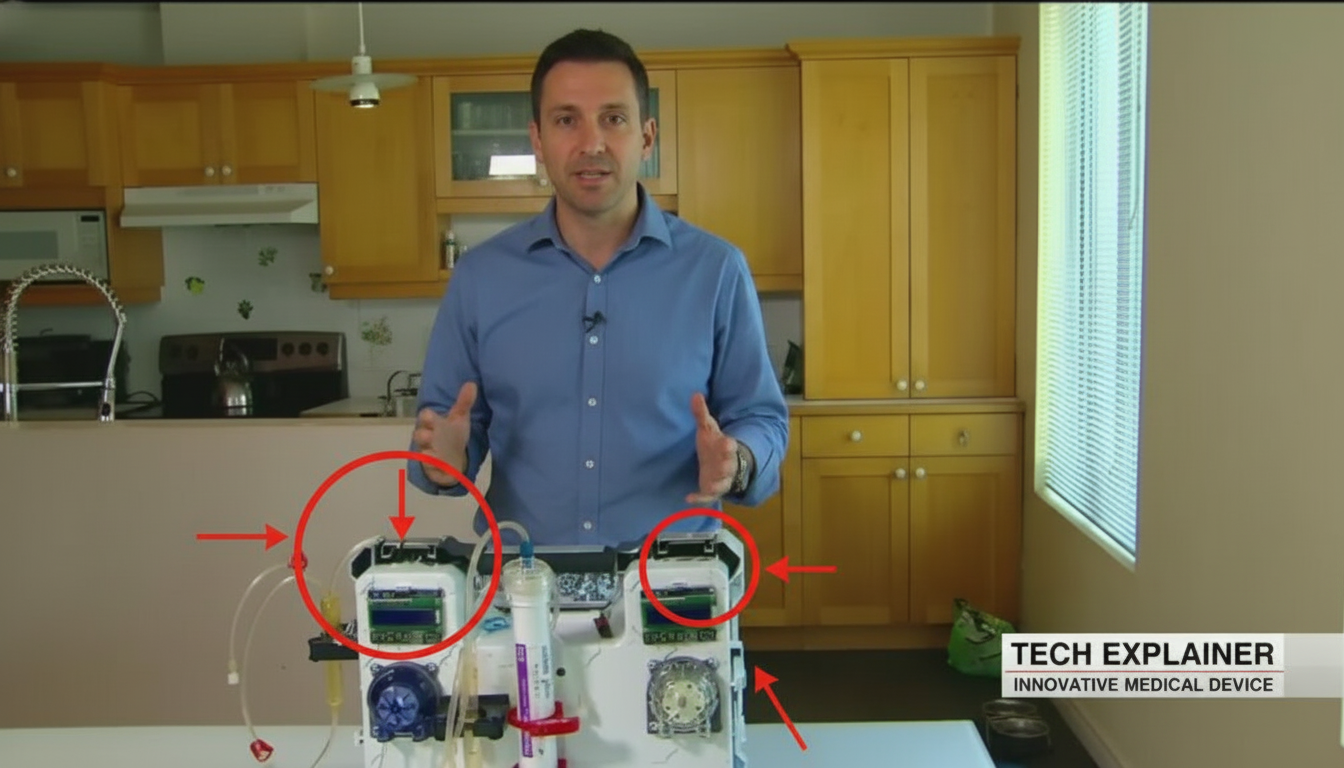
Now, imagine a lifeline. A truly low-cost option changes absolutely everything. Even if it never completely replaces clinic dialysis, it could provide crucial support for patients between visits. It could bring life-saving dialysis access closer to communities that don’t have the luxury of large hospitals. This isn’t just an upgrade; it’s a revolution in patient care.
Here’s another kicker: lower cost doesn’t just help patients; it supercharges innovation. Cheaper devices are easier to test, adjust, and improve. That flexibility is almost always missing from traditional medical equipment, where the intimidating price tag alone stifles any real experimentation. Because of this, Anya’s idea didn’t just stand out because of her age; it stood out because of the radical, disruptive thinking it represented. She wasn’t just building a device; she was building a new paradigm for medical innovation.
Recognition That Traveled Far
Once Anya presented her groundbreaking work at science competitions, the world took notice, and fast. Judges immediately recognized that her idea tackled a real, undeniable medical need. Soon, media outlets couldn’t get enough of the story. It exploded beyond Canada, reaching audiences far and wide, hungry for news about healthcare access and the power of youth-led innovation.
But here’s the real class act: what truly stood out was the integrity of the presentation. The project wasn’t hyped as a finished product, ready for market. Instead, it was honestly presented as a promising idea, still in its early stages of development. No overnight sensation BS here. Far too many young inventors get framed as instant success stories. In Anya’s case, the focus stayed exactly where it should: on potential, on learning, and on the long, dedicated effort required for true progress.
Anya Pogharian. Image Credit: CTV Montreal
How Portability Changes Daily Life
Portability. It might sound like a dry technical detail, but for patients, this isn’t technical; it’s deeply, profoundly personal. A machine that can actually move with the user? That fundamentally rewrites how dialysis treatment fits into everyday life. Imagine that freedom. Instead of planning your entire existence around dialysis appointments, dialysis finally begins to fit around your life.
Think about the sheer relief a smaller system could bring. It could slash travel time, a huge burden for many. It could empower patients to consistently stick to their treatment schedules, crucial for their health. It might even significantly ease the crushing mental weight that comes with constant dependency and feeling tied down. While Anya’s design was still conceptual, it perfectly aligned with a wider, unstoppable shift in modern medicine. More and more care is moving out of sterile hospitals and into the comfort of patients’ homes. Devices are getting smaller, smarter, and more integrated into daily living. This isn’t just a gadget; it’s a movement towards a more humane and accessible future for everyone.
Thank you for diving into this incredible story of innovation and hope. We believe in bringing you the most impactful stories that reshape our world. Don’t stop here! Explore more articles on our website about medical breakthroughs, inspiring young minds, and the future of global healthcare. Your next discovery awaits!