 By admin
 Activated Charcoal for Gray Hair: Natural Remedy or Just a Temporary Fix?
Imagine a relaxed Sunday gathering with your family, perhaps in a vibrant place like Mexico. As photos are snapped and shared, a quick glance at an image reveals something you hadn’t fully appreciated in the mirror: those subtle streaks of silver around your temples now appear undeniably brighter and more prominent. For many, this moment sparks a common desire: to find simple, natural methods to diminish the visibility of gray hair without resorting to harsh chemical dyes.
The quest for solutions can lead to a maze of online remedies, and one particularly intriguing trend that often surfaces is the use of activated charcoal. Some proponents suggest it can effectively darken gray strands. But before you consider adding this ingredient to your hair care routine, it’s crucial to understand the science behind it. The true effectiveness, revealed at the end of this discussion, might just surprise you.
Understanding the Emergence of Gray Hair with Age
Graying hair is a universally recognized aspect of the aging process. Yet, its appearance can often bring a sense of discomfort or self-consciousness for many individuals. Let’s delve into the straightforward biological explanation:
- Melanin Production: Hair color is determined by a specialized pigment called melanin, which is produced by unique cells residing within each hair follicle as new hair grows.
- Cellular Decline: As we advance in age, these pigment-producing cells gradually become less active. Eventually, they cease melanin production entirely.
- Color Transformation: When melanin production stops, the new hair emerging from the follicle lacks pigment, thus appearing gray or white.
However, age isn’t the sole determinant. Research published in various dermatology journals points to several additional factors that can accelerate the graying process:
- Genetic Predisposition: The timing of gray hair onset is often strongly influenced by inherited genes.
- Oxidative Stress: An imbalance between free radicals and antioxidants in the body can potentially impact pigment cells.
- Lifestyle Choices: Habits such as smoking or prolonged periods of chronic stress have been linked to premature graying.
- Nutritional Deficiencies: In some cases, inadequate intake of certain vitamins and minerals can affect hair health and appearance.
The overarching truth remains: gray hair itself is not an indicator of ill health; it is simply a natural part of our biological journey. Nevertheless, the intriguing aspect is that certain natural ingredients might offer a temporary cosmetic alteration to gray hair’s appearance, even if they don’t modify the underlying biology. Activated charcoal is one such ingredient that has garnered attention in this regard.
What Exactly Is Activated Charcoal?
Despite its name, activated charcoal is fundamentally different from the charcoal used for grilling food. This unique substance is manufactured by heating natural source materials—such as coconut shells, bamboo, or wood—to extremely high temperatures in an oxygen-free environment. This intensive process creates millions of microscopic pores across its surface, effectively transforming it into a highly porous material, akin to a sponge at a molecular level.
These minuscule channels are what give activated charcoal its remarkable property: the ability to attract, bind, and trap impurities, excess oils, and various particles. Due to this exceptional adsorptive capability, activated charcoal has become a popular ingredient in a wide array of products:
- Facial Cleansers and Masks: For deep skin purification.
- Oral Care Products: Used in some teeth whitening formulations.
- Detoxifying Skincare: Featured in formulations aimed at drawing out toxins.
- Clarifying Hair Treatments: To remove build-up from hair and scalp.
Here’s a crucial detail that often gets overlooked: activated charcoal possesses an intensely dark black color. This deep pigmentation allows it to temporarily adhere to various surfaces, including individual hair strands. And this is precisely where the belief in its ability to darken gray hair originates.
Can Activated Charcoal Truly Darken Gray Hair?
This brings us to the core question that many are eager to have answered: can activated charcoal genuinely make gray hair appear darker? The straightforward answer is yes, but its effect is purely cosmetic and temporary. Here’s an explanation:
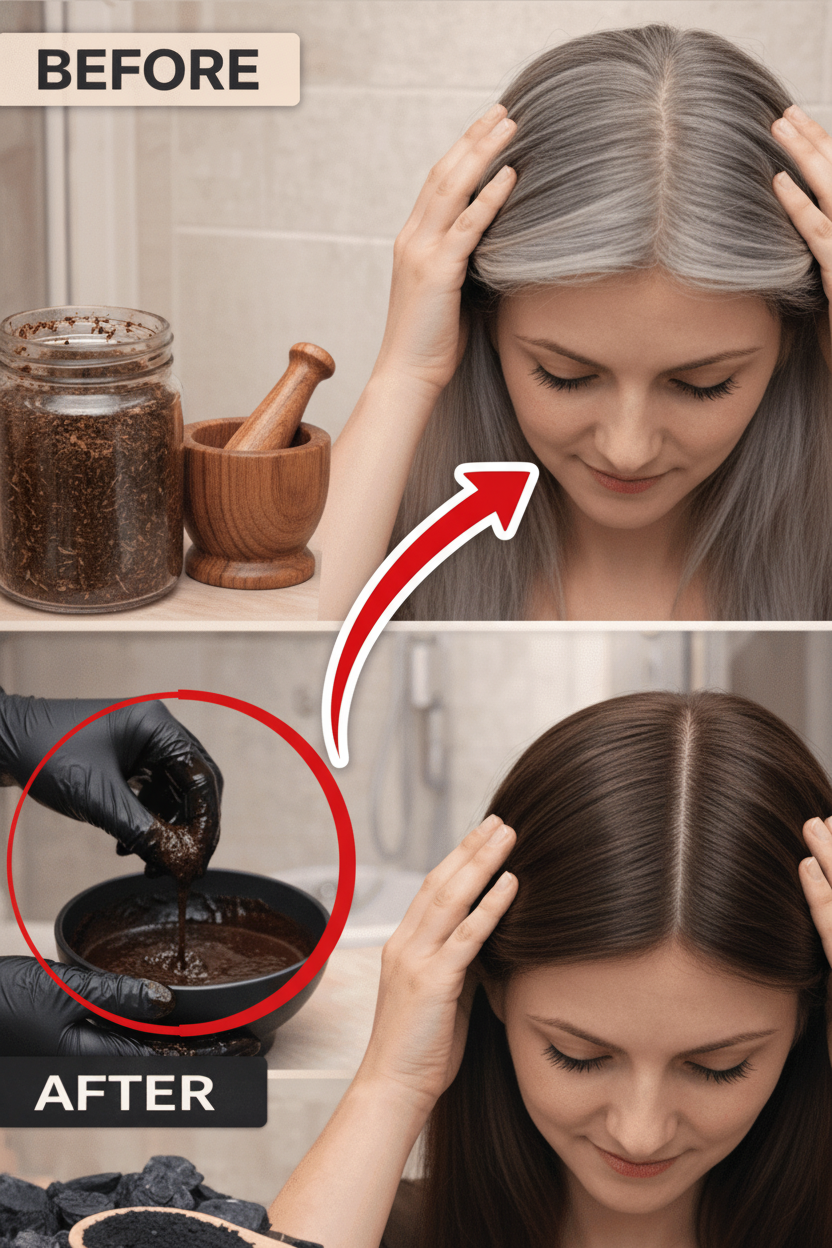
The tiny particles of activated charcoal can lightly coat the outermost layer of hair strands. Since gray hair lacks its own natural pigment, this dark residue can create the illusion of a slightly darker shade for a brief period. However, it’s vital to understand that this mechanism operates more like a temporary cosmetic application than a permanent hair dye. It does not penetrate deep into the hair shaft, nor does it influence the production of melanin within the hair follicle.
In practical terms, this means the darkening effect typically lasts only until the next time you shampoo your hair. To further clarify the distinction, consider this simple comparison:
| Method | How It Works | Duration |
|---|---|---|
| Activated Charcoal | Dark particles coat the hair’s surface externally. | Until the next wash |
| Plant-Based Dyes | Pigment attaches more deeply to the hair’s outer layers. | Several washes |
| Chemical Hair Dye | Pigment penetrates and alters the hair shaft’s internal structure. | Weeks or months |
Therefore, while activated charcoal might offer a fleeting darkening effect on gray strands, it does not provide a lasting change to hair color. Yet, its appeal isn’t solely based on this temporary cosmetic trick. The more compelling benefits are actually linked to scalp health.
Unexpected Benefits Activated Charcoal May Offer Your Hair and Scalp
This is the aspect that frequently surprises people. Activated charcoal can provide several indirect advantages for the overall appearance of your hair and the health of your scalp. These benefits are generally supported by cosmetic research:
- Deep Scalp Clarification: Activated charcoal acts like a powerful magnet, effectively drawing out and adsorbing excess oil, dirt, and accumulated product residue. Many individuals find that their scalp can accumulate layers of hair spray, styling creams, and environmental pollutants, which can weigh hair down and potentially clog follicles.