 By admin
 Amlodipine for Seniors: Recognizing Subtle Side Effects Often Overlooked
Just last month, a retired gentleman shared an experience that resonated deeply. For years, he had diligently taken his prescribed blood pressure medication, yet he gradually noticed his shoes feeling tighter and a persistent decline in his energy levels. Initially, he attributed these changes to the natural process of aging. However, the swelling became too pronounced to ignore, and the fatigue began to significantly impact his cherished daily walks.
Such scenarios are far more common than many people realize. The challenging truth is that the nuanced effects of prescription medications can often go unnoticed, hiding in plain sight. Developing an awareness of what your body might be communicating can fundamentally transform the dialogue you have with your healthcare provider. Intriguingly, one particular symptom discussed later in this article frequently astonishes even long-term patients.
A significant number of individuals over the age of fifty, particularly in countries like the United States, depend on amlodipine to help manage their blood pressure and support overall cardiovascular health. While clinical studies frequently characterize this medication as ‘well-tolerated,’ real-world patient accounts and further research suggest that certain side effects may manifest more frequently than anticipated.
It’s crucial to emphasize a key principle: understanding these potential indicators does not imply that medication should be discontinued without medical advice. Instead, it empowers you to identify changes early, enabling you and your doctor to discuss them calmly, confidently, and collaboratively. Let’s delve into some of the most commonly reported reactions that patients and their families might inadvertently overlook.
Peripheral Edema: The Swelling Many Seniors Often Overlook
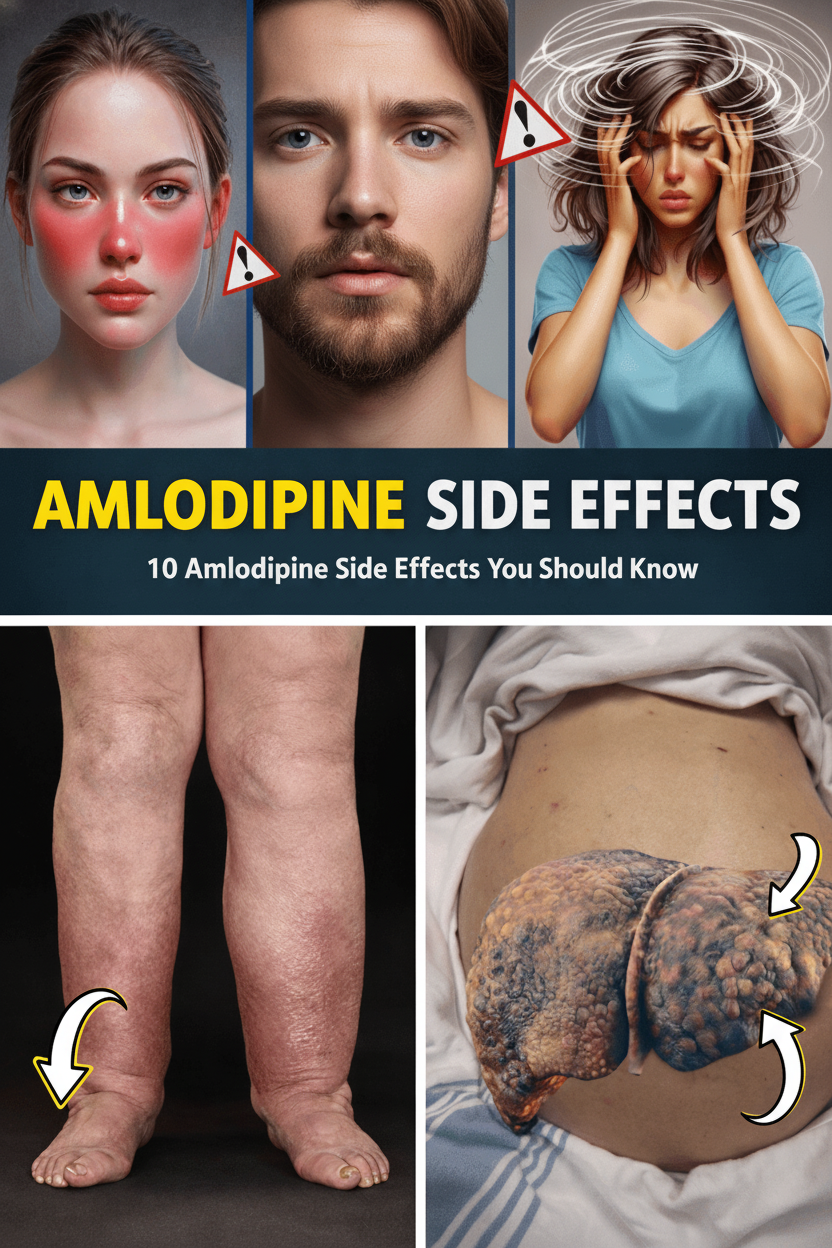
One of the most frequently discussed reactions associated with amlodipine is swelling in the feet or ankles, medically termed peripheral edema. For many older adults, its onset is often gradual and understated. Patients might first notice their shoes fitting more snugly than usual, or that their socks leave deeper, more lasting indentations on their skin. Walking can also start to feel heavier or more strenuous than before.
Research published in various cardiovascular medicine journals indicates that a noticeable percentage of patients may experience this swelling, with its incidence potentially increasing at higher dosages. But why does this phenomenon occur? Amlodipine functions by relaxing the blood vessels, which improves circulation. In some individuals, this vasodilation can cause fluid to seep from the blood vessels into the surrounding tissues, especially in the lower extremities.
Here are some tell-tale signs that numerous patients have described:
- Ankles appearing visibly puffy, particularly towards the end of the day.
- A sudden, unexplained tightness in footwear.
- A sensation of heaviness or increased weight in the legs after prolonged standing.
It’s important to note that while this type of swelling is generally not considered dangerous, it can certainly impact a person’s mobility and overall comfort. This is precisely why many healthcare professionals advocate for patients to report it promptly rather than simply enduring it or dismissing it. This leads us to another effect that patients sometimes overlook.
Persistent Fatigue or Unexplained Low Energy
Have you ever experienced an unusual level of tiredness, even after a seemingly restful night’s sleep? Some patients report a progressive decline in their energy levels after initiating blood pressure medication. This alteration can be subtle at first, making it easy to miss. Instead of enjoying a brisk walk around the neighborhood, an individual might find themselves preferring to rest more frequently. Similarly, what once was hours of enthusiastic gardening might now be cut short.
Clinical observations suggest that fatigue may affect a small segment of users. The precise underlying cause isn’t always immediately apparent; shifts in blood pressure, alterations in circulation, and individual physiological sensitivities can all contribute to this feeling of lassitude. It’s a crucial point to remember:
Fatigue resulting from medication can be easily misconstrued as a normal part of the aging process.
For this reason, doctors frequently advise patients to meticulously monitor and track any significant changes in their energy levels after starting or adjusting their prescriptions. However, changes in energy are not the only subtle shifts some individuals observe.
Dizziness and Moments of Lightheadedness
Dizziness represents another effect occasionally reported in connection with blood pressure medications. For older adults, this particular symptom carries added significance, as maintaining balance and mitigating the risk of falls become increasingly critical with advancing age. Some patients recount experiencing:
- Brief moments of lightheadedness, especially when transitioning from a sitting or lying position to standing.
- A slight sensation that the room is gently spinning.
- A mild feeling of instability or imbalance while walking.
Research indicates that dizziness may occur in a small percentage of patients, particularly if their blood pressure drops more significantly than anticipated. Nevertheless, the occurrence of dizziness does not automatically render the medication unsafe. Instead, it underscores the importance of vigilantly monitoring symptoms and discussing them during routine checkups. This allows doctors to make appropriate adjustments to the treatment plan if necessary. Surprisingly, the next potential side effect bears no direct relation to blood pressure regulation at all.
Unexpected Gum Changes: Gingival Overgrowth
This particular effect frequently takes patients by surprise. Some individuals taking certain blood pressure medications, specifically a class known as calcium channel blockers (which includes amlodipine), may observe changes in their gum tissue over time. Dental professionals refer to this condition as gingival overgrowth, or gingival hyperplasia. It can manifest in several ways:
- Gums appearing noticeably thicker or fuller around the teeth.
- Increased difficulty in effectively flossing between teeth.
- Gum tissue progressively covering more of the tooth surface.
Dental research has thoroughly documented this effect in a small percentage of individuals utilizing certain calcium channel blockers. Fortunately, maintaining excellent oral hygiene practices often plays a significant role in mitigating its impact. Dentists commonly recommend a proactive approach that includes:
- Regular professional dental cleanings.
- Gentle yet consistent daily flossing.
- Routine dental examinations.
However, alterations in gum tissue are not the only unusual reactions that have been reported. Let us talk about the signals related