 By admin
 Beyond Tiredness: 8 Unexpected Signs You Might Need More Vitamin B12
Do you often wake up feeling exhausted, even after a full night’s sleep? Perhaps you’ve experienced peculiar sensations like tingling in your hands or feet that just don’t seem right. These subtle yet persistent changes can be perplexing, leaving many to wonder about their underlying cause. While often dismissed as signs of aging or stress, such symptoms could surprisingly point to a common nutritional gap: a deficiency in Vitamin B12. Understanding these less obvious indicators is crucial for proactive health management and can unlock improved energy and focus.
Why Vitamin B12 Matters for Overall Wellness
Vitamin B12 is an essential nutrient, pivotal for numerous critical bodily functions. It’s vital for the healthy formation of red blood cells, which transport oxygen throughout your body, and plays an indispensable role in maintaining robust nerve function. As a water-soluble vitamin, B12 is also instrumental in converting the food we eat into usable energy, directly impacting our vitality. However, as we age, the body’s ability to absorb B12 can diminish due to various factors, including dietary shifts or certain medications. Health organizations like the National Institutes of Health highlight that a significant number of adults over 50 may not be obtaining adequate B12 from their diet alone. Recognizing the signs of insufficient B12 isn’t about self-diagnosis; it’s about fostering an informed approach to your daily well-being.
Common Factors Affecting B12 Absorption
Issues with Vitamin B12 absorption are surprisingly prevalent, particularly among specific demographics. Seniors, for instance, often experience a natural decline in stomach acid production with age, which is crucial for detaching B12 from food proteins, thus impairing its absorption. Similarly, individuals following strict plant-based diets, such as vegans and vegetarians, are at a higher risk since B12 is predominantly found in animal products. Furthermore, certain medications, including antacids and metformin, can interfere with the body’s ability to absorb this vital vitamin. The good news is that understanding these common hurdles empowers us to make smarter dietary choices and consider appropriate supplementation. Before diving into solutions, let’s explore some less obvious indicators that your B12 levels might be low.
8 Unexpected Signs Linked to Low Vitamin B12 Levels
When Vitamin B12 levels fall below optimal, your body often sends out signals that can be easily misinterpreted or overlooked. While severe deficiencies present clear symptoms, many subtle indicators can hint at a developing issue. Below, we’ve compiled eight lesser-known signs that warrant your attention, presented in a reverse order countdown.
8. Blurred or Disturbed Vision
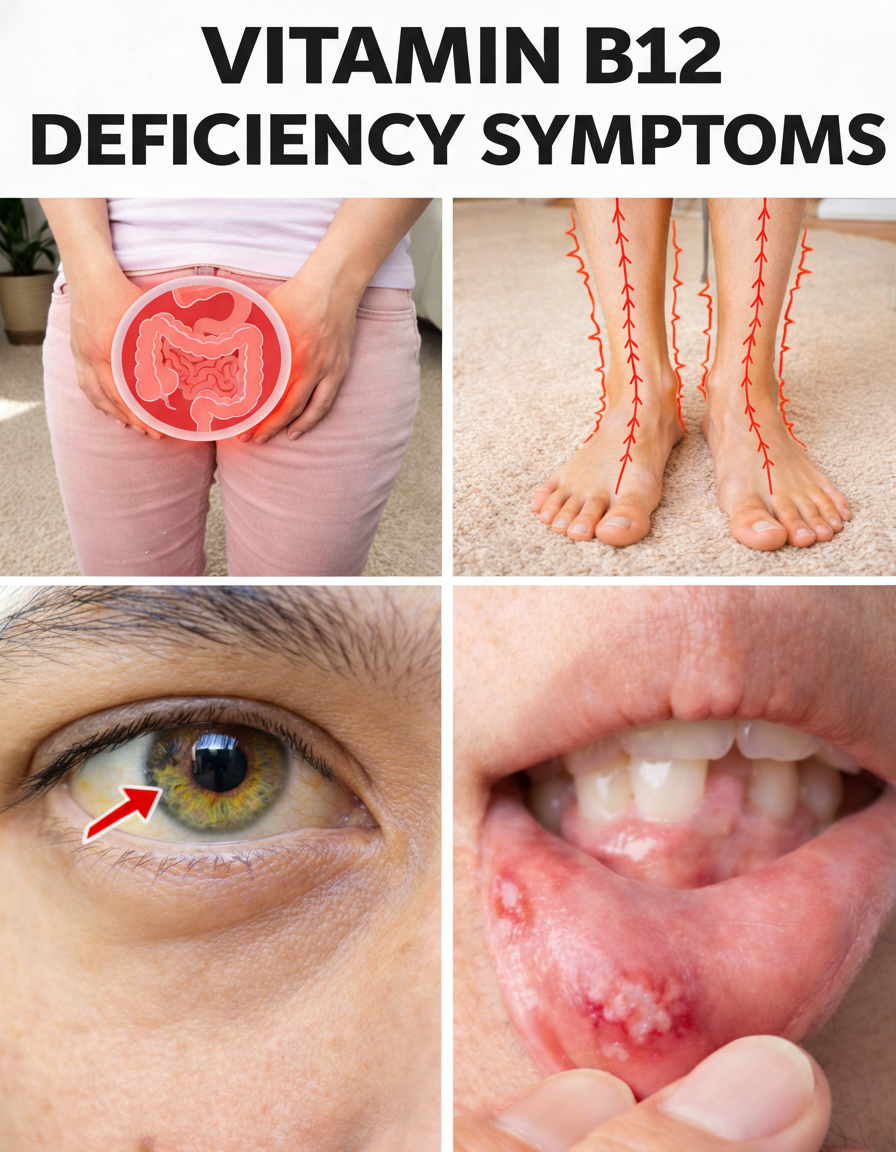
Experiencing unexplained blurry vision, double vision, or even light sensitivity? Vitamin B12 plays a crucial role in maintaining the health of the optic nerve. A deficiency can damage this nerve, potentially causing temporary visual disturbances or a general ‘fuzziness’ in your sight. If your vision seems off without a clear explanation, it’s a sign worth investigating.
7. Mood Changes Like Irritability
Are you finding yourself unusually irritable, anxious, or experiencing sudden shifts in mood? B12 is integral to neurological health and the production of neurotransmitters that regulate mood. Insufficient levels can disrupt these delicate brain chemicals, leading to increased feelings of frustration, sadness, or general mood instability that can gradually impact your daily life and relationships.
6. Unsteady Walk or Balance Issues
If you’ve noticed an increasing difficulty with coordination, a wobbly gait, or feeling generally unsteady on your feet, Vitamin B12 deficiency could be a factor. This vital nutrient is critical for maintaining healthy nerve function, which directly impacts balance and proprioception (your body’s sense of its position in space). Untreated, these subtle balance issues can progress.
5. Brain Fog or Memory Lapses
Struggling with ‘brain fog,’ finding it hard to concentrate, or experiencing frequent memory lapses? Vitamin B12 is essential for optimal brain health and cognitive function. Low levels can manifest as reduced mental clarity, difficulty focusing on tasks, or even short-term memory problems. The good news is that addressing a B12 deficiency often leads to noticeable improvements in mental sharpness and recall.
4. Pale or Slightly Jaundiced Skin
Observe your skin tone. If it appears unusually pale or takes on a faint yellowish tint (a condition known as mild jaundice), it could be a subtle sign of B12 deficiency. This occurs because inadequate B12 can impair red blood cell production, leading to anemia. When red blood cells break down prematurely, they release bilirubin, which can give the skin a yellowish hue. Many mistakenly attribute this to general tiredness.
3. Glossy, Red, or Sore Tongue
A distinct change in your tongue can be a strong indicator. If your tongue appears unusually smooth, swollen, bright red, or feels sore and painful (a condition medically termed glossitis), it’s a classic symptom of B12 deficiency. This occurs because B12 is crucial for cell regeneration, and its absence affects the tiny papillae on your tongue, making eating and speaking uncomfortable.
2. Persistent Fatigue
While often associated with many conditions, persistent, unexplained fatigue that doesn’t improve with adequate rest is a hallmark sign of low Vitamin B12. Since B12 is fundamental to converting food into energy and for healthy red blood cell formation, a deficiency means your body isn’t efficiently producing the energy it needs, leaving you feeling constantly drained and lethargic.
1. Tingling or Numbness in Extremities
Perhaps one of the most common and often unsettling signs is the sensation of tingling, ‘pins and needles,’ or numbness in your hands, feet, or other extremities. This neurological symptom arises because Vitamin B12 is vital for maintaining the myelin sheath, a protective covering around your nerves. Without sufficient B12, nerve damage can occur, leading to these characteristic sensations. If you’re experiencing these, it’s a significant signal from your body.
Comparing Sources of Vitamin B12 for Better Choices
Understanding these potential signs is the first step. The next is to ensure adequate intake of Vitamin B12 through your diet or supplementation. Not all sources offer the same absorption potential, so making informed choices is key. The table below provides a straightforward comparison to guide your daily intake.
| Source Type | Examples | Absorption Potential | Best For | Daily Idea |
|---|---|---|---|---|
| Animal Foods | Salmon, Lean Beef, Eggs | High (Naturally Bioavailable) | General population seeking natural intake | A 3-4 oz serving of fish or meat; 2 eggs |
| Fortified Foods | Fortified Plant Milks, Breakfast Cereals, Nutritional Yeast | Moderate (Good for specific diets) | Vegans, Vegetarians, or those with limited animal product intake | One serving of fortified cereal or plant milk |
| Dairy Products | Yogurt, Cheese, Milk | Good (Easily integrated) | Those looking for diverse dietary sources | One cup of yogurt or a slice of cheese |
| Supplements | Oral Pills, Sublingual Tablets, Injections | Varies (Higher for injections) | Individuals with confirmed deficiency, malabsorption issues, or specific dietary needs | As recommended by a healthcare professional |
By paying close attention to these often-overlooked signals, you can take proactive steps towards addressing potential Vitamin B12 deficiency. Consulting with a healthcare professional for diagnosis and personalized advice is always recommended to ensure optimal health and vitality.