 By admin
 Have you ever paused to truly observe the resilient, broad-leaved plants that frequently emerge in your lawn, along pavement cracks, or within garden beds? Often dismissed as mere invaders, these humble green companions have, for millennia, been a trusted resource across diverse cultures, offering gentle support for everyday well-being. In our modern, fast-paced lives, where minor skin irritations, occasional digestive upset, or everyday inflammation can easily disrupt our comfort, many are seeking natural solutions with deep historical roots. Among these, Broadleaf Plantain (Plantago major) stands out as a remarkable botanical, woven into traditional practices worldwide, presenting a simple yet fascinating option worthy of careful exploration.
What makes this incredibly common plant so historically significant? Continue reading to delve into its rich traditional background, explore what contemporary scientific research reveals about its active compounds, and discover practical, safe ways to learn more about its potential benefits. You might find an intriguing insight by the end that completely transforms your perspective on the plants thriving in your own backyard.
What is Broadleaf Plantain?
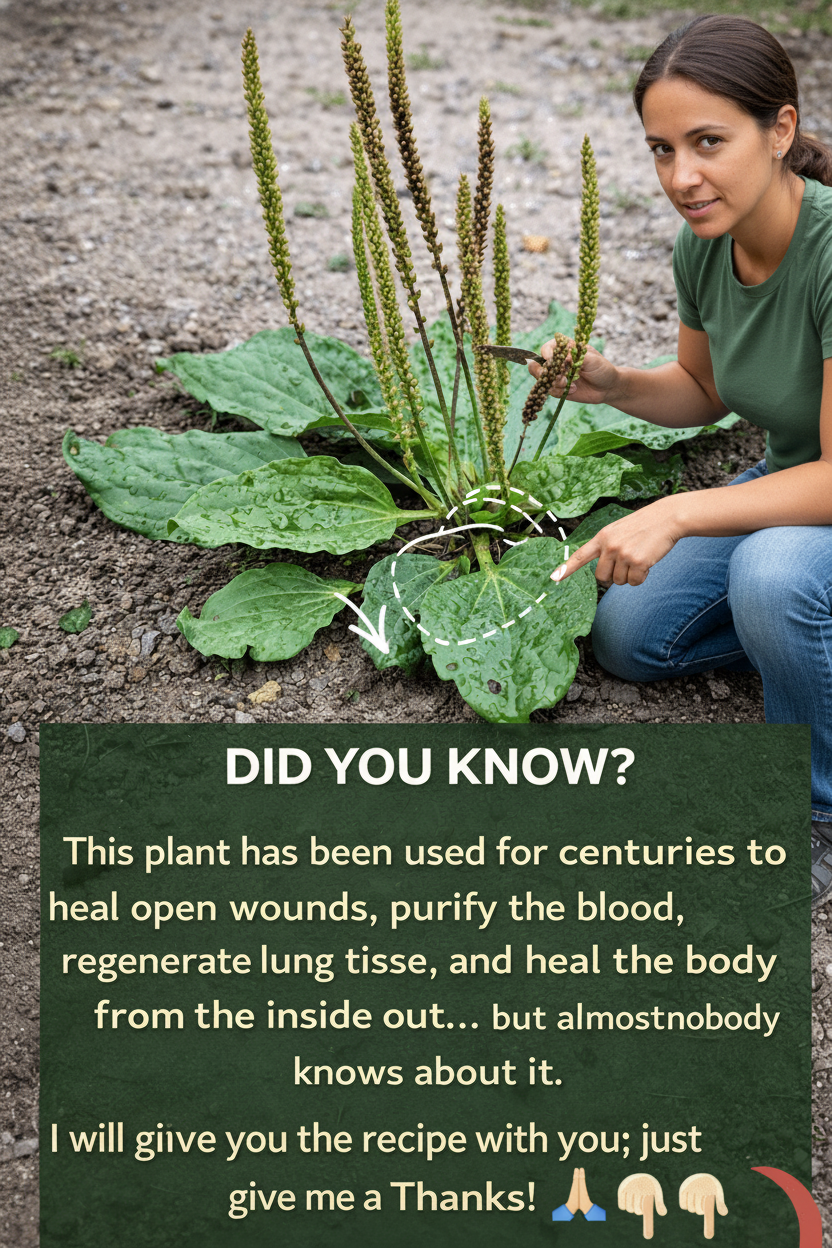
Broadleaf Plantain, known scientifically as Plantago major, is a hardy perennial herb that originated in Europe and parts of Asia, but has since spread globally, flourishing in nearly every environment. It’s easily recognized by its distinctive oval to elliptical leaves, arranged in a low-lying rosette, featuring prominent parallel veins. From the center of this rosette emerge tall, slender flower spikes adorned with countless tiny seeds.
This adaptable plant is also affectionately known by various names such as Greater Plantain, Waybread, or even “white man’s footprint” – a moniker earned due to its remarkable ability to thrive in compacted soil and follow human migration paths. Its historical presence in folk medicine is extensive. For countless generations, those practicing herbal traditions have utilized its readily available leaves in straightforward preparations, valuing both its accessibility and its gentle properties. Its traditional applications are truly cross-cultural, ranging from ancient European folk remedies to practices within Persian and other traditional systems, where it has long been esteemed for its role in promoting skin comfort and overall vitality.
Traditional Uses Across Cultures
Throughout history, Broadleaf Plantain has been a staple in traditional herbal practices, addressing a wide spectrum of common daily concerns. Its leaves were frequently employed, either fresh or as poultices, to soothe minor skin issues such as scrapes, insect bites, or irritations. In various regions, infusions made from the leaves were consumed to support respiratory comfort during coughs or to provide gentle assistance for mild digestive complaints.
Reviews of historical and ethnobotanical research consistently highlight its traditional role in encouraging skin repair, alleviating occasional inflammation, and enhancing general vitality. Furthermore, these studies often point to the presence of specific compounds like polysaccharides, flavonoids, and iridoid glycosides (notably aucubin) as potential contributors to these long-standing traditional applications. While not presented as a miraculous cure, the widespread and enduring use of Broadleaf Plantain speaks volumes about the deep cultural trust placed in its mild yet effective properties.
What Modern Research Suggests
Contemporary scientific investigations have delved into the bioactive constituents of Broadleaf Plantain, offering valuable insights into why this herb has maintained its prominence in traditional medicine for so long. These studies help bridge the gap between ancient wisdom and modern understanding.
Support for Skin Comfort and Repair
A number of preclinical and smaller-scale clinical studies suggest its potential to promote the healing of minor wounds and support tissue regeneration. For instance, research conducted on animal models and limited human trials has explored how extracts from Plantago major may aid natural healing processes. This could be attributed to its anti-inflammatory and antioxidant effects, stemming from compounds such as allantoin and various phenolic acids.
Anti-Inflammatory Properties
The leaves of Broadleaf Plantain contain a rich array of compounds, including tannins, flavonoids, and other elements. Laboratory and animal research indicates that these components may play a role in modulating occasional inflammation within the body, offering a scientific basis for its traditional use in soothing discomfort.
Other Areas of Interest
Further investigations propose that Broadleaf Plantain exhibits antioxidant activity, possesses mild antimicrobial effects, and may offer support for digestive or respiratory comfort. It is important to note, however, that while these findings are intriguing, the evidence varies, and more robust human clinical trials are necessary to fully confirm these potential benefits. These insights are often drawn from respected sources like reviews in journals dedicated to ethnopharmacology and phytotherapy, emphasizing the plant’s rich phytochemical profile without overstating any specific health claims.
Here are some key compounds frequently highlighted in research:
- Allantoin — Widely recognized for its soothing properties and its role in promoting healthy skin cell turnover.
- Flavonoids and Phenolics — Powerful antioxidants that contribute to cellular protection against oxidative stress.
- Polysaccharides — May assist in retaining moisture and providing gentle structural support to tissues.
- Iridoid Glycosides (e.g., Aucubin) — Compounds that have been linked in studies to potential anti-inflammatory actions.
While these observations are certainly promising and provide a scientific context for traditional practices, they remain preliminary. Always consider them as part of a broader, holistic approach to wellness, and not as definitive medical advice.
How to Explore Broadleaf Plantain Safely at Home
If you’re intrigued by Broadleaf Plantain and wish to explore its potential, begin with simple, low-risk methods. Always prioritize your safety and consult with a healthcare professional before incorporating any new herbal remedy, especially if you have pre-existing health conditions or are currently taking medications.
Identify It Correctly
It is crucial to accurately identify the plant. Look for broad, distinctly ribbed leaves arranged in a basal rosette. Be vigilant to avoid confusion with similar-looking plants that may not share the same properties or could even be harmful. Furthermore, ensure that any plant material you gather comes from clean, uncontaminated areas, free from pesticides, herbicides, or heavy metals.