 By admin
 Bruise Colors: Your Body’s Gory Little Secret – What It’s REALLY Telling You!
Ever smack into that damn table corner while you’re just trying to tidy up, only to spot a nasty dark mark on your arm later? You probably brush it off at first. But then, *bam!* The next day it’s a deep purple… then a few days later, a sickly yellow. Look, nobody likes a random bruise, especially when you’re older and folks start asking questions. But here’s the raw truth: these battle scars pop up more often as you age, and their shifting hues are actually screaming secrets about what’s going down beneath your skin. And get this – most people don’t figure it out until it’s staring them in the face: a bruise’s color isn’t just random; it’s a silent, gritty play-by-play of your body’s own healing saga. Keep your eyes glued to this page, because by the end, you’ll uncover a simple trick doctors swear by to shield your aging skin and finally kick those unnecessary bruises to the curb.
Why Bruises Change Color During Healing
So, you’ve got this angry blotch, and it feels like some kind of dark magic, right? Wrong. Medically speaking, your body’s just doing its thing, following a playbook as old as time. A bruise kicks off when those tiny blood vessels chilling right under your skin decide to burst after some clumsy bump or a minor whack. Blood spills out, floods the surrounding tissues, and *boom!* You get that lovely discoloration staring back at you.
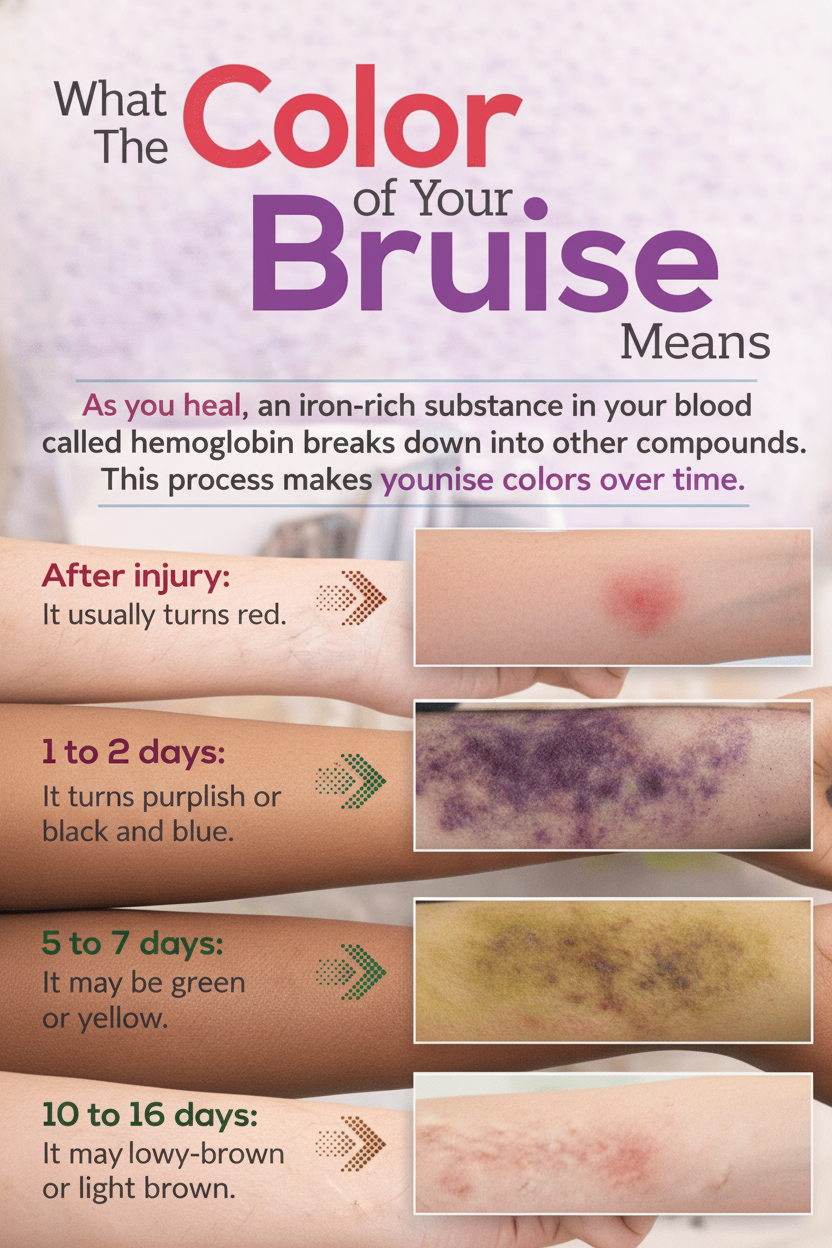
But here’s where it gets wild: as your body hustles to fix the mess, that trapped blood starts to break down. It’s a whole chemical party where a protein called hemoglobin morphs into other compounds, each stage flashing a different color. Ready for the gory details? Here’