 By admin
 Imagine you’re going about your day, perhaps noticing a slight change in your body – a bit of unexpected spotting, or an unusual discomfort. It might not be painful, and it doesn’t quite fit your usual cycle, yet a subtle worry sparks in the back of your mind. For countless women in their 30s, 40s, and beyond, these minor reproductive shifts are often attributed to daily stress, hormonal fluctuations, or simply the natural process of aging. This tendency to dismiss subtle signs can unfortunately lead to delays in seeking crucial medical advice. Cervical cancer, despite being highly preventable through proactive screening and increased awareness, frequently presents with early indicators that are easily missed amidst the demands of modern life. Throughout this article, we’ll unveil critical insights into prevention that could profoundly transform your approach to personal health.
🔍 Why Cervical Cancer Often Goes Unnoticed Until Later Stages
In the fast-paced rhythm of life beyond 35, professional ambitions, family commitments, and personal well-being often compete for attention, frequently pushing individual health concerns down the priority list. This environment makes it easy for the subtle signs of cervical cancer to be misconstrued as typical bodily fluctuations, leading to a gradual erosion of confidence in one’s health perception. The majority of cervical cancer cases are instigated by persistent high-risk Human Papillomavirus (HPV) infection, which can remain asymptomatic for extended periods. During this silent phase, abnormal cervical cells can develop without causing pain or clear symptoms, transforming what could have been straightforward intervention into more intricate medical challenges. Leading health organizations, including the Mayo Clinic and the American Cancer Society, consistently underscore that timely detection through regular screening significantly enhances treatment success and patient prognosis. Yet, a fundamental question remains for many: how does one discern when a bodily change truly warrants medical scrutiny? We aim to demystify this process, guiding you through each crucial indicator.
❓ The Subtle Way Early Cervical Changes Appear
It’s natural to expect that any serious health concern would present with unmistakable, alarming symptoms. However, the initial early indicators of cervical cancer frequently appear as slight deviations from your body’s normal routines. These are changes that are remarkably easy to dismiss or attribute to other factors, yet their prompt recognition is paramount. Rather than causing immediate distress, these signs often subtly manifest as alterations in vaginal bleeding, discharge characteristics, or general pelvic comfort, all of which can be linked to evolving cervical tissue. Cultivating an understanding of your body’s typical patterns is key; this heightened awareness can significantly alleviate the anxiety of uncertainty. Crucially, observing these signs should not induce panic, but rather empower you to take proactive, informed steps toward your health. Let’s now delve into the specific symptoms that are most commonly overlooked by women.
9. Changes in Urination or Bowel Habits
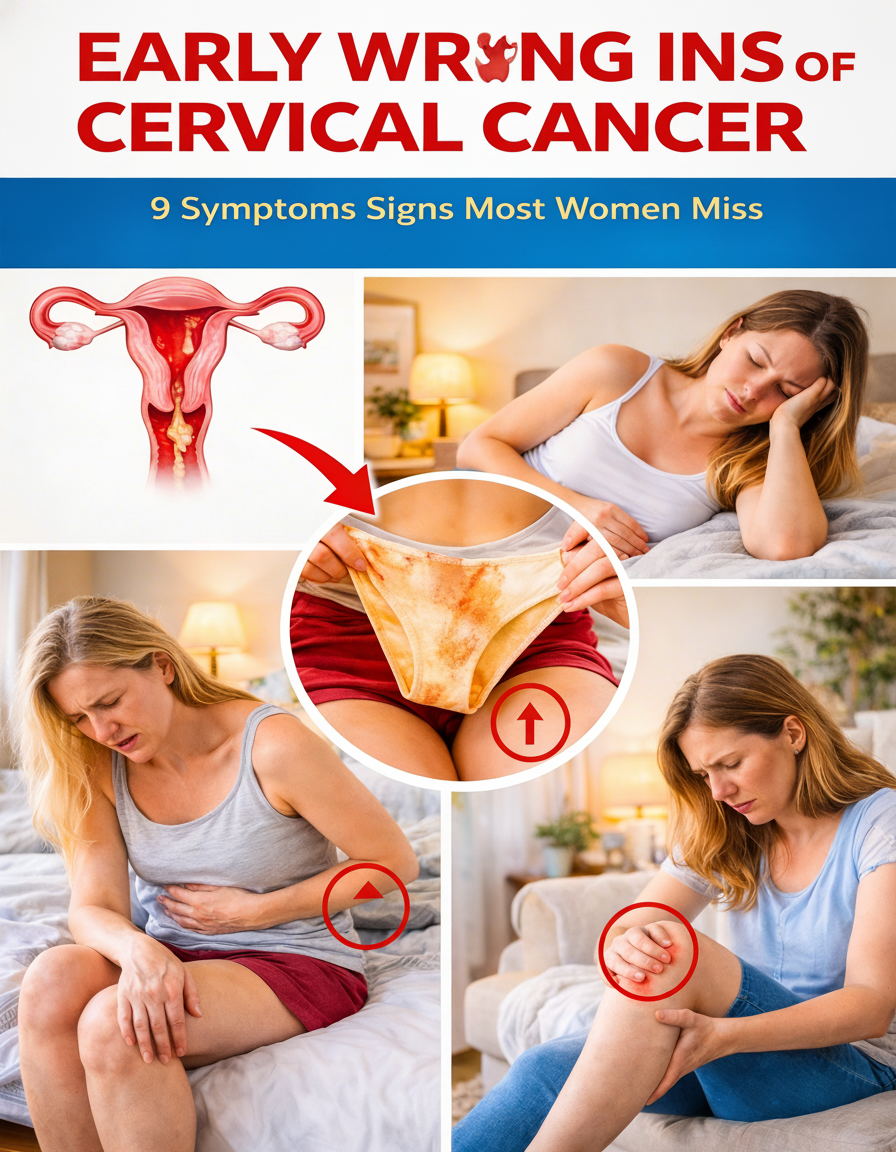
Experiencing more frequent urges to urinate, encountering difficulty in completely emptying your bladder, or observing notable alterations in your bowel movements might initially be dismissed as dietary issues or age-related shifts. However, when these changes persist, they can become a source of considerable frustration and may indicate underlying pelvic pressure stemming from internal changes. As highlighted by experts at the Cleveland Clinic, these urinary and bowel irregularities are among the often-missed early signs of cervical cancer, suggesting potential effects on surrounding pelvic organs and making everyday activities uncomfortable. Recognizing these patterns encourages a proactive approach without instilling fear. Should these symptoms appear alongside other concerning indicators, the case for a thorough medical evaluation becomes even stronger. But let’s first address a more frequently reported symptom.
8. Leg Pain or Swelling
Persistent, unexplained discomfort or swelling, particularly if localized to one leg, can significantly impede mobility and trigger quiet apprehension about its cause. While less frequent in the very initial stages, this particular cervical cancer symptom can signify more advanced progression, underscoring the critical importance of identifying earlier warning signs. Organizations such as the American Cancer Society identify unilateral leg pain or swelling as an indicator that typically emerges in later stages, thereby emphasizing the immense value of diligent, proactive health screenings. Beyond physical limitations, this symptom can restrict participation in enjoyable activities, contributing to emotional distress. It is also often observed in conjunction with persistent fatigue.