 By admin
 Dates: Your Everyday Ally for Stronger Bones and Preventing Age-Related Bone Loss
For many individuals stepping into their 50s and beyond, familiar changes often emerge: a noticeable stiffness in the mornings, an occasional twinge in the hips or back during daily activities, or an increasing concern about preserving an active, independent life. These subtle signals frequently point to the gradual process of bone thinning, a widespread issue, particularly for postmenopausal women and older adults, where inadequate nutrient intake and the natural progression of aging can quietly diminish skeletal strength. The good news is remarkably simple: enjoyable, nutrient-rich additions to your daily diet—like certain dried fruits—can deliver essential minerals crucial for maintaining optimal bone health. What if a naturally sweet, convenient snack could effortlessly contribute to your daily mineral requirements while also enhancing your meals and snacks? Read on to uncover how dates can become a vital part of a bone-friendly lifestyle, supported by expert nutritional insights and practical tips you can begin using today.
Understanding Bone Health Challenges as We Age
Osteoporosis, a condition characterized by fragile bones, typically progresses silently, often remaining undetected until a painful fracture occurs. Beyond the age of 50, a natural decrease in bone density is common, significantly increasing the likelihood of debilitating fractures in areas like the hip, spine, or wrist, which can severely restrict mobility and independence. Key factors accelerating this bone degradation include insufficient intake of vital minerals such as calcium, magnesium, or potassium, along with reduced physical activity and age-related hormonal shifts. Crucially, a well-balanced diet serves as a cornerstone for maintaining bone integrity. Extensive research consistently demonstrates that dietary patterns abundant in specific bone-supporting minerals found in fruits, vegetables, and other whole foods are positively correlated with greater bone mass and a slower rate of bone loss over time. While no singular food can entirely prevent or reverse bone diseases, consistent nutritional support from daily food choices, combined with regular physical activity and professional medical advice, can significantly help to slow their progression. In many parts of the world, including Mexico where they are a cherished cultural food, dates are readily available. Their impressive array of minerals makes them a notable candidate for supporting overall skeletal wellness.
The Nutrient Powerhouse: How Dates Support Bone Health
Beyond their delightful natural sweetness and satisfying texture, dates offer a rich spectrum of vital minerals essential for our well-being. A 100-gram serving (roughly 4–5 Medjool dates or comparable types) typically provides these key nutrients:
- Calcium: Approximately 39–64 mg, playing a fundamental role in building and maintaining bone structure.
- Magnesium: Around 43 mg, crucial for the formation of bone crystals and the regulation of calcium within the body.
- Phosphorus: Roughly 62 mg, collaborating with calcium to forge strong, resilient bone tissue.
- Potassium: Up to 656 mg, vital for balancing minerals and potentially minimizing calcium loss through urine.
These mineral levels are consistent with nutrients frequently highlighted in scientific studies for their positive impact on bone health. For example, observational research indicates a correlation between higher dietary magnesium and potassium intake and increased bone mass. Magnesium actively participates in bone metabolism, while potassium helps maintain overall mineral balance by reducing the excretion of calcium. Furthermore, dates contain powerful antioxidants, such as phenolic compounds, which help counteract oxidative stress—a known contributor to age-related bone deterioration. While extensive dedicated clinical trials focusing solely on dates for bone density are still developing, their synergistic nutrient profile firmly establishes them as an excellent complementary food within a bone-supportive diet. And there’s more: their substantial fiber content (around 7g per 100g) also promotes a healthy gut, which, in turn, indirectly enhances the absorption of these crucial bone-building nutrients.
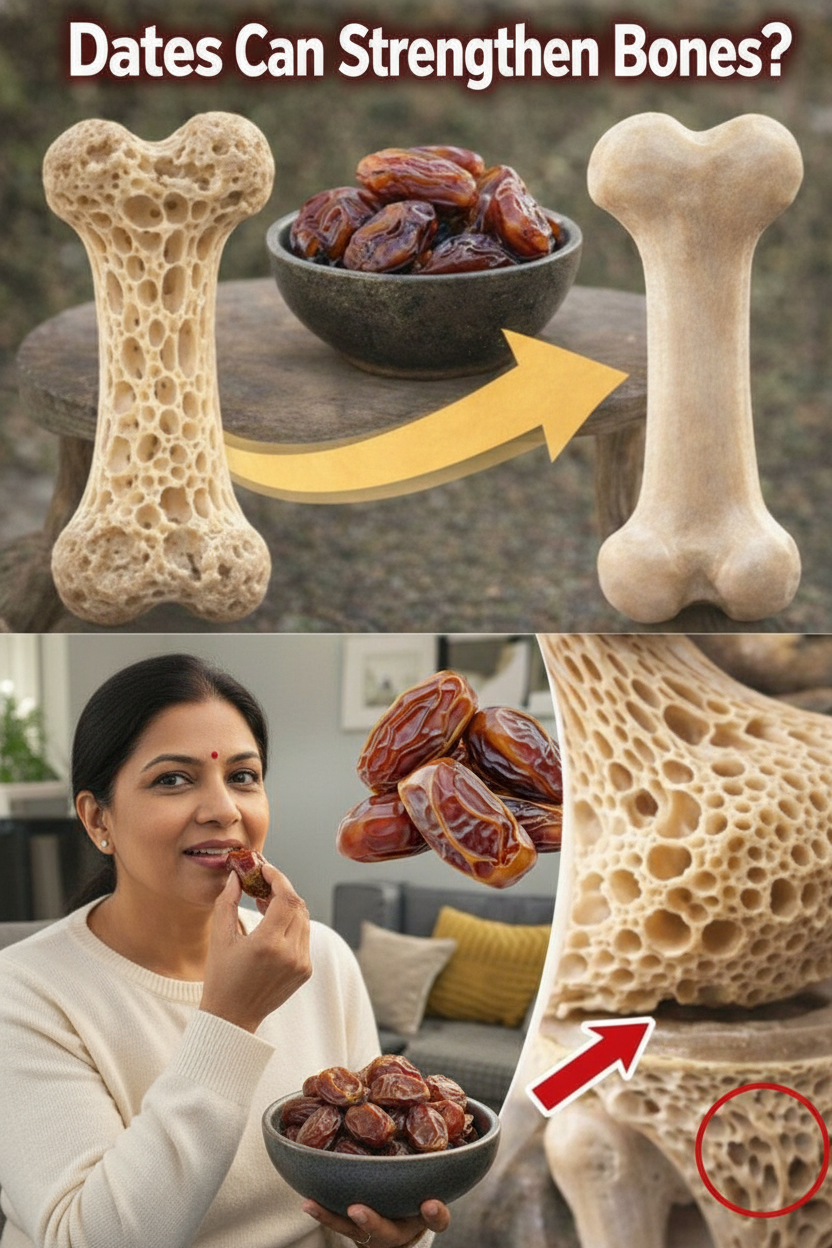
Key Ways Dates May Support Your Bones
Let’s summarize the significant contributions dates can make to your bone health:
- Natural Calcium Source: Dates contribute to your daily calcium intake, working alongside other dietary sources to support ongoing bone maintenance.
- Magnesium Enhancement: This mineral is vital for bone density, proving particularly beneficial for postmenopausal women, with research indicating its connection to a more robust skeletal framework.
- Potassium for Mineral Balance: Potassium helps to conserve calcium within the body by assisting in the maintenance of proper acid-base equilibrium.
- Essential Phosphorus Partner: Phosphorus is a crucial component of hydroxyapatite, the mineral complex responsible for providing bones with their characteristic hardness and strength.
- Antioxidant Protection: The antioxidants present in dates may offer protection to bone cells against the damaging effects of oxidative stress, which can accumulate with age.
- Sustained Energy for Movement: Dates provide a natural, sustained energy source, encouraging participation in weight-bearing exercises—a well-established method for strengthening bones.
- Fiber for Nutrient Uptake: Their fiber content promotes a healthy digestive system, thereby improving the body’s efficiency in absorbing vital bone-building nutrients.
How Dates Compare to Other Bone-Friendly Foods
To better understand the unique position of dates within a bone-supportive diet, let’s examine a straightforward comparison with other well-known bone-friendly foods (per typical serving):
| Aspect | Dates (4–5 pieces) | Yogurt (1 cup plain) | Leafy Greens (1 cup cooked kale) |
|---|---|---|---|
| Calcium | Moderate (~50–80 mg) | High (~300 mg) | High (~180 mg) |
| Magnesium | High (~40–50 mg) | Moderate | High |
| Potassium | Very High (~600+ mg) | Low | High |
| Ease of Use | Ready-to-eat, portable, no refrigeration needed | Needs refrigeration, ready-to-eat | Requires preparation (washing, cooking) |
| Bone Support Notes | Excellent mineral-rich complement, convenient snack | Strong source of calcium and probiotics | Packed with vitamins K & C, plus minerals |