 By admin
 Decoding Tiny White Spots on Your Arms and Legs: A Complete Guide to Understanding and Care
Have you ever noticed those persistent, tiny white spots or small white bumps appearing on your upper arms, thighs, or shoulders? If these little marks, often lighter than your natural skin tone, have left you wondering about their cause and what they mean, rest assured – you’re far from alone. Many individuals experience these common skin variations and may feel a degree of self-consciousness, particularly when wearing sleeveless tops or shorts. The reassuring truth is that, in most instances, these small white spots on the skin are entirely harmless and pose no significant health risk. However, gaining a clear understanding of their origins and characteristics can provide significant peace of mind and guide you toward appropriate skincare. Let’s explore the common culprits behind these markings and effective strategies for management.
Understanding the Most Common Small White Spots
When it comes to those persistent white spots on arms and legs, the most frequent culprit is a benign skin condition known as Keratosis Pilaris, commonly abbreviated as ‘KP.’ This condition arises when an excess of keratin, a natural protein found in skin, hair, and nails, accumulates within the hair follicles. Instead of shedding efficiently, this keratin forms a plug, effectively blocking the follicle’s opening and resulting in a small, raised bump. The appearance of these tiny bumps can vary, often presenting as white, reddish, or even skin-colored, influenced by your individual skin tone and any surrounding inflammation. It’s crucial to understand that these aren’t ‘spots’ due to a loss of skin pigment; rather, they are distinct, hard plugs of skin that create a lighter appearance around the hair follicle.
How to Identify Keratosis Pilaris
- Distinctive Texture: You’ll typically notice small, rough bumps that give the skin a ‘sandpaper’ or ‘goosebump’ like feel, which doesn’t resolve spontaneously.
- Common Locations: These small white bumps most frequently manifest on the back of the upper arms, the outer thighs, buttocks, and occasionally on the cheeks.
- Clustered Appearance: They often appear clustered together, forming noticeable patches.
- Color Variations: While often white, they can also present as flesh-colored or reddish, depending on skin type and inflammation levels.
- Minimal Itching: KP is generally not itchy, though severe dryness or irritation can sometimes lead to mild discomfort.
- Seasonal Worsening: Symptoms often become more pronounced during dry weather conditions or the colder winter months.
Pityriasis Alba: The “Summer White Spots”
Another prevalent cause of white skin spots, particularly noticeable during warmer months, is Pityriasis Alba. This condition is especially common among children, adolescents, and young adults. It presents as round or oval patches that are noticeably lighter than the surrounding skin and may have a subtle, fine scale. Here’s how to differentiate Pityriasis Alba from Keratosis Pilaris:
- Smooth Texture: Unlike the bumpy nature of KP, Pityriasis Alba lesions are entirely flat to the touch.
- Subtle Scaling: Upon closer inspection, you might observe a fine, powdery scale on the surface of the patches.
- Indistinct Borders: The edges of these patches tend to be less sharply defined compared to other skin conditions.
- Post-Sun Exposure Prominence: They frequently become more apparent after sun exposure, as the surrounding healthy skin tans, making the affected areas stand out as pale spots.
- Gradual Resolution: These hypopigmented patches typically fade slowly over several months to a few years.
Less Common Causes of White Skin Spots
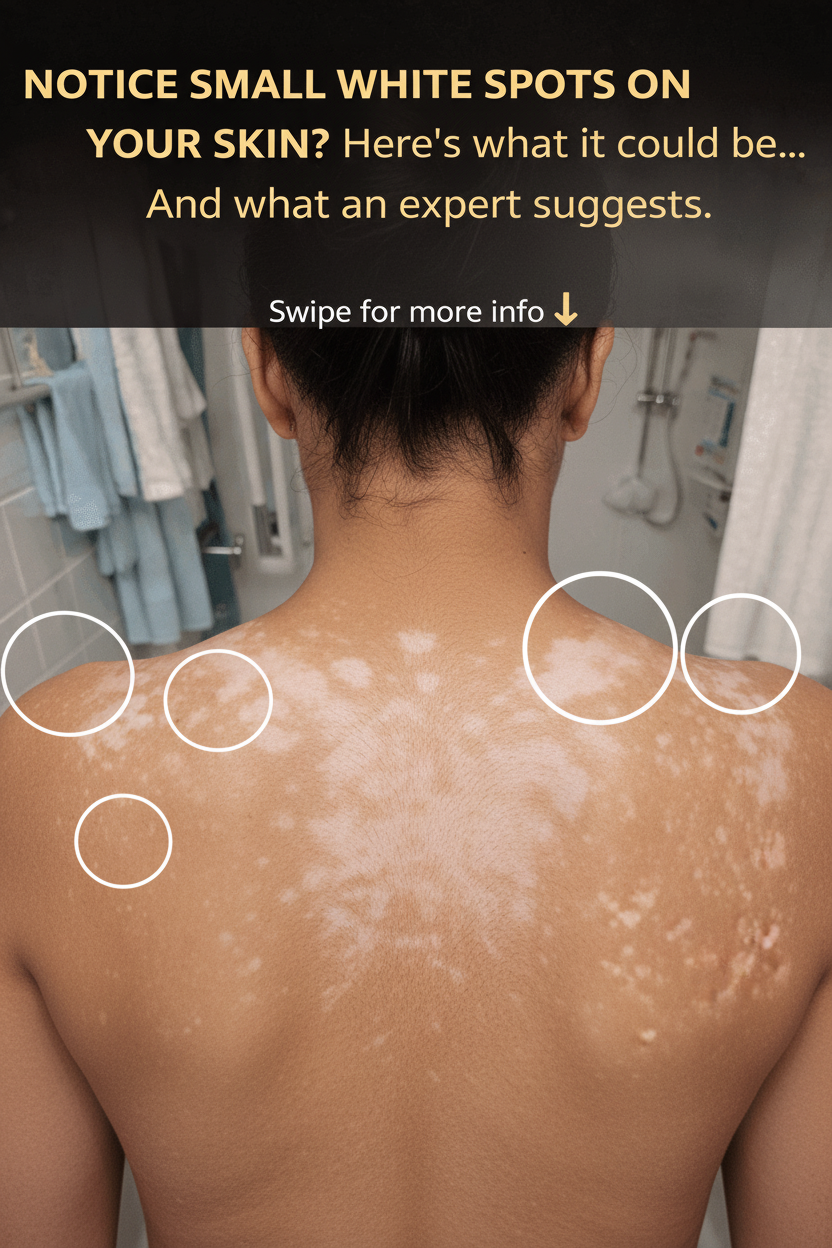
While Keratosis Pilaris and Pityriasis Alba represent the majority of cases of small white spots on the body, it’s important to be aware of other less common conditions that might present similarly. These include:
- Idiopathic Guttate Hypomelanosis (IGH): Characterized by very small (2–5 mm), perfectly round, flat, and pure white spots, IGH typically emerges after the age of 40. These white spots from sun exposure are most commonly found on the arms and legs, resulting from cumulative sun damage over the years.
- Tinea Versicolor: This is a superficial yeast infection that can lead to patches of skin discoloration, appearing white, pink, or light brown. These areas often have a fine scale and are usually more widespread, frequently affecting the trunk.
- Post-inflammatory Hypopigmentation: These are lighter areas of skin that develop after the healing of inflammatory skin conditions such as eczema, bug bites, or other skin injuries. The skin’s pigment production is temporarily reduced in the affected area.
- Vitiligo: A significantly rarer autoimmune condition, Vitiligo manifests as larger, distinct patches of completely milk-white skin with sharply defined borders. A key characteristic of Vitiligo is its tendency to gradually expand and spread over time.
Why Do These Spots Appear? Exploring the Triggers
The emergence of white spots on your skin can be attributed to various factors, with specific triggers often linked to the underlying condition. Here are the most common reasons:
- Genetic Predisposition: For conditions like Keratosis Pilaris, genetics play a significant role. KP frequently runs in families and is remarkably common, affecting 40-50% of adolescents and a substantial number of adults to some degree.
- Dry Skin Conditions: Environments with low humidity, along with the use of harsh soaps, excessively hot showers, and cold winter air, can exacerbate conditions like KP by making the follicular plugs more prominent and the skin drier.
- History of Sun Exposure: Prolonged and cumulative exposure to the sun can contribute to certain types of white spots, such as Idiopathic Guttate Hypomelanosis. Over time, tanning can darken the surrounding skin, making unaffected areas appear paler in contrast.
- Atopic Dermatitis and Eczema: Individuals prone to atopic dermatitis or eczema often experience more pronounced cases of Keratosis Pilaris, suggesting a link between these inflammatory skin conditions and the development of KP.
- Fungal Overgrowth: In the case of Tinea Versicolor, the presence of a mild overgrowth of yeast on the skin is the primary cause of the characteristic discolored patches.
Practical Steps You Can Take at Home for Skin Care
Although most tiny white spots are benign, many individuals seek ways to minimize their appearance. Fortunately, several safe and evidence-backed home care strategies can help manage these conditions:
- Adopt a Gentle Cleansing Routine:
- Opt for mild, fragrance-free, and non-foaming cleansers to avoid stripping natural skin oils.
- Steer clear of harsh bar soaps and body washes containing sulfates, which can further irritate the skin.
- Bathe with lukewarm water instead of hot, as hot water can worsen dryness.
- Prioritize Consistent, Effective Moisturizing:
- Apply a rich, fragrance-free cream or ointment immediately after bathing, ideally within three minutes, to lock in moisture.
- Seek out products containing key ingredients known for their hydrating and exfoliating properties, such as:
- Urea (10–20%)
- Lactic acid (6–12%)
- Ammonium lactate
- Salicylic acid (at very low strengths)
- Moisturizers enriched with ceramides are also beneficial, as they help to restore and strengthen the skin’s natural barrier.
- Consider Gentle Exfoliation (for bumpy textures):
- If your skin has a bumpy texture (like KP), a soft washcloth or loofah can be used with light, gentle pressure. Avoid aggressive scrubbing.
- Chemical exfoliants, such as those containing Alpha Hydroxy Acids (AHAs) or Beta Hydroxy Acids (BHAs), can also be highly effective in smoothing skin texture by promoting cell turnover. Always introduce these gradually and follow product instructions carefully.