 By admin
 Early Detection is Key: 4 Critical Breast Cancer Warning Signs You Shouldn’t Ignore
Breast cancer remains one of the most prevalent cancers affecting women globally. While routine screenings like mammograms often detect abnormalities before they’re noticeable, developing a keen awareness of your own breasts and recognizing subtle changes can significantly impact early diagnosis and treatment outcomes. It’s perfectly normal to feel concerned if something seems amiss with your body—these sensations are often vital signals. The empowering news is that being informed about potential indicators allows you to proactively safeguard your health.
Crucially, some signs can manifest gradually, even before a distinct lump becomes palpable. In the following sections, we will delve into four essential early indicators, supported by leading health organizations. Stay with us until the end for practical, immediate steps you can take to maintain optimal breast health awareness.
Why Early Awareness is Your Most Powerful Tool
Most breast cancers, particularly in their nascent stages, do not present with dramatic or debilitating symptoms. Research from reputable bodies like the American Cancer Society highlights that advanced screening methods, such as mammography, frequently identify issues long before they become apparent to the touch or eye. Nevertheless, understanding the normal appearance and feel of your breasts is indispensable for promptly spotting any unusual patterns.
Studies consistently demonstrate that personal breast awareness, combined with regular medical check-ups, leads to improved prognoses when changes are addressed swiftly. However, this isn’t the complete picture. Many non-cancerous conditions can mimic these symptoms, meaning these signs are not definitive proof of a serious illness. The paramount actions are diligent observation and professional medical evaluation. Let’s now explore the four signs that experts urge you to pay attention to.
1. A New Lump or Thickening in the Breast or Underarm Region
The most commonly discussed alteration is the discovery of a new lump or mass within the breast tissue or the armpit. According to guidelines from the American Cancer Society and the Mayo Clinic, this is frequently the initial change individuals notice. It’s important to remember that not all lumps are malignant; many are benign, such as cysts or fibroadenomas. A cancerous lump might feel firm with irregular borders, but it can also be soft, round, or even tender. Sometimes, it presents without pain, making it easily overlooked. Pay particular attention if its texture differs from the usual feel of your breast tissue.
However, it bears repeating: not every lump signifies a serious problem. Hormonal fluctuations, especially during your menstrual cycle, can induce temporary changes. Nonetheless, any persistent new lump warrants a thorough medical examination by a healthcare professional.
2. Unexplained Changes in Breast Size, Shape, or Contour
If one breast suddenly appears or feels distinctively different from the other, it can be a crucial early indicator. This category of changes includes:
- Unexplained swelling affecting a portion or the entirety of the breast.
- A noticeable shift in size or shape that cannot be attributed to typical factors like weight fluctuations, pregnancy, or menstrual cycles.
- Skin dimpling or puckering, often likened to the texture of an orange peel (known as peau d’orange).
The Mayo Clinic emphasizes that these visual or tactile discrepancies can originate from underlying tissue alterations. If one breast begins to exhibit asymmetry without any apparent cause, close monitoring is advisable. And keep in mind: natural breast asymmetry is common, but a sudden or progressive change is what truly signals a need for concern.
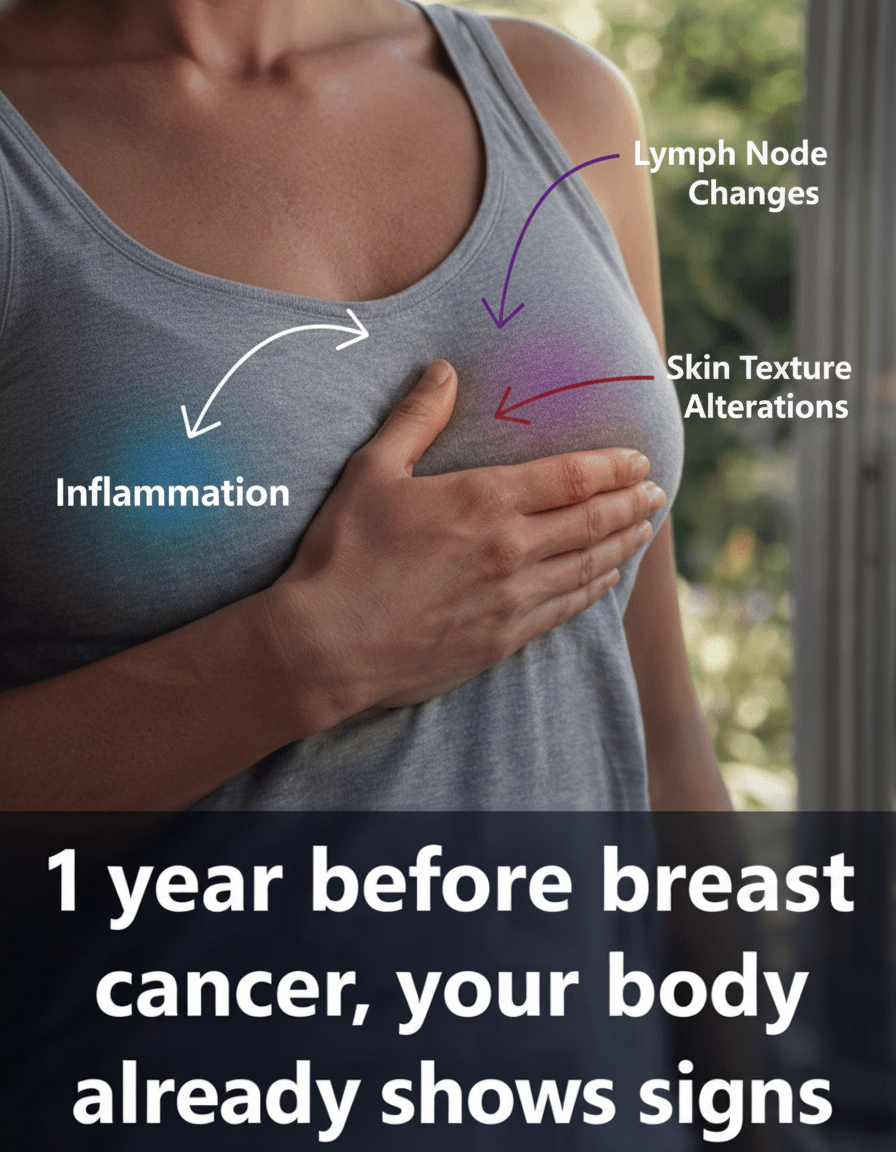
3. Persistent Skin Changes or Redness on the Breast
The skin on your breasts can offer significant clues about your health. Be vigilant for:
- Redness, warmth, or irritation that persists and doesn’t resolve spontaneously.
- Scaling, flaking, or a rash-like appearance, particularly around the nipple area.
- Thickening or dimpling of the breast skin that wasn’t previously present.
These symptoms are occasionally misidentified as minor infections or allergic reactions. However, persistent changes—especially if they predominantly affect one breast—should prompt an immediate medical consultation. Respected sources like the CDC and Susan G. Komen stress that inflammatory changes can be indicative of a condition requiring urgent attention. The reality is, these are not typical everyday issues for most individuals, so it’s vital not to dismiss them as trivial skin problems.
4. Nipple Alterations or Unusual Discharge
Changes involving the nipple can be subtle yet highly significant. Common alterations to watch for include:
- A nipple turning inward (inversion) when it previously protruded normally.
- Unexplained pain, burning sensation, or tenderness in the nipple region.
- Any discharge that is clear, bloody, or occurs spontaneously without squeezing (particularly if it emanates from only one breast).
The American Cancer Society highlights that while nipple discharge is frequently benign (often due to hormonal influences), bloody or spontaneous discharge is a critical red flag. Any new nipple inversion or ongoing discomfort in the nipple area should never be disregarded. This particular set of signs is often overlooked because nipple changes can develop quietly over time.
How to Perform a Simple Breast Self-Awareness Check (Step-by-Step)
Being proactive about your breast health doesn’t require complex equipment. Here’s a straightforward routine you can integrate into your monthly self-care, ideally a few days after your menstrual period concludes, when breasts are typically less tender and swollen:
- Visual Inspection: Stand in front of a mirror with your arms at your sides. Then, raise your arms overhead. Carefully observe your breasts for any changes in shape, size, skin texture, or nipple appearance (such as dimpling, puckering, redness, or inversion).
- Palpation While Lying Down: Lie comfortably on your back. Use the pads of your fingers (not just the fingertips) to systematically feel your entire breast area, from your collarbone to your abdomen, and from your armpit to your sternum. Use light, medium, and firm pressure to check for any lumps, thickenings, or tender spots. Cover the entire breast in a consistent pattern (e.g., in concentric circles or up-and-down lines).
- Palpation in the Shower: Many women find it easier to feel for changes when their skin is wet and slippery. While showering, raise one arm and use the pads of the fingers of your opposite hand to examine your breast and armpit area in the same systematic manner as described for lying down.
Your Next Steps for Optimal Breast Health
Remember, while self-awareness is a powerful tool, it’s not a substitute for professional medical advice or routine screenings. If you notice any of these warning signs, or any other unusual changes in your breasts, do not delay in contacting your doctor. Early detection significantly improves treatment outcomes and survival rates for breast cancer. Prioritize your breast health by staying informed, performing regular self-checks, and scheduling your recommended clinical exams and mammograms. Your vigilance could be life-saving.